
I. Introduction
Clinical neurophysiology occupies an important position at the interface between fundamental neuroscience and clinical practice. Postgraduate learners are expected to understand physiological mechanisms and, at the same time, relate those mechanisms to functional exploration of the nervous system, interpretation of electrophysiological findings, and clinical decision-making. Contemporary training therefore requires more than factual retention: learners must organize knowledge, retrieve it efficiently, connect physiological concepts, and progressively apply those concepts in authentic clinical contexts. Verdugo and Matamala emphasize the continuing need to strengthen education and training in clinical neurophysiology as the specialty evolves and incorporates increasingly complex diagnostic and technological approaches [1].
The cognitive demands of the discipline make the design of postgraduate teaching particularly important. The volume and interconnected nature of neurophysiological information can make purely linear transmission of content difficult to consolidate. Traditional lectures remain useful for introducing and structuring complex subjects, especially when learners require a coherent conceptual overview. Nevertheless, when lectures are used as the sole teaching method, opportunities for systematic feedback, retrieval practice, active reorganization of knowledge, and learner-directed review may be limited. Reviews comparing discussion-based and conventional teaching approaches have similarly highlighted the educational value of increasing interaction rather than relying exclusively on one-way transmission of information [2].
Blended learning offers a practical way to preserve the strengths of face-to-face teaching while extending learning beyond the classroom. The term generally refers to the deliberate integration of in-person and technology-mediated learning activities rather than the simple addition of digital files to a conventional course. Garrison and Kanuka described blended learning as an approach with the potential to restructure the learning experience through purposeful integration of classroom and online components [3]. A systematic review by Boelens et al. identified flexibility, interaction, facilitation of the learning process, and the affective learning climate as central design challenges in blended environments [4]. These considerations are directly relevant to postgraduate medical education, in which learners must balance scheduled teaching with clinical responsibilities and may benefit from asynchronous access to materials and activities.
Evidence from health-professions education supports continued investigation of this approach, while also emphasizing the need for methodological caution. A systematic review and meta-analysis by Liu et al. found that blended learning was generally associated with favorable knowledge outcomes compared with no intervention and was at least comparable with non-blended instruction, but the authors also reported substantial heterogeneity across studies [5]. More recently, an umbrella review of blended learning in nursing and medical education concluded that blended approaches can have beneficial effects on learner-related outcomes while noting that the methodological quality of the underlying reviews is variable and that long-term, standardized outcome evaluation remains limited [6]. Thus, blended learning should not be treated as inherently superior; its educational value depends on how the online and face-to-face components are aligned with explicit learning objectives.
Digital familiarity may facilitate implementation, but it should not be assumed simply from a learner’s age or generational label. A scoping review of Generation Z healthcare students reported preferences for accessible, interactive, and technology-supported learning environments [7]. At the same time, the concept of the “digital native” has been criticized because exposure to technology does not necessarily imply digital literacy, effective information management, or advanced learning skills [8]. A systematic review of digital-native behaviors likewise found considerable variability in how university learners use technology and emphasized the need for pedagogically guided integration of digital tools [9]. Accordingly, the rationale for blended teaching should be based on instructional purpose and learner needs rather than on deterministic assumptions about a generation.
The postgraduate setting also makes self-regulated learning relevant. Residents and other postgraduate learners must frequently plan study around clinical responsibilities, monitor their own progress, identify knowledge gaps, and decide when additional review is needed. Meta-analytic evidence across undergraduate and graduate medical education indicates a positive association between self-regulated learning strategies and learning outcomes, although the strength and nature of this relationship vary across outcome domains and educational settings [10]. A blended environment can provide opportunities for self-paced review and formative checking, but such opportunities should not be interpreted as proof that self-regulation has improved unless it is measured directly.
Within clinical neurophysiology, a blended sequence may be especially useful when it combines different cognitive functions. A classroom session can establish the conceptual framework and permit direct interaction with the instructor. A formative quiz can require retrieval of essential information. A cognitive map can require selection, hierarchy, and explicit linkage of concepts. An online platform can centralize resources and deadlines, while asynchronous communication can maintain continuity between scheduled sessions. The educational contribution of such a sequence lies not in the use of technology itself, but in the coordination of these functions around the same learning objectives.
The present study therefore aimed to describe the implementation and feasibility of a blended pedagogical scenario for postgraduate learners in clinical neurophysiology at the Faculty of Medicine of Tlemcen. The primary objectives were to document learner completion of two planned digital activities, describe performance on an online formative multiple-choice assessment, and examine the organizational characteristics of learner-generated cognitive maps. A secondary objective was to identify the practical strengths, limitations, and methodological requirements that should guide a future larger-scale evaluation of the model. The study was intentionally framed as a descriptive pilot, and no claim of superiority over conventional face-to-face teaching was made.
II. Materials and Methods
A. Study Design and Setting
A descriptive, single-cohort educational pilot study was conducted at the Faculty of Medicine of Tlemcen during the first quarter of the 2024/2025 academic year. The intervention was embedded within routine postgraduate teaching in clinical neurophysiology and functional exploration of the nervous system. The study focused on the implementation of a blended-learning sequence and on directly observable educational outputs generated during that sequence: completion of a formative assessment, assessment scores, completion of a cognitive-map task, and descriptive features of the submitted maps.
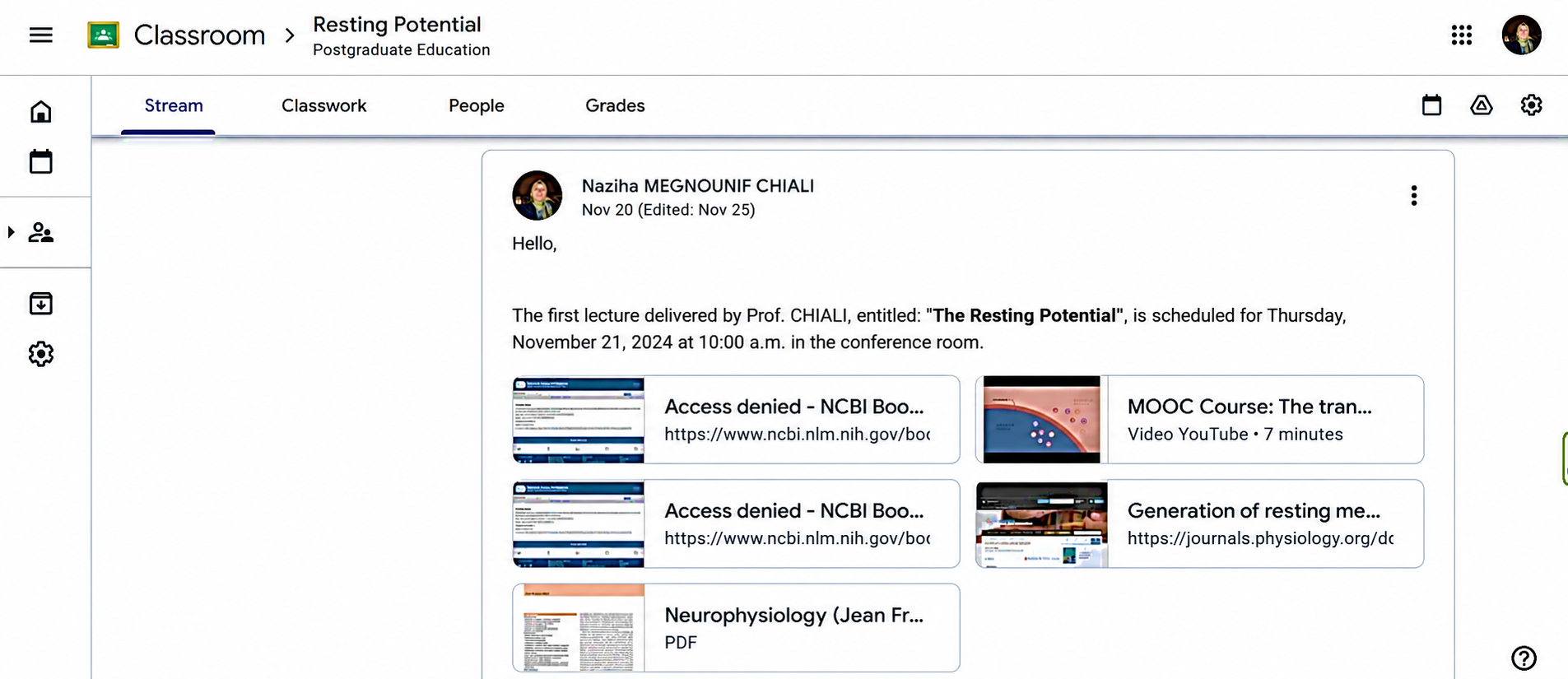
Google Classroom was selected as the principal learning-management platform because it is freely accessible, relatively easy to use, and enables instructors to distribute resources, communicate instructions, organize deadlines, and collect or link learning activities in a single digital environment. The pedagogical intention was not to replace classroom teaching, but to connect structured face-to-face instruction with asynchronous activities that learners could complete between sessions. The learning-platform interface used to announce the course and provide supporting resources is shown in Figure 1.
B. Participants
The study sample consisted of seven learners enrolled in specialized medical studies in clinical neurophysiology and functional exploration of the nervous system. The small cohort reflected the number of residents participating in the relevant postgraduate teaching activity during the study period rather than a statistically determined sample size. Because the purpose of the pilot was to describe implementation and learner outputs within this specific educational setting, no sampling-based generalization to a wider postgraduate population was intended.
C. Pedagogical Context and Rationale
Clinical neurophysiology and functional exploration of the nervous system constitute a hospital-university specialty in which theoretical knowledge is closely connected to clinical application. Declarative knowledge acquired during classroom teaching provides a conceptual basis for supervised functional exploration activities in clinical settings, including activities undertaken at the patient’s bedside. The blended sequence was therefore designed as a supplement to, rather than a substitute for, supervised clinical education.
The educational sequence was based on complementarity between learning activities. Face-to-face teaching was used to establish the conceptual structure of the topic and clarify expectations. The online formative assessment required learners to retrieve recently taught information. The cognitive-map task required them to reorganize the same material into a hierarchical visual representation and to make relationships between concepts explicit. Google Classroom functioned as the organizational hub, while Telegram was used as an additional communication channel for questions and schedule-related information. In the present manuscript, the term cognitive map refers to the hierarchical learner-generated mind maps created with Coggle; these products were not assumed to be equivalent to formally constructed and scored Novakian concept maps.
The principal components of the intervention and their intended pedagogical functions are summarized in Table 1.
| Phase | Mode/tool | Learner activity | Primary pedagogical purpose |
|---|---|---|---|
| Concept introduction | Face-to-face teaching | Attend the course, receive learning objectives, and clarify the organization of the topic | Establish a coherent conceptual framework and permit direct interaction with the instructor |
| Resource access | Google Classroom | Consult bibliographic links, educational videos, course support, and the Coggle tutorial | Extend access to learning resources beyond the scheduled classroom session |
| Formative retrieval | Google Forms | Complete a 10-item multiple-choice formative assessment | Encourage retrieval of core content and provide a rapid indication of current understanding |
| Knowledge organization | Coggle | Construct and submit a hierarchical cognitive map of the course | Select key information, identify relationships, and synthesize the course into a visual structure |
| Communication and feedback | Telegram and Google Classroom | Ask questions, receive schedule information, submit work, and receive instructor evaluation | Maintain continuity between sessions and support completion of asynchronous activities |
D. Course Structure and Learning Scenario
The course was organized according to a modular structure so that its principal components and expected learning activities were clearly identifiable. The course entitled “The Resting Potential” was used as the illustrative teaching sequence in the present study because it contains multiple interconnected concepts, including membrane permeability, ionic gradients, equilibrium potentials, active transport, and physiological consequences.
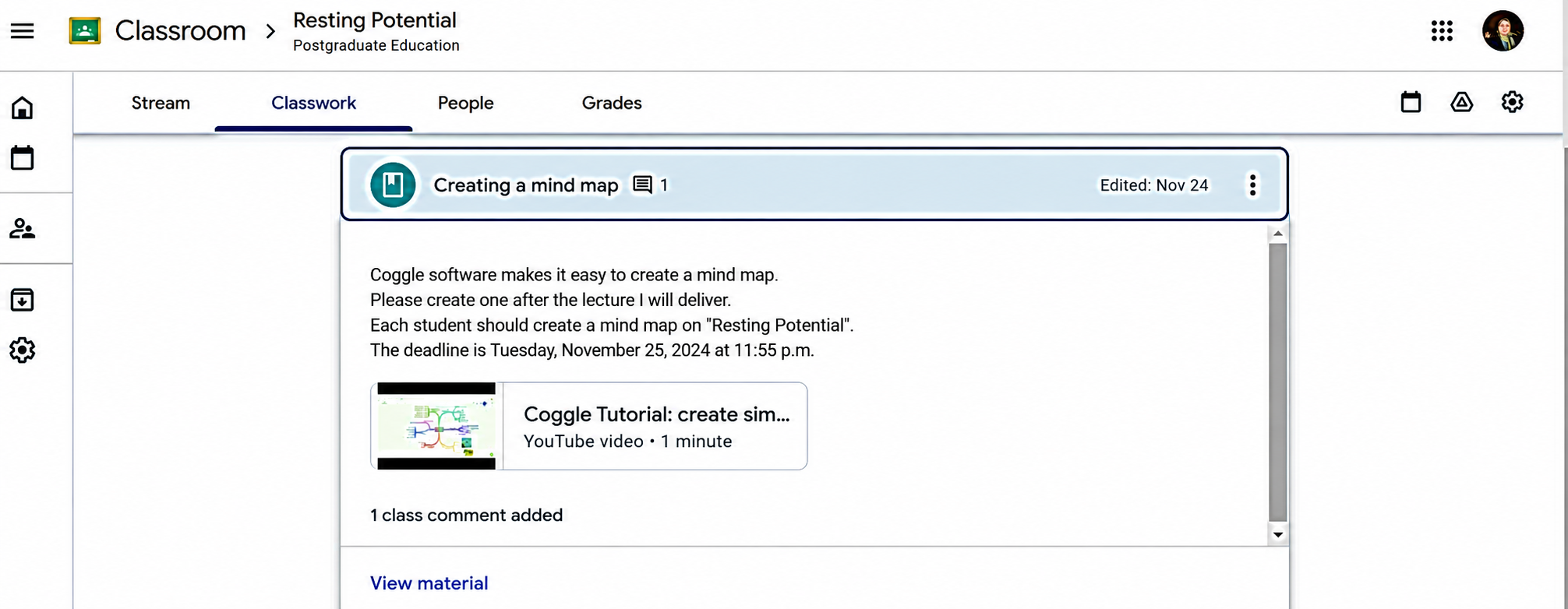
The first period of activity consisted of a face-to-face session during which the instructor presented the learning objectives and delivered the course. At the end of the session, the instructor explained the work to be completed during the inter-class period, specified the organizational arrangements, and communicated submission deadlines through Google Classroom. Supporting documentation was then uploaded to the platform. These resources included links to bibliographic references, educational YouTube videos, and a tutorial explaining how to create a cognitive map using Coggle. The Google Classroom announcement for the cognitive-map activity is illustrated in Figure 2.
During the inter-class period, residents completed the assigned work remotely. The activities were designed primarily for individual completion while still permitting communication and collaboration when necessary. Online materials allowed residents to revisit the course content before completing the required tasks. Completed work was submitted through the digital environment and was subsequently reviewed by the instructor. Telegram was made available so that learners could ask questions if difficulties arose, exchange practical information, and receive notifications concerning possible scheduling changes. This communication channel was intended to maintain continuity between face-to-face sessions rather than to function as a separate teaching intervention.
E. Formative Assessment
Google Forms was used to administer a formative multiple-choice questionnaire consisting of 10 items. Responses were collected electronically and organized through Google Sheets. The resulting score was expressed on a 20-point scale. The assessment was used as a low-stakes educational activity rather than as a validated summative examination. Its purpose was to encourage retrieval of course content and provide a rapid descriptive indication of performance after the teaching sequence.
Because the assessment instrument had not undergone a reported formal validation process and because no pre-intervention score was available, the results were not interpreted as evidence of a change in competence. No pass/fail threshold was imposed for research interpretation. The study therefore reports the observed distribution, mean, median, and sample standard deviation without inferential hypothesis testing.
F. Cognitive-Map Activity
Each learner was asked to synthesize the course by creating a cognitive map with Coggle. The task required identification of a central concept and organization of subordinate concepts into branches and sub-branches. Learners were free to choose the detailed visual layout, color scheme, and branch arrangement, while the substantive content was expected to represent the principal chapters and relationships contained in the course.
The submitted maps were downloaded for descriptive review. The review considered whether the maps used a central topic, organized content hierarchically, linked related physiological concepts, and represented multiple major components of the course. No standardized numerical rubric was applied in this pilot study; therefore, the maps were not assigned comparative quality scores. Their role in the analysis was to document task completion and the types of knowledge organization produced by learners.
G. Outcome Measures and Data Analysis
The prespecified descriptive outcomes were: (1) completion of the online formative assessment; (2) the distribution and central tendency of formative-assessment scores; (3) completion of the cognitive-map task; and (4) descriptive organizational characteristics of the submitted maps. These outcomes were selected because they could be observed directly from the learning activities without requiring assumptions about long-term knowledge retention, learner satisfaction, autonomy, or clinical performance.
All seven learners completed both activities, so there were no missing data for the reported completion and score outcomes. Formative-assessment results were summarized using frequencies, range, arithmetic mean, median, and sample standard deviation. Given the sample size of seven learners and the absence of a comparison condition or baseline measure, inferential statistical testing was not performed. The study design does not support causal estimation of an effect of blended learning relative to another teaching method.
III. Results
A. Implementation and Completion of the Activities
The planned course chapters, instructions, and supporting resources were made available on Google Classroom according to the teaching sequence. All seven participating learners completed the 10-item online formative MCQ and all seven submitted a cognitive map. The completion rate was therefore 7/7 (100%) for each of the two principal digital activities. This finding establishes that the workflow was operationally feasible for this small cohort and that the selected tools could be incorporated into the existing postgraduate teaching schedule.
The completion rate should be interpreted as an implementation outcome rather than a measure of satisfaction or preference. The study did not administer a validated questionnaire on learner engagement, acceptability, perceived workload, usability, or autonomy. Consequently, task completion demonstrates participation in the planned activities but cannot establish why learners participated or whether they preferred the blended format to conventional teaching.
B. Formative Assessment Results
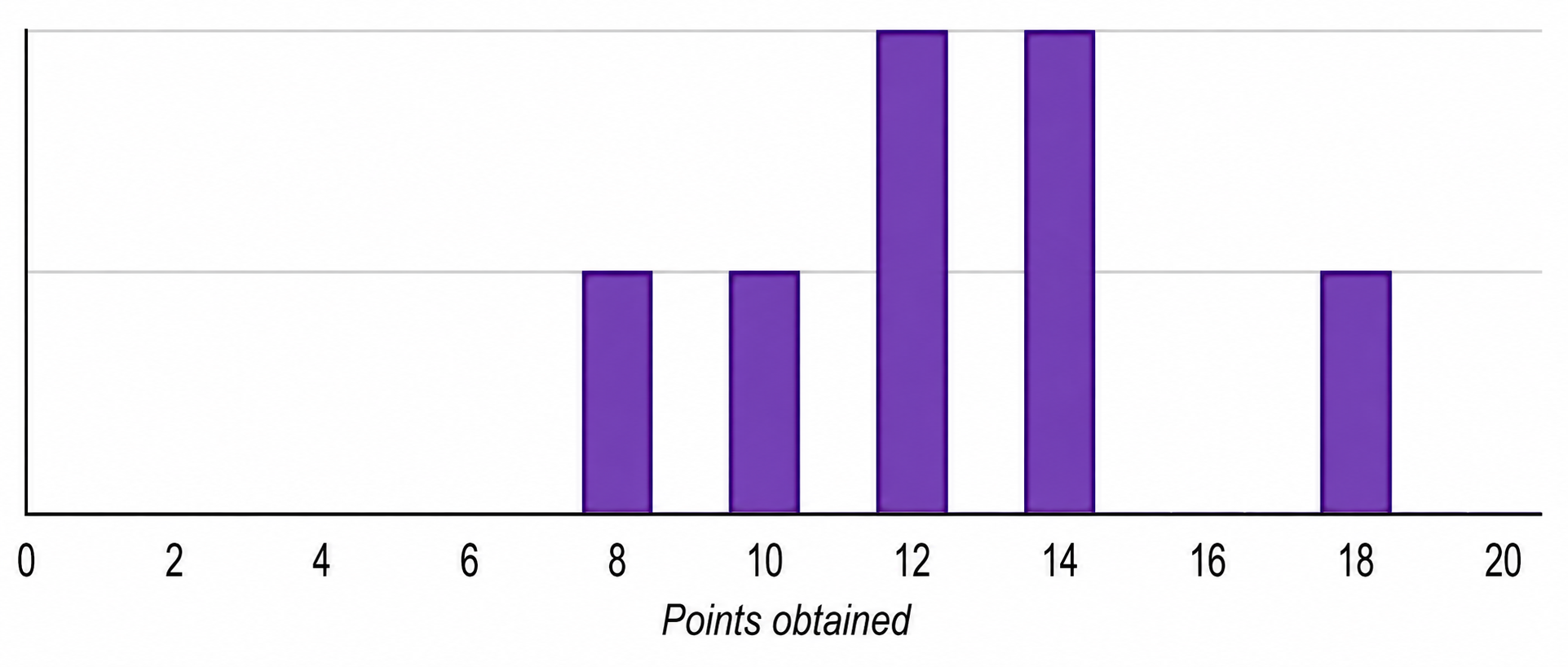
The individual formative-assessment scores were 8, 10, 12, 12, 14, 14, and 18 points out of 20. The mean was 12.57/20, the median was 12/20, and the sample standard deviation was 3.21 points. Scores therefore ranged over 10 points, from 8 to 18. One learner (14.3%) scored 8, one (14.3%) scored 10, two (28.6%) scored 12, two (28.6%) scored 14, and one (14.3%) scored 18. The observed distribution is presented in Figure 3.
Because the assessment was formative, no validated competency threshold was specified. The scores are therefore reported descriptively and should not be interpreted as a formal measure of mastery or as evidence that the blended sequence produced a particular magnitude of learning gain.
C. Cognitive-Map Activity
All participating learners produced and submitted a cognitive map. Figure 4 presents the seven maps and illustrates the variety of visual organizations used to represent the same course topic.
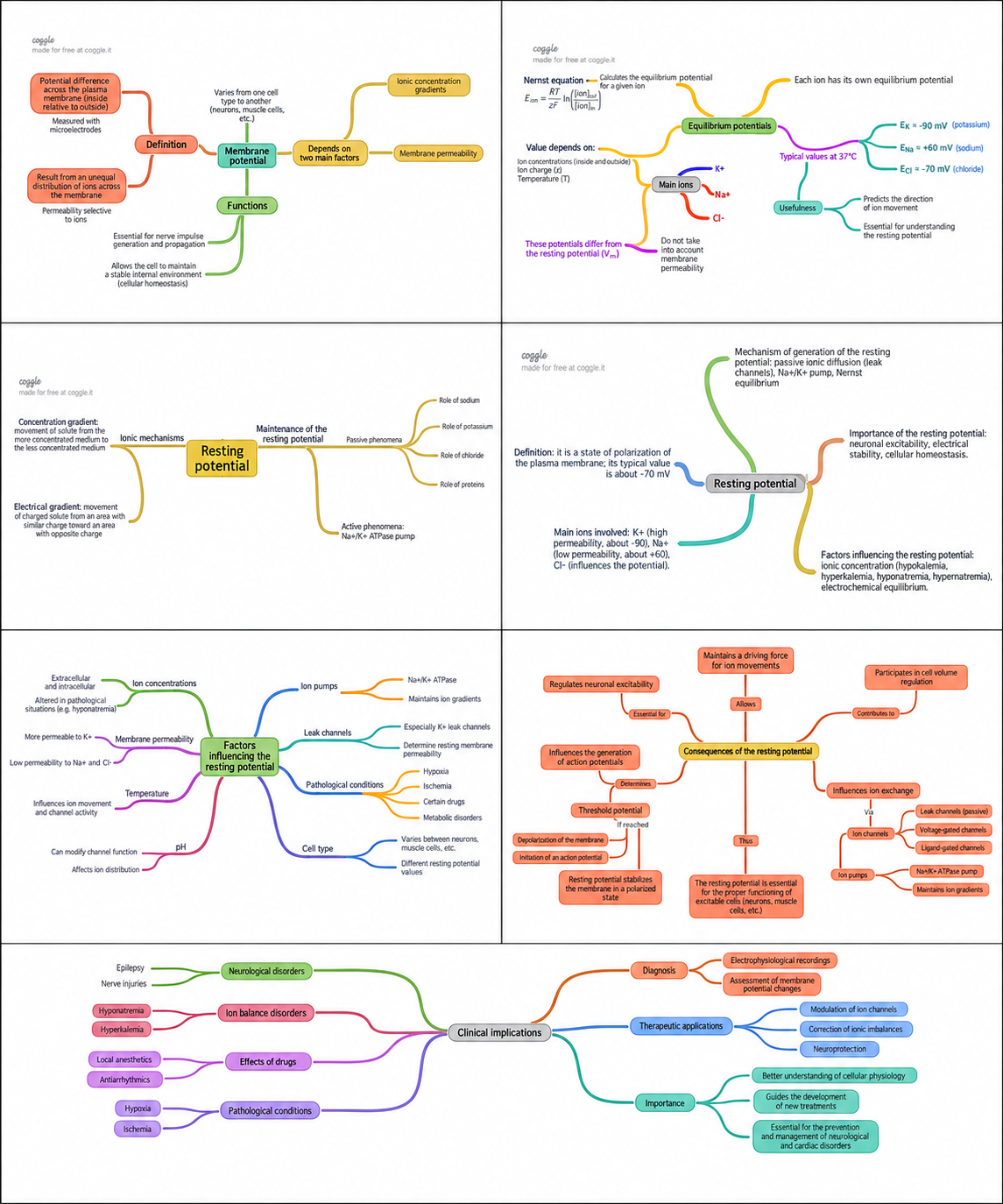
Despite differences in layout, color, and branch structure, the maps generally used the resting potential or membrane potential as a central organizing concept and expanded outward toward related ideas. Recurring content visible across the submitted work included the definition of membrane or resting potential, ionic concentration gradients and membrane permeability, equilibrium potentials and the Nernst relationship, passive and active mechanisms maintaining the resting state, factors that influence resting potential, physiological consequences, and clinical implications. These recurring branches indicate that learners selected multiple conceptually related components rather than representing the course as a single linear sequence.
The maps also differed in the level of granularity used by individual learners. Some emphasized broad categories with relatively few branches, whereas others incorporated multiple sub-branches and explanatory statements. Because no validated rubric was used, these differences were not converted into quality rankings. The defensible conclusion from the present data is that all learners completed the requested transformation of course material into a hierarchical visual representation; the study cannot establish whether one mapping style reflected deeper understanding than another.
IV. Discussion
A. Principal Findings
This pilot study examined the implementation of a blended-learning sequence in postgraduate clinical neurophysiology and described the learning products generated through its digital components. The central finding is one of feasibility: all seven learners completed both the online formative assessment and the cognitive-map task, and the digital workflow was successfully integrated with the face-to-face course. The study therefore contributes a concrete, reproducible example of how classroom teaching, a learning-management platform, low-stakes online assessment, visual knowledge organization, and asynchronous communication can be combined within a specialized postgraduate medical course.
The contribution should be interpreted at the correct level. A 100% completion rate in a cohort of seven learners shows that the planned activities were completed, but it does not demonstrate greater motivation, engagement, autonomy, or satisfaction. Similarly, the observed assessment scores describe performance after the teaching sequence but do not show improvement because there was no pre-intervention measure or control group. Framing the study in this way strengthens rather than weakens its value: the pilot identifies an implementable model and clarifies exactly which outcomes require more rigorous measurement in a subsequent trial or prospective comparative study.
B. Formative Assessment and Retrieval of Knowledge
The formative MCQ provided a rapid mechanism for requiring learners to retrieve recently taught information. In Bloom’s taxonomy, remembering and understanding represent foundational cognitive processes upon which more complex application, analysis, evaluation, and creation can be built [11]. The observed mean score of 12.57/20 provides a descriptive snapshot of performance on the specific 10-item assessment, but the study did not establish the psychometric properties of the instrument. Llorca’s work on immediate pedagogical evaluation in continuing medical education similarly illustrates the usefulness of structured knowledge assessment while underscoring that conclusions depend on what the assessment has actually been designed to measure [12].
The role of the MCQ can also be understood through the literature on retrieval practice. A systematic review in health-professions education found that distributed and retrieval practice frequently improved academic outcomes across heterogeneous studies, while also noting important design variables such as assessment type, feedback, time on task, and retrieval interval [13]. Multiple-choice questions mainly require recognition and are therefore generally less cognitively demanding than free recall or short-answer formats. For the present course, the MCQ was appropriate as a brief formative check, but a stronger future design could combine recognition questions with short-answer or case-based retrieval tasks and could examine delayed retention rather than only immediate post-course performance.
This distinction is particularly relevant in clinical neurophysiology. Remembering ionic values, definitions, and mechanisms is necessary, but postgraduate competence ultimately requires interpretation and application in clinical contexts. A future assessment strategy should therefore sample several levels of cognitive performance, for example by pairing factual retrieval with interpretation of electrophysiological data, explanation of mechanisms, and application to short clinical scenarios. The current pilot did not assess those higher-level outcomes and should not be interpreted as having done so.
C. Cognitive Mapping and Knowledge Organization
The cognitive-map activity was designed to complement retrieval-oriented assessment with a task that required reorganization and connection of ideas. Concept mapping has a substantial history in medical education. Daley and Torre’s analytical review concluded that concept maps have been used to promote meaningful learning, provide an additional learning resource, facilitate feedback, and contribute to assessment [14]. A more recent BEME systematic review found evidence that concept mapping can support critical-thinking-related outcomes in undergraduate medical education, although study findings and implementation methods were heterogeneous [15]. Berthou and Marchand likewise described cognitive mapping as a graphical approach with potential applications in health-professions learning and reflection [16].
The products in the present study should nevertheless be described precisely. The Coggle maps were hierarchical mind or cognitive maps rather than formally standardized concept maps scored according to a validated method. This distinction matters because the mere presence of branches and connections does not establish conceptual correctness or depth. The maps do, however, provide observable evidence that learners selected a central concept and reorganized multiple parts of the course around it. In Figure 4, the repeated appearance of branches dealing with ionic mechanisms, equilibrium potentials, factors affecting the resting potential, and physiological or clinical consequences suggests that the task encouraged learners to represent relationships that are distributed across the linear lecture content.
A logical next step would be to introduce an explicit scoring rubric. Such a rubric could evaluate scientific accuracy, appropriateness of hierarchy, completeness of major concepts, correctness of links, integration across course sections, and clarity of the final representation. Independent scoring by more than one reviewer would also allow assessment of inter-rater agreement. With these additions, cognitive maps could move from being illustrative learning products to becoming analyzable educational outcomes.
D. Blended Learning in the Postgraduate Context
The sequence used in this study is relevant to postgraduate education because it distributes learning across time and modes. The classroom session provided direct explanation and immediate access to the instructor. The inter-class period created space for review, retrieval, and visual synthesis. The online platform centralized materials and deadlines, while Telegram offered an additional route for practical communication. This organization may be especially useful for postgraduate learners whose study time must coexist with clinical duties, although the present study did not formally measure time use, convenience, or perceived flexibility.
Evidence from graduate medical education suggests that technology-supported and flipped or blended models can be feasible and acceptable, but comparative outcomes vary considerably across interventions. A systematic review of flipped-classroom approaches in graduate medical education reported generally positive learner perceptions and frequent pre/post improvements, while controlled comparisons produced mixed results and the authors emphasized heterogeneity in implementation and study quality [17]. The current pilot is consistent with this broader pattern: implementation is feasible, but stronger causal conclusions require more rigorous design.
The most recent broader evidence also argues against presenting blended learning as a universally superior modality. The umbrella review by Li et al. found potential benefits across nursing and medical education but highlighted methodological weaknesses, lack of standardized outcomes, and limited evidence about long-term or higher-level effects [6]. This is directly relevant to the present study. The practical value of the intervention lies in the deliberate coordination of activities, not in the brand names of the digital tools. Google Classroom, Google Forms, Coggle, and Telegram could be replaced by other platforms if the same pedagogical functions—resource access, retrieval, synthesis, submission, feedback, and communication—were preserved.
E. Self-Regulated Learning and Learner Autonomy
The asynchronous elements of the sequence gave learners responsibility for completing activities between classroom sessions. This design is compatible with principles of self-regulated learning, which involve planning, monitoring progress, selecting strategies, and adjusting learning behavior. Meta-analytic evidence has shown a positive association between self-regulated learning strategies and outcomes across undergraduate and graduate medical education [10]. However, the present study did not directly measure goal setting, metacognitive monitoring, motivation, time management, or autonomous learning behavior. It would therefore be inappropriate to conclude that the intervention increased learner autonomy.
Future work can address this gap by using a validated self-regulated-learning measure before and after the intervention, recording time on task, and collecting qualitative data on how residents use the online materials. These additions would help determine whether learners merely complete the activities or whether the blended structure changes how they plan, monitor, and evaluate their own learning. They would also help identify learners who may require more structured support despite being comfortable with digital technology.
F. Practical Implications for Course Design
Several practical lessons emerge from the pilot. First, the online activity should be explicitly connected to the face-to-face session so that learners understand why it is being completed. Second, the workload should be limited and clearly scheduled; in this study, the formative quiz and map had distinct purposes and did not simply duplicate the lecture. Third, digital resources should be curated rather than accumulated. Fourth, an asynchronous communication channel can support continuity, but expectations concerning response times and appropriate use should be stated. Finally, learning products should be matched with an evaluation strategy: a formative MCQ requires attention to item quality, while a cognitive map requires an explicit rubric if it is to be used for research comparison.
The intervention is also potentially transferable because it relies on widely available tools and does not require a specialized simulation platform. Nevertheless, transferability should not be confused with generalizability of the present findings. Institutions differ in connectivity, device access, digital literacy, curricular structure, faculty workload, and assessment culture. Local adaptation is therefore necessary, and future multi-site work would be valuable for determining whether the workflow remains feasible across different postgraduate programs.
G. Strengths and Limitations
An important strength of the study is that the intervention was implemented in an authentic postgraduate clinical-neurophysiology setting rather than in an artificial experimental environment. The pedagogical sequence combined several complementary components and generated objective artifacts that could be directly observed: assessment responses, numerical scores, and submitted maps. The paper also distinguishes feasibility and completion from unmeasured constructs such as satisfaction, autonomy, and clinical competence, thereby reducing the risk of overinterpretation.
The limitations are substantial and define the boundaries of the conclusions. First, the sample consisted of only seven learners from a single postgraduate program. Second, the study used a single-cohort descriptive design with no control group and no baseline assessment, so causal comparison with traditional instruction is impossible. Third, the 10-item MCQ was a local formative instrument without reported evidence of validity or reliability. Fourth, the cognitive maps were reviewed descriptively rather than scored using a standardized rubric. Fifth, no validated measures of learner satisfaction, engagement, self-regulated learning, perceived workload, digital literacy, or usability were collected. Sixth, the intervention was evaluated over a short period and did not assess delayed knowledge retention. Seventh, the study did not measure transfer to electrophysiological interpretation, clinical reasoning, procedural performance, or patient-related outcomes. Finally, the sample size precluded meaningful inferential statistical analysis and limits external generalizability.
These limitations should guide the design of the next study rather than simply be viewed as defects of the pilot. A prospective evaluation could incorporate a pre/post knowledge assessment, a comparison or crossover condition, validated learner-reported measures, standardized map scoring, and delayed follow-up. Where feasible, outcome assessment should extend beyond recall to include interpretation of clinical neurophysiology data and application to case-based problems. Measuring time on task and documenting exposure to each digital component would help distinguish the effect of the pedagogical strategy from the effect of simply spending more time studying. Qualitative interviews or focus groups could also explain how residents experience the blend and which components they perceive as most useful or burdensome.
V. Conclusion
This descriptive pilot demonstrates the practical feasibility of integrating face-to-face teaching with structured digital activities in postgraduate clinical neurophysiology at the Faculty of Medicine of Tlemcen. All seven learners completed both the online formative assessment and the cognitive-map task. The assessment produced a mean score of 12.57/20, while the submitted maps showed that learners could reorganize the course into hierarchical visual structures linking major physiological and clinical concepts.
The study’s principal contribution is therefore an implementable pedagogical framework rather than proof of educational superiority. The blended sequence extends learning beyond the classroom by combining resource access, retrieval-oriented formative assessment, visual knowledge organization, remote submission, feedback, and communication. At the same time, the absence of a control group, baseline testing, validated engagement or autonomy measures, standardized cognitive-map scoring, and long-term or clinical outcomes requires cautious interpretation. Future studies with larger cohorts, stronger comparative designs, validated outcome measures, and delayed follow-up are needed to determine whether the model improves knowledge retention, self-regulated learning, clinical reasoning, and performance in supervised neurophysiology practice.
Within these limitations, the present work provides a transparent starting point for the systematic development of a flexible and learner-active postgraduate curriculum in clinical neurophysiology. Its value lies in showing how commonly available digital tools can be organized around specific pedagogical functions while preserving face-to-face teaching as the foundation for clinically oriented training.
Authors’ Contributions
All authors contributed to the development of the study, critically reviewed the manuscript, approved the final version, and agreed to be accountable for all aspects of the work.
Conflicts of Interest
The authors declare no conflicts of interest.
Funding
This research received no external funding.
Data Availability
Data supporting the empirical analysis and the findings reported in this study are available from the corresponding author upon reasonable request.
Declaration of Generative AI and AI-Assisted Technologies in the Writing Process
The manuscript was initially written in French. During preparation of the English version, the authors used ChatGPT to assist with translation and to improve linguistic quality and readability. Following the use of this AI-assisted tool, the authors comprehensively reviewed and revised the manuscript to ensure the accuracy, integrity, and scientific rigor of the final text. All authors take full responsibility for the final content of the published work, including any remaining errors or inconsistencies.