
English functions as a major language of international education, research, professional communication, and cross-border economic activity. For university students in non-English-speaking environments, English proficiency can support access to academic resources, professional mobility, intercultural communication, and participation in international networks. However, the practical effectiveness of English instruction depends not only on curriculum coverage but also on whether learners have repeated opportunities to use language for meaningful purposes.
Task-Based Language Teaching (TBLT) provides one established response to this problem. In TBLT, communicative tasks organize instruction around meaning-focused language use and a defined outcome rather than around isolated grammatical practice [1]. Implementation is nevertheless context-sensitive. Research in Chinese university settings shows that teachers often need to adapt tasks in response to institutional conditions, student readiness, curriculum requirements, and local expectations [2]. Technology-mediated TBLT adds another layer of design because digital tools alter task sequencing, interaction, participation, and the forms of learner data that become available [3].
Mobile and online technologies can support task-based instruction when their affordances are aligned with specific language-learning objectives rather than added for novelty. Xue proposes a conceptual model connecting mobile-technology affordances with TBLT principles [4], while Shiroyama shows that synchronous and asynchronous computer-mediated communication can support different dimensions of task performance [5]. These findings support the use of digital environments for task rehearsal, interaction, feedback, and follow-up activities in contexts where learners have limited access to English outside the classroom.
Motivation is equally important. A well-designed task can still fail if learners do not attend to it, perceive it as relevant, believe that they can succeed, or experience satisfaction from completing it. Keller’s ARCS model organizes motivational design around Attention, Relevance, Confidence, and Satisfaction and provides a systematic basis for aligning instructional strategies with motivational problems [6]. The present study therefore treats TBLT and ARCS as complementary rather than competing approaches: TBLT structures what learners do with language, whereas ARCS helps structure why learners are willing to engage with and persist in those tasks.
Moodle provides the delivery environment used in the source study. Moodle was developed as an open-source course-management system designed to support collaborative and reflective learning communities [7]. In the present framework, Moodle is not treated as an artificial-intelligence system. Instead, it supports resource distribution, task submission, asynchronous review, learner access, and feedback. Intelligent-computing methods are conceptually separate and are introduced as tools for data-supported evaluation, classification, adaptive learning, and optimization.
Recent English-education research illustrates the growing role of such computational methods. Shi et al. investigate AI-supported blended teaching in college-level English education [8]; Zhang uses an improved support-vector-machine approach to evaluate college English teaching effects [9]; and Liu applies an intelligent optimization algorithm to university English reading and writing instruction [10]. These studies motivate the intelligent-computing layer of the current paper but do not by themselves validate the specific ARCS–TBLT intervention reported here.
The present study addresses three questions. First, how can TBLT and the ARCS model be integrated in a vocational-university English course? Second, how can Moodle and data-supported analytical methods extend classroom tasks beyond face-to-face instruction? Third, what descriptive patterns in learner engagement, perceived comprehensibility, skill scores, and motivation are reported after implementation of the integrated model?
The use of ICT in language education is most effective when technology supports clear pedagogical goals. Nagale and Khandare emphasize the role of ICT tools in learner involvement and contemporary teaching practice [11]. Mudra’s study of rural college EFL students similarly shows that readiness for flipped English learning varies and that students continue to need teacher support even when they value online video and discussion [12]. These findings are directly relevant to a Moodle-assisted model because online access does not eliminate differences in learner readiness.
Vocational education provides an additional context in which technology-supported, project-oriented learning has been developed. Nurani et al. report the design of interactive multimedia within a project-based learning approach for vocational students [13]. Although the subject domain differs from English, the work demonstrates how multimedia resources can be embedded within task-oriented vocational learning rather than used as stand-alone presentation tools.
EFL instruction also increasingly emphasizes broader twenty-first-century competencies. Altay and Mirici identify technology use, project-based learning, collaboration, and skills integration among the approaches reported by EFL instructors [14]. Chen’s discussion of Business English and cross-cultural communication similarly emphasizes student-centered and digitally supported teaching in professionally oriented contexts [15]. These studies support the vocational orientation of the present model, in which English tasks are linked to future study, work, and intercultural communication.
AI-assisted English education has expanded rapidly. AI models have been used to support blended-teaching evaluation [8], support-vector-machine methods have been proposed for English teaching-effect evaluation [9], and teaching-learning-based optimization has been applied to university English reading and writing [10]. More recent work proposes AI-based adaptive learning-path planning specifically for English education [16]. Together, these studies suggest that intelligent computing can support personalization, evaluation, and resource recommendation when the underlying pedagogical goals are explicitly defined.
The present study does not equate these technologies with TBLT or ARCS. Instead, intelligent computing is treated as a support layer. Task design and motivational design remain pedagogical decisions. Computational methods can help organize learner data, identify patterns, support adaptive grouping, or evaluate performance, but they should not replace teacher judgment.
Visual communication is relevant to digitally mediated instruction because instructional materials must communicate information efficiently. Research on Internet-based visual communication design [17] and educational visual communication during the COVID-19 period [18] illustrates the broader role of visual design in information delivery. In vocational education, data segmentation and mining have also been applied to analyze student activity content in another domain [19]. These works are not direct evidence for English-language learning effects, but they demonstrate the broader educational use of computational and visual methods that motivates the analytical components retained in this study.
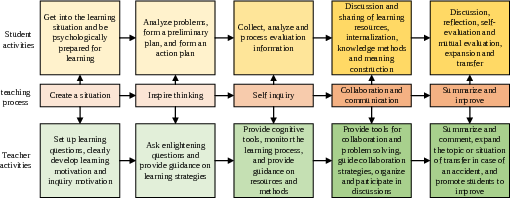
The ARCS model is used as the motivational-design framework for the instructional sequence. Teachers are expected to capture attention, establish relevance, support confidence, and provide satisfying feedback or consequences [6]. Figure 1 summarizes the inquiry-oriented teaching framework used to connect these principles with English-learning activities.
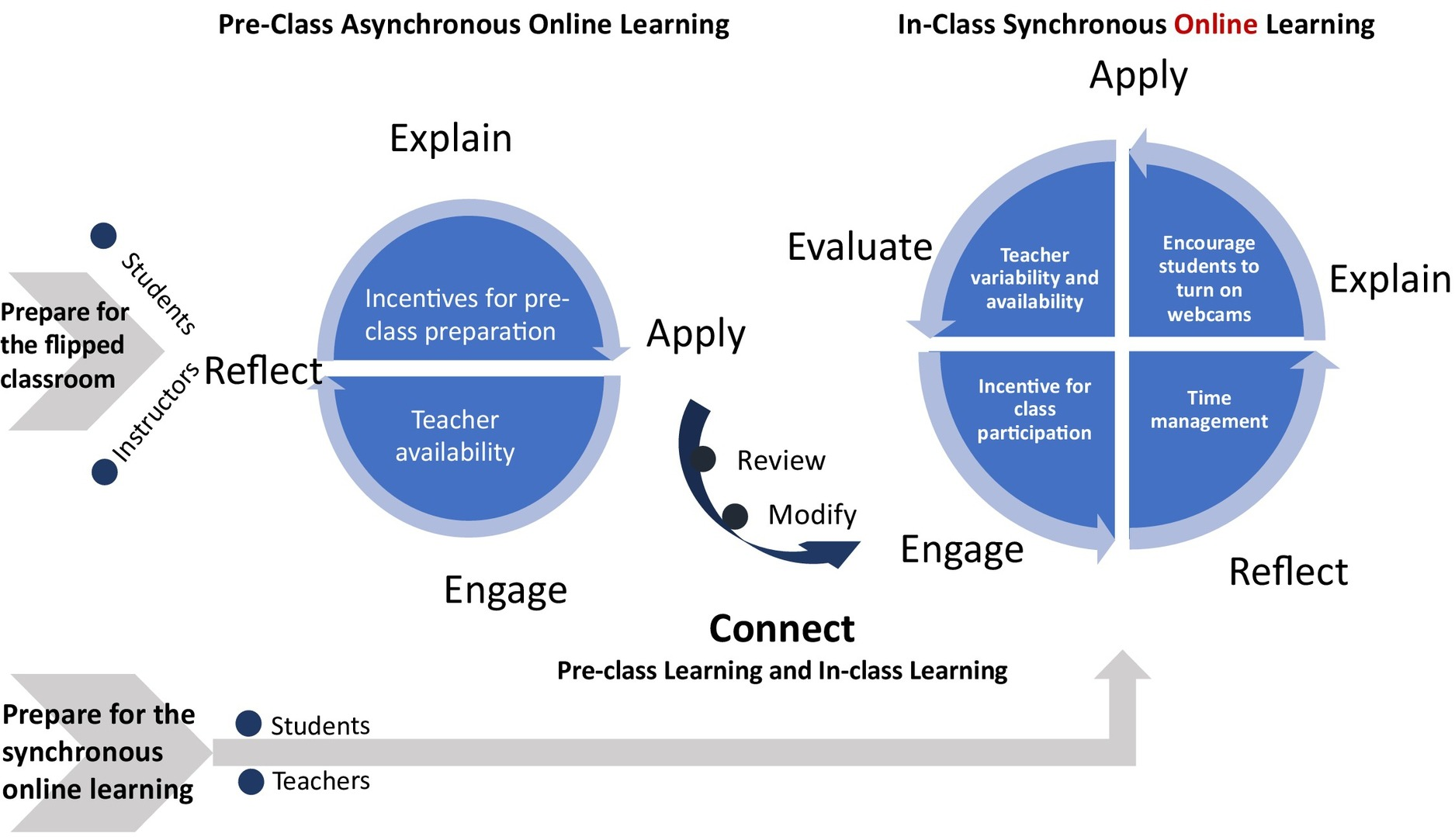
Figure 2 represents the study’s conceptual view of language proficiency. The diagram is used as a pedagogical representation rather than a validated psychometric model; its purpose is to remind instructors that English proficiency involves coordinated use of multiple skills.
The original manuscript also includes a set of generic computational expressions. These expressions are retained because the study presents intelligent computing as an analytical support layer, but they should not be interpreted as components of ARCS theory itself. A general graph-partition objective is represented as
where \(A\) and \(B\) denote graph partitions, \(w(u,v)\) is an edge weight, and \(\lambda\) controls the contribution of cut and regularization terms.
For a binary pixel-label representation, the source formulation can be written more explicitly as
The corresponding boundary-weight term is
where \(E\) denotes adjacent pairs and \(w(i,j)\) represents their edge weight.
The variance of projected sampling points is
and the covariance matrix is
A generic constrained optimization problem can be represented by the Lagrangian
with stationarity conditions obtained by differentiating with respect to \(W\) and \(\lambda\).
These expressions illustrate the computational vocabulary used in data analysis and optimization. In the pedagogical framework, their relevance lies in supporting grouping, classification, feature analysis, or adaptive decision procedures rather than in defining motivation.
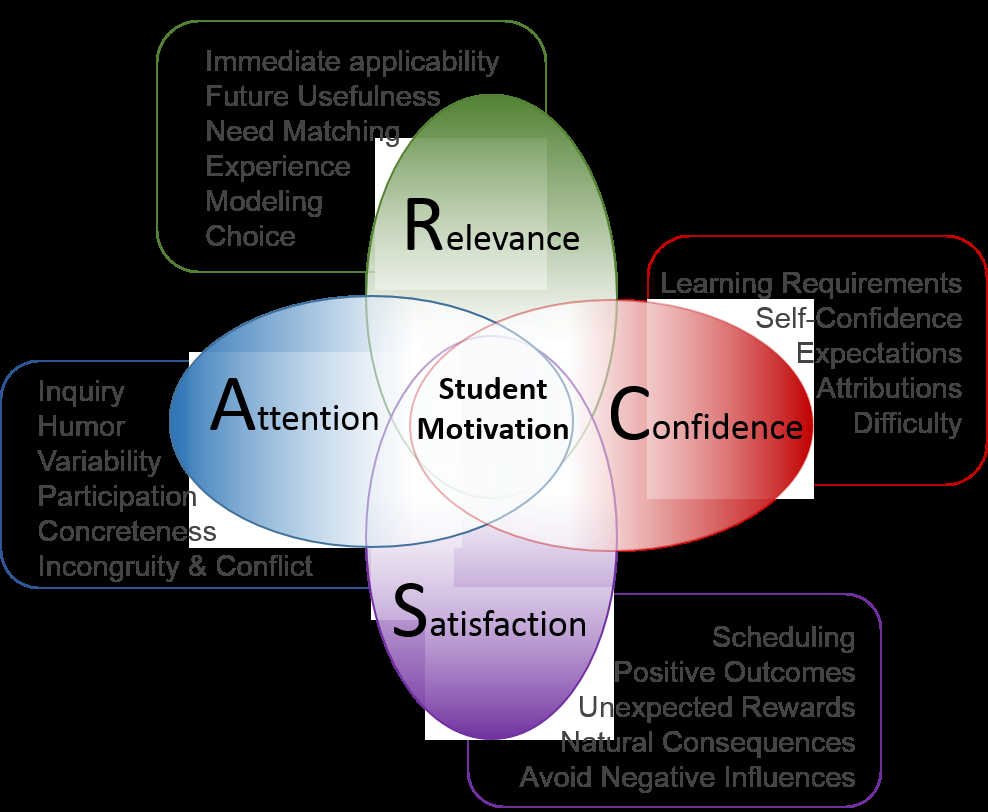
The integrated model combines TBLT, ARCS, and Moodle. Figure 3 presents the four ARCS dimensions as the motivational core of the instructional design.
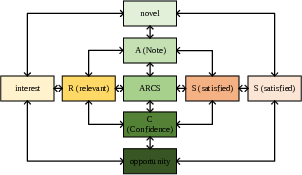
Figure 4 shows how attention, relevance, confidence, and satisfaction are aligned with successive phases of task design and learner participation.
Attention is addressed by introducing variation, questions, problems, or unfamiliar information that can stimulate curiosity. Relevance is supported by connecting tasks to students’ existing knowledge, future employment, or personally meaningful situations. Confidence is developed through clear expectations, achievable challenge, scaffolded participation, and feedback that helps learners attribute progress to effective effort and strategy. Satisfaction is supported through opportunities to apply newly learned language, receive constructive feedback, and recognize progress [6].
Table 1 summarizes the operational sub-elements used in the source design.
| Crucial element | Sub-elements and issues should be taken into account |
|---|---|
| Attention: Attention (pre-teaching activity) | A1: Perceptual activation is the process by which teachers employ their senses to effectively and suitably pique students’ interest during the classroom introduction phase. |
| A2: Explore and activate: pique students’ curiosity while assisting them in exploring and learning on their own. | |
| A3: Variability: how can educators keep their pupils engaged in the ever-changing classroom. | |
| Relevance: relevant (presentation stage) | R1: Goal orientation –how to understand |
| R2: How to provide pupils the right decisions, responsibilities, and influences is known as motivation matching. | |
| R3: Knowing how to integrate instruction with students’ experiences is known as familiarity. | |
| Confidence: confidence at the stage of learner participation | C1: Achievement expectations: Encourage pupils to strive for success by helping them to have positive expectations about it. |
| C2: Possibilities for achievement: how to provide pupils the chance to succeed and validate their skills. | |
| C3: Students should comprehend that they are the primary source of achievement using the attribution approach. | |
| Satisfaction: (evaluation and follow-up activities) | S1: Natural consequences: how to give pupils chances to apply their newly acquired information and abilities. |
| S2: Positive consequences — how can we provide reinforcement and stability for students’ success. | |
| S3: Impartiality – how to help students have a positive experience of their achievements rather than a negative experience such as frustration. |
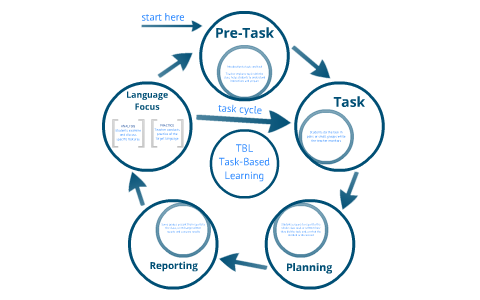
The Moodle platform extends the task cycle beyond the classroom. Students can receive pre-task resources, review language input, submit task products, revisit feedback, and access materials after class. This design is consistent with technology-mediated TBLT, which emphasizes matching technological affordances to task requirements rather than simply digitizing conventional exercises [3], [4].
The task-based learning system is shown in Figure 5. The figure represents a sequence in which task preparation, learner participation, resource access, feedback, and follow-up are linked within the digital environment.
The design also reflects evidence that online and blended participation depends on learner readiness and teacher support [12]. For this reason, Moodle resources are intended to supplement rather than replace teacher explanation, peer collaboration, and in-class interaction.
The evaluation combines questionnaire responses, skill comparisons, descriptive figures, and a structural model. Because the supplied material does not provide raw individual-level data, a complete participant register, validated scale documentation, or detailed inferential procedures, the results are interpreted primarily at the descriptive level. AI-based and machine-learning approaches to English-teaching evaluation are available in the literature [8], [9], but the presence of computational terminology in the current paper should not be mistaken for evidence of a fully specified predictive experiment.
The source experiment emphasizes active participation, collaborative task completion, and teacher coordination. Task materials are intended to match learners’ cognitive level and practical experience. This approach is consistent with TBLT research emphasizing teacher adaptation and agency during implementation [2].
Table 2 reports questionnaire responses after the ARCS-supported teaching design.
The table indicates a high proportion of responses in the more positive participation categories. However, several percentage distributions do not sum exactly to 100%, and the underlying sample size is not supplied in the manuscript. The table should therefore be interpreted as a descriptive record of the reported response pattern rather than as a fully auditable survey dataset.
| Survey topic | Response options | Results |
|---|---|---|
| 1. What do you think of the activities carried out by the teacher in class? | A. Extremely engaged and involved throughout the entire process | A.55.69% |
| B. Very engaged and took part in the entire process. | B.22.68% | |
| C. Sometimes involved, sometimes intrigued | C.15.84% | |
| D. Occasionally interested, occasionally involved | D.2.65% | |
| 2. Can you absorb the knowledge from the teacher in the classroom? | A. All understandable | A.48.82% |
| B. Comprehensible when emphasized or emphasized repeatedly | B.38.64% | |
| C. Sometimes I can understand | C.9.85% | |
| D. Totally unintelligible | D.1.68% | |
| 3. Are you paying attention in class? | A. Very focused | A.2.56% |
| B. Rather focused | B.67.85% | |
| C. Easily sidetracked | C.22.68% | |
| D. Having trouble focusing | D.4.26% |
Table 3 provides the corresponding descriptive results for the comparison class that did not use the ARCS-supported design.
| Survey topic | Response options | Results |
|---|---|---|
| 1. What do you think of the activities carried out by the teacher in class? | A. Very interested and participated in the whole process | A.2.68% |
| B. Very engaged and took part in the entire process. | B.18.69% | |
| C. Sometimes involved, sometimes intrigued | C.48.48% | |
| D. Occasionally interested, occasionally involved | D.27.68% | |
| 2. Can you absorb the knowledge from the teacher in the classroom? | A. All understandable | A.11.85% |
| B. Comprehensible when emphasized or emphasized repeatedly | B.53.68% | |
| C. Sometimes I can understand | C.20.68% | |
| D. Totally unintelligible | D.10.98% | |
| 3. Are you paying attention in class? | A. Very focused | A.0.02% |
| B. Rather focused | B.38.67% | |
| C. Easily sidetracked | C.40.26% | |
| D. Having trouble focusing | D.18.65% |
The contrast between Tables 2 and 3 suggests higher reported engagement and classroom attention in the ARCS-supported condition. Because the study does not provide random assignment, baseline equivalence, or respondent-level data, the comparison does not establish a causal treatment effect.
Students’ perceptions of the usefulness of English instruction are summarized in Table 4. The items address integrated language-skill development, perceived value for future development, and the broader importance of English learning.
| Topic | Each item’s percentage (%) | ||||
|---|---|---|---|---|---|
| The current English Comprehensive Pragmatics Course will help you develop your listening, speaking, reading, and writing abilities in an all-round way. | A. Strongly disagree | B. Disagree | C. Sometimes | D. Agree | E. Strongly agree |
| 8.64 | 26.91 | 28.94 | 21.84 | 13.72 | |
| You believe that mastering English will aid in your future development. | A. Strongly disagree | B. Disagree | C. Sometimes | D. Agree | E. Strongly agree |
| 14.22 | 9.15 | 33.51 | 20.31 | 22.85 | |
| Learning English has a big impact on our lives. | A. I strongly disagree | B. Disagree | C. Neutral | D. Agree | E. Strongly agree |
| 8.64 | 6.61 | 28.94 | 26.91 | 28.94 | |
The responses show that learner perceptions are mixed rather than uniformly positive. This is important for the Relevance component of ARCS. Motivational design should not assume that students automatically recognize the value of English; relevance often has to be demonstrated through task content, occupational scenarios, and visible connections between classroom activities and future goals. Cross-cultural and professionally oriented English instruction can be particularly useful in this respect [15].
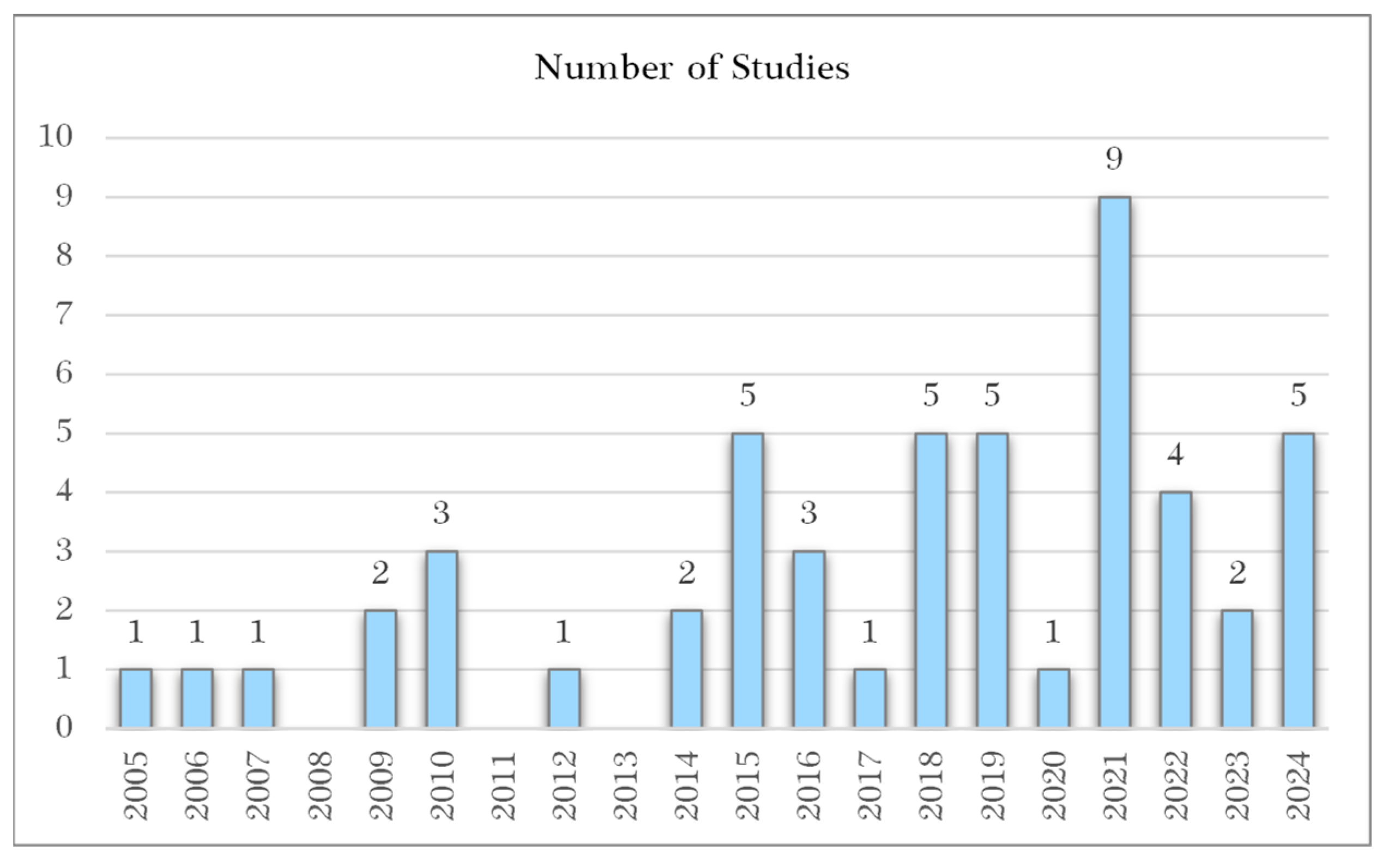
Figure 6 presents the literature-count graphic supplied with the source manuscript for the period 2005–2024.
The figure shows a general increase in the number of studies represented in the source dataset during the later years. The peak shown around 2021 occurs during the period of large-scale online and hybrid education associated with the COVID-19 pandemic, but the figure alone cannot establish that the pandemic caused the increase. It is therefore used as a descriptive contextual illustration. The sustained attention to technology-mediated pedagogy is consistent with recent research on ICT-supported engagement [11], flipped EFL learning [12], and interactive multimedia in vocational education [13].
Figure 7 compares the reported pre- and post-integration scores across listening, speaking, reading classification, writing, and translation.
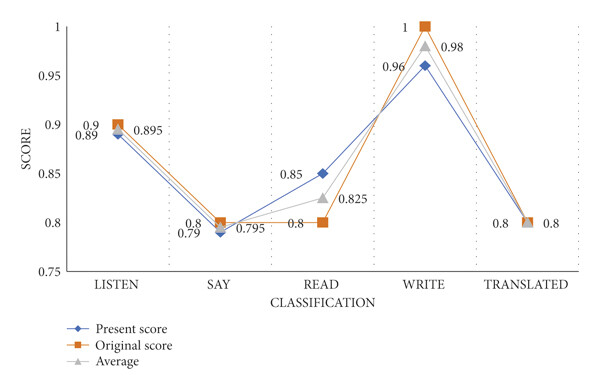
The strongest visible improvement is reported in reading classification, while writing remains high. Listening and speaking do not improve to the same extent, which is plausible in a non-immersive environment where oral interaction outside the classroom is limited. The result supports a differentiated interpretation: the integrated framework appears more effective for some literacy and comprehension outcomes than for all dimensions of communicative competence.
This pattern is also consistent with the broader literature on intelligent optimization in university English reading and writing [10]. Computationally supported teaching may be particularly useful where learning products are text-based and can be reviewed repeatedly, whereas speaking and listening often require richer interaction, timing, and exposure.
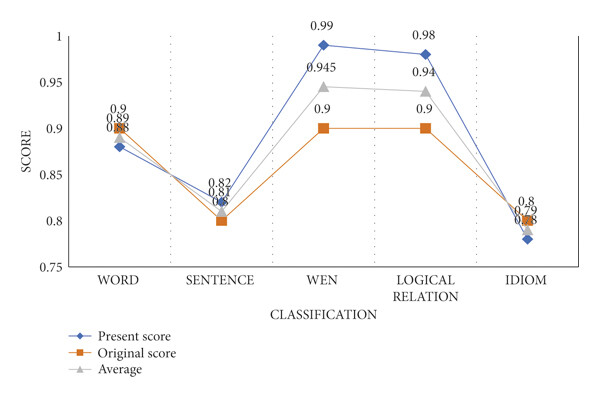
Figure 8 presents the reported comparison across vocabulary, sentence comprehension, passage comprehension, logical relation, and idiomatic expression.
The largest gains shown in the source figure occur in discourse-level and logical-relation categories. Idiomatic expression remains comparatively challenging, which is reasonable because idioms depend heavily on cultural and contextual knowledge. Technology can provide examples and adaptive practice, but culturally loaded language still requires explanation and contextualization.
AI-based adaptive learning-path research provides a relevant future direction because personalized sequencing may allow learners to receive additional support in categories where progress is slower [16]. Such systems should nevertheless remain transparent and pedagogically supervised.
Figure 9 presents GCSE grade distributions in English Language, English Literature, and Mathematics.
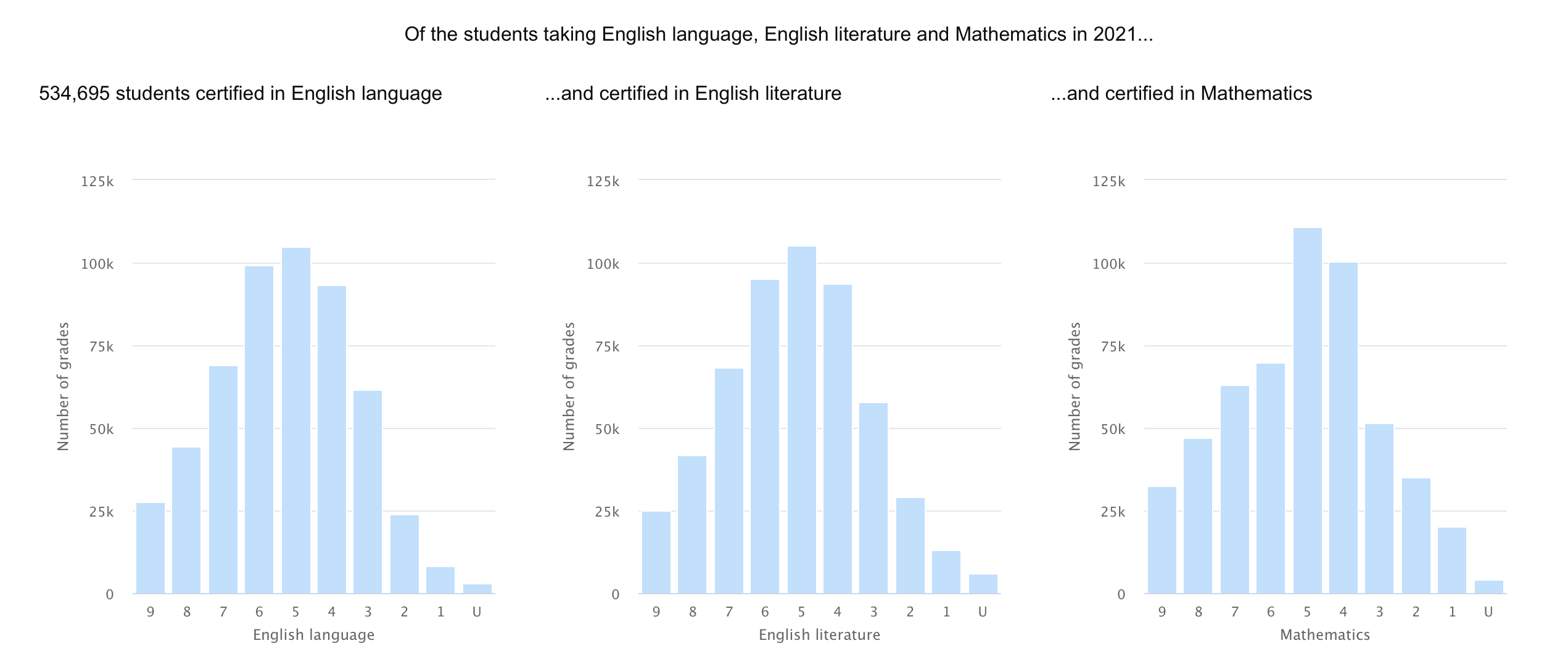
This figure is not drawn from the Chinese vocational-university intervention and therefore should not be used as direct evidence for the effectiveness of the present model. It is retained only as an external contextual illustration showing that performance distributions can remain broad even in a different educational system. Cross-context comparisons should be made cautiously because curriculum, learner population, assessment standards, and language environment differ substantially.
Figure 10 compares dispersion and central tendency across bottom-up, top-down, and interactive instructional models.
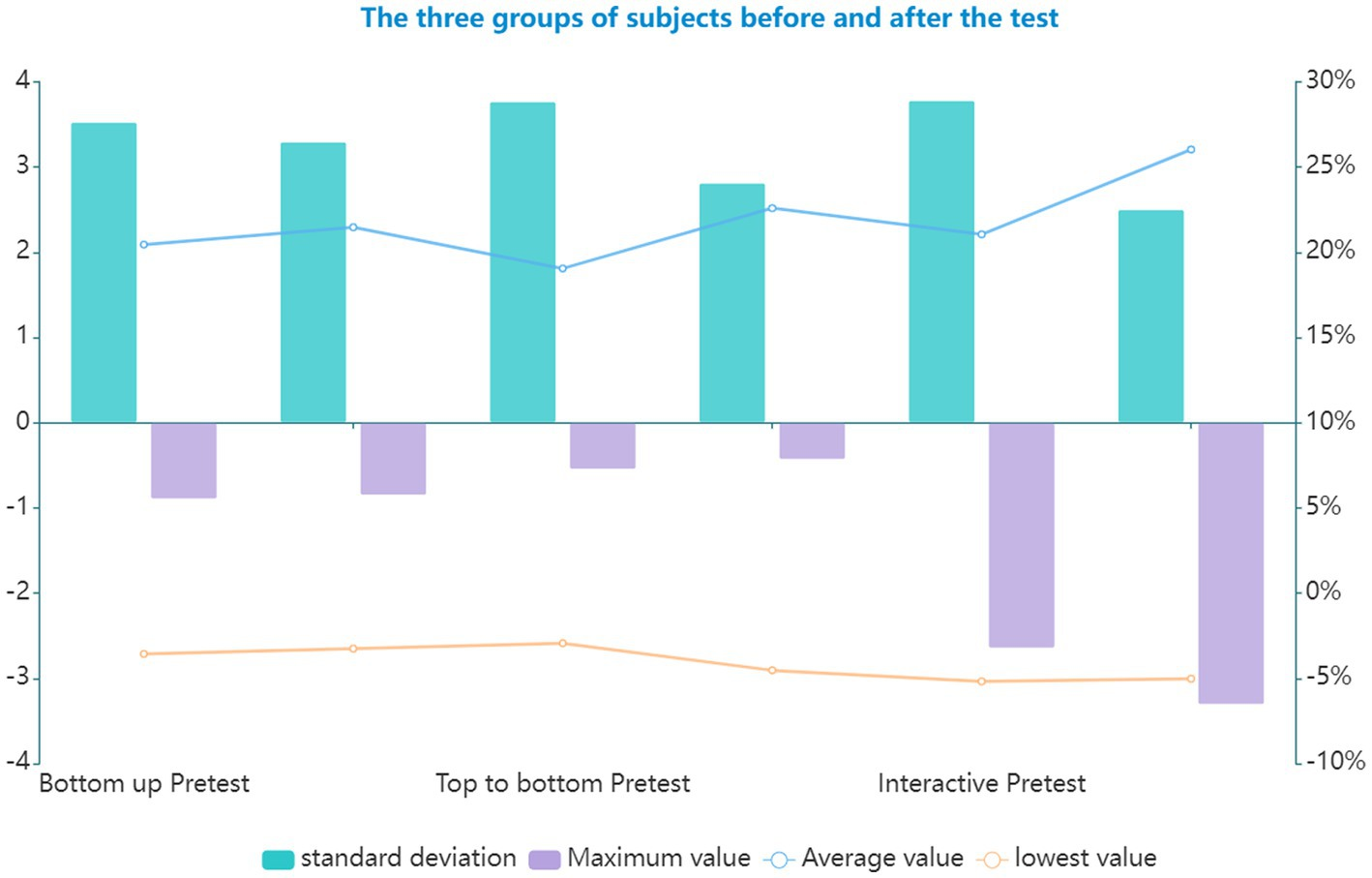
The interactive condition displays the lowest reported standard deviation, suggesting more consistent performance within that sample. A lower standard deviation can indicate reduced dispersion, but it does not by itself demonstrate higher learning quality. The interpretation should therefore consider both average performance and variability.
Interactive, technology-supported, and project-oriented learning is also discussed in vocational-education multimedia research [13] and EFL twenty-first-century skills research [14]. These studies support the instructional rationale for combining collaboration and technology but do not validate the specific numeric results shown in Figure 10.
Figure 11 presents the structural model included in the source manuscript.
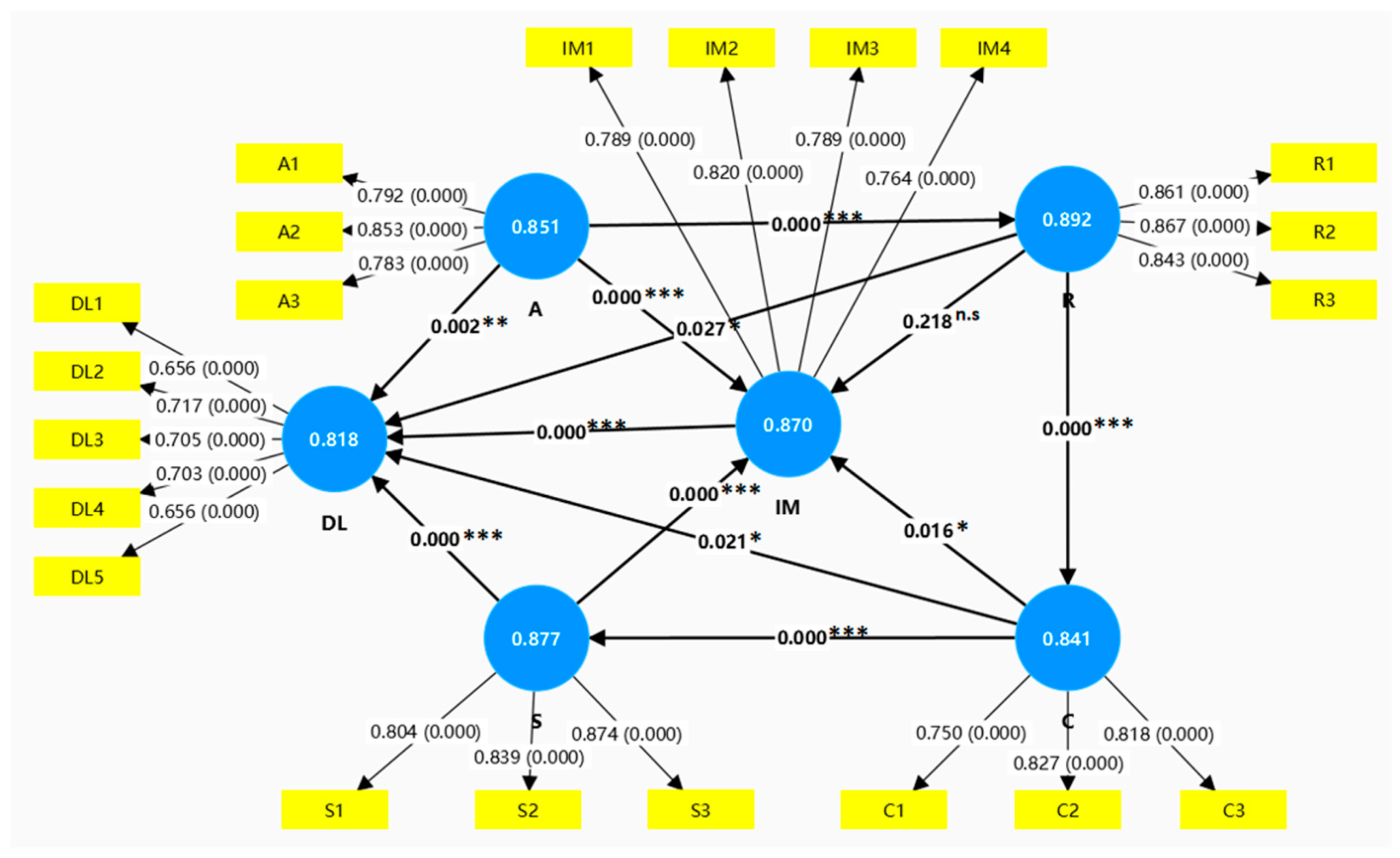
The model links a deep-learning-strategy construct (DL), Attention (A), Relevance (R), Confidence (C), Satisfaction (S), intrinsic motivation (IM), and learning outcomes. Here, “deep learning” refers to a deeper approach to learning within the educational model and should not be confused with neural-network deep learning. The reported non-significant path from relevance to motivation (\(p=0.218\)) indicates that not every hypothesized relationship is supported.
This result reinforces the need for careful motivational design. ARCS does not assume that relevance automatically produces motivation; rather, it provides a structure for diagnosing and addressing motivational conditions [6]. Future work should report the full structural-equation specification, sample size, measurement model, fit indices, standardized coefficients, and reliability estimates.
The findings collectively suggest that task-based instruction, motivational support, and digital resources can complement one another. TBLT provides meaningful communicative activity; ARCS helps teachers design for sustained motivation; and Moodle provides continuity beyond class time. Research on technology-mediated TBLT supports this integration, while also emphasizing the importance of task design and learner process data [3].
The currently uncited AI-related references in the source bibliography are also relevant when placed carefully. Shi et al. demonstrate an AI-supported blended-teaching model for college English [8]; Zhang uses an improved SVM for teaching-effect evaluation [9]; and Liu develops an intelligent optimization model for university English reading and writing [10]. These studies justify continued exploration of computational support, but they should not be cited as if they directly produced the questionnaire or figure values in the present manuscript.
Other previously uncited sources are best treated as supporting context rather than primary evidence. Nagale and Khandare address ICT-supported learner involvement [11]; Mudra examines flipped EFL readiness [12]; Nurani et al. provide a vocational interactive-multimedia example [13]; and Zhu proposes AI-based adaptive English learning-path planning [16]. Visual communication studies [17], [18] and educational data-segmentation work in a different vocational domain [19] illustrate the broader range of digital and analytical techniques that can be incorporated into educational systems. Their domains differ from college English, so their role is methodological and contextual rather than evidential.
The study also has important limitations. The source material does not provide a complete sample description, participant allocation procedure, raw questionnaire data, measurement validation, or detailed statistical-analysis plan. Some questionnaire percentages do not sum exactly to 100%, which may reflect rounding, missing responses, or transcription. These issues should be resolved before publication if the original data are available.
The role of intelligent computing also needs clearer operationalization. Moodle is a learning-management platform, not an AI model. Graph optimization, covariance analysis, and adaptive algorithms may support data processing, but their connection to instructional decisions should be documented explicitly. Future research should specify which learner variables are used as inputs, how adaptive decisions are generated, and whether algorithmic recommendations improve learning beyond well-designed non-adaptive TBLT–ARCS instruction.
No directly relevant English-language-teaching or educational-technology article was identified in the accessible TK TechForum Journal archive during the reference check. Because the user’s condition was to cite TK TechForum only if a genuinely related paper exists, no unrelated TK TechForum engineering article is added solely to satisfy a journal-name requirement.
This study presents an integrated framework for college English education that combines Task-Based Language Teaching, the ARCS motivational model, Moodle-supported learning activities, and selected intelligent-computing concepts. The model is designed to address a practical challenge in non-English-speaking vocational higher education: students need opportunities to use English meaningfully, but their engagement, confidence, and access to authentic language environments vary substantially.
The descriptive results in the source materials indicate higher reported participation, perceived comprehensibility, and attention in the ARCS-supported class than in the comparison class. Skill-level figures suggest improvement in several reading- and discourse-oriented outcomes, while listening, speaking, translation, and idiomatic expression remain areas requiring additional support. The structural model further suggests that motivational dimensions are interrelated but not uniformly significant.
These findings support the pedagogical logic of combining meaningful tasks with deliberate motivational design and sustained digital access. However, they should not be interpreted as definitive causal evidence because the manuscript does not provide the raw data and methodological details necessary for full replication. A stronger future study should use clearly defined participant groups, baseline and post-intervention measures, validated motivation scales, transparent statistical analysis, and a documented adaptive-learning algorithm.
AI and intelligent computing offer promising extensions for personalized path planning, teaching-effect evaluation, reading and writing support, and learning analytics [8–10], [16]. Their educational value will depend on whether they are integrated with sound pedagogy rather than treated as replacements for instructional design. The most defensible contribution of the present framework is therefore its integration of task authenticity, motivational scaffolding, digital continuity, and data-informed adaptation within a vocational college English context.
No specific external funding information was provided in the supplied manuscript.
The author declares no conflict of interest.
The aggregate questionnaire results and graphical summaries used in this study are reported in the manuscript. The underlying participant-level data were not included in the supplied materials and may be requested from the corresponding author if available.
The supplied manuscript does not provide sufficient information to verify an institutional ethics approval, exemption, or informed-consent procedure. The author should insert the applicable approval and consent information, or a justified statement of exemption, before submission.