
Sexuality is an important but complex aspect of human life that has often generated tension between public curiosity and social restrictions. Although some societies discuss sexual matters extensively, others avoid them, and individuals may regard themselves as knowledgeable despite having incomplete or inaccurate information about sexual health and sexual relationships [1]. Scientific understanding of sexuality requires attention to the ways biological, emotional, interpersonal, and sociocultural processes interact throughout life. The World Health Organization (WHO) characterises sexuality as a central aspect of being human and identifies sex, gender identities and roles, sexual orientation, eroticism, pleasure, intimacy, and reproduction among its dimensions. Sexuality may be experienced and expressed through thoughts, desires, beliefs, attitudes, values, behaviours, practices, roles, and relationships, although not every dimension is necessarily present or expressed in every individual. The WHO further emphasises that biological, psychological, social, economic, political, cultural, legal, historical, religious, and spiritual factors interact in shaping sexual experiences and expressions [2]. This multidimensional understanding provides an important foundation for examining the psychological concepts considered in the present study.
Sexual experiences and behaviours may include consensual activities undertaken alone or with others, as well as the personal meanings attached to such experiences. Sexuality develops through continuing interactions among biological, psychological, interpersonal, social, and cultural influences; consequently, individuals differ in their feelings, attitudes, interpretations, and experiences. The concept of the self-schema provides a useful framework for understanding these differences. Markus [3] describes self-schemata as cognitive structures through which individuals organise information about themselves and interpret personally meaningful experience. Self-schemas help influence which information attracts attention, how that information is interpreted, and what is subsequently remembered [4]. Andersen and Cyranowski [5] extended this framework to sexuality, introducing the sexual self-schema as a cognitive generalisation that develops from past experiences, appears in current experience, influences the processing of sexually relevant information, and guides behaviour. A sexual self-schema therefore concerns how individuals understand and describe their sexual selves. In the original model, positive schemas are associated with relatively favourable sexual self-perceptions, romantic feelings, and openness to sexual experience, whereas negative schemas are associated with discomfort, anxiety, or inhibitions in relation to sexuality. The original account also distinguishes co-schematic and aschematic positions, which should not be collapsed into the simple positive-versus-negative distinction. From a relational perspective, women with more positive schemas have been described as more open to sexual experience and more accepting of their sexual responses, whereas negative self-views may be associated with difficulty experiencing arousal or evaluating sexual experiences favourably [6]. These distinctions are conceptual tendencies rather than diagnostic categories, and they should be interpreted in the context of the particular scale being used.
The categories and distinguishing characteristics of sexual self-schemas are summarised in Table 1, based on the foundational conceptual literature and subsequent discussions of positive, negative, co-schematic, and aschematic self-views.
| Sexual Self-Schemas | Characteristics |
|---|---|
| Positive | – They tend to hold positive views of their sexuality and sexual behaviour. – They may describe themselves as romantic, emotionally involved, and passionate in intimate relationships. – They may report greater flexibility and openness toward sexual experiences. |
| Negative | – They may experience negative emotions, such as avoidance, apprehension, or anxiety, in sexual situations. – They may report difficulties with arousal or positive sexual experiences. |
| Co-schematic | – They may express both positive and negative perspectives regarding sexuality. – They may simultaneously experience sexual interest or arousal and feelings of anxiety or discomfort. |
| Aschematic | – They do not describe their sexual experiences as negative, but they also do not make positive or negative cognitive evaluations about sexual intercourse. – They may describe relatively limited personal identification with sexual self-descriptors and less pronounced orientations toward sexual experiences. |
Source: adapted conceptually from Andersen and Cyranowski [5], Cyranowski and Andersen [7], and Andersen et al. [8]. Categories describe conceptual tendencies rather than clinical diagnoses.
A substantial body of research has explored sexual self-schemas across different populations, including heterosexual men [9], gay men [10], and bisexual men [11], as well as samples differentiated by religiosity [12], restrictive eating disorders [13], and experiences of sexual victimisation or abuse [14], [15]. Other studies have examined sexual self-schemas in relation to sexual functioning among female service members and veterans [16], gynaecological cancer and other gynaecological conditions [17], [18], spinal cord injuries [19], heart failure [20], prostate cancer [21], and breast cancer [22], [23]. Further work has considered sexual satisfaction and relationship functioning [24], [25], broader constructions of female sexual self-schema [26], perceived attractiveness and body image [27], foundational accounts involving young adults [5], and responses to sexual appeals in social media advertising [28]. A substantial number of Turkish postgraduate theses have also investigated sexual self-schemas and related psychological processes [29]–[39]. Although these studies demonstrate the breadth of the topic, the joint relationship between sexual self-schema dimensions, romantic attachment dimensions, and sexual compulsivity among young adults remains an important question for empirical analysis.
Arnett [40] identifies emerging adulthood as a period characterised by exploration of identity, intimate relationships, and occupational possibilities, during which decisions about romantic partners, careers, and long-term commitments often become particularly salient. Developmental perspectives therefore place considerable emphasis on the formation and maintenance of close relationships. The ability to establish satisfying relationships may contribute to personal identity, opportunities for intimacy, awareness of sexual interests and preferences, experiences of belonging, and feelings of commitment, affection, and mutual understanding [41]–[44]. Romantic relationships are also embedded within wider patterns of emotional development and psychological well-being. Research has examined the association between emerging adults’ experiences of intimacy and their psychological adjustment, suggesting that relationship quality and satisfaction are relevant to emotional functioning [45]. These considerations make young adulthood a meaningful period in which to examine the connections between sexual self-perceptions, attachment experiences, and sexual compulsivity.
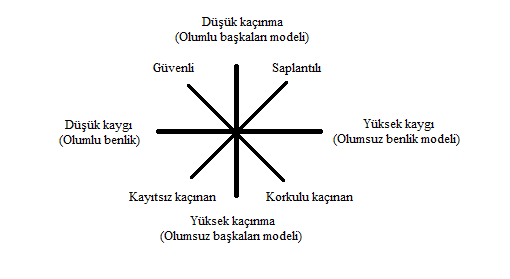
Attachment relationships form an important part of emotional and interpersonal development, influencing how individuals seek closeness, respond to separation, and understand the availability of significant others [46]. In adult romantic relationships, attachment processes can intersect with affection, intimacy, physical closeness, and sexual attraction [46], [47]. Brennan, Clark, and Shaver [48] described adult romantic attachment in terms of two broad dimensions: anxiety and avoidance. Attachment-related anxiety reflects concerns about rejection, abandonment, or inconsistent responsiveness, whereas avoidance reflects discomfort with dependence or emotional closeness. These dimensions also correspond to the self- and other-related representations discussed in attachment theory. Within the four-category model of Bartholomew and Horowitz [49], comparatively low anxiety and low avoidance are associated with secure attachment, while high anxiety and high avoidance are associated with fearful attachment. High anxiety combined with low avoidance characterises a preoccupied orientation; in contrast, low anxiety combined with high avoidance is associated with a dismissing orientation. Although the categories are useful for illustration, the present study examines anxiety and avoidance as continuous measured dimensions rather than assigning each participant to a discrete attachment category.
Figure 1 illustrates the four-category model of adult attachment in relation to the underlying anxiety and avoidance dimensions described by Bartholomew and Horowitz [49].
Simpson [50] investigated associations between attachment styles and romantic relationships, reporting that secure attachment was associated with relatively higher levels of trust, commitment, and relationship satisfaction than anxious or avoidant attachment. Frazier and colleagues [51] examined partner selection and found that individuals’ attachment orientations were related to preferences for particular partner characteristics. Chappell and Davis [52] further examined perceptions of romantic partners, suggesting that people may differ in the attractiveness they assign to secure, anxious, and avoidant attachment characteristics. Turkish theses and dissertations have also addressed attachment dimensions, relationship satisfaction, psychological adjustment, and related interpersonal variables [53]–[60]. Collectively, this literature underscores the importance of studying attachment as a dimension of young adults’ close relationships and provides a basis for investigating its potential association with sexual self-schemas and sexual compulsivity.
During the twenty-first century, changing cultural and clinical understandings of sexuality have stimulated renewed debate about the boundaries between ordinary variation in sexual desire and clinically significant problems with sexual self-regulation. Historically, terms such as “nymphomania” and “Don Juanism” were used to describe unusually intense sexual interests, but these labels reflect earlier social and medical perspectives and should not be treated as contemporary diagnoses [61], [62]. Historical writings attributed to Benjamin Rush in the early nineteenth century, Krafft-Ebing in the late nineteenth century, and later psychoanalytic discussions associated with Otto Fenichel illustrate the long-standing effort to describe repetitive or difficult-to-control sexual behaviour [63], [64]. Such accounts are important as historical context, although terminology has changed substantially and high sexual interest should not be equated with psychopathology. Contemporary research places greater emphasis on impaired control, persistence, adverse consequences, and the individual’s functioning rather than on sexual desire or frequency alone.
Young adults, regardless of whether they are currently involved in romantic or sexual relationships, may report difficulties regulating sexual urges or behaviours for different psychological and interpersonal reasons. The literature has described related patterns using overlapping terms such as sexual compulsivity [65]–[70], sexual addiction [71], [72], impulsive or compulsive sexual behaviour [73]–[75], paraphilia-related disorders [78], and hypersexuality [63], [76], [77]. These terms are not fully interchangeable, because they arise from different theoretical traditions and may refer to different operational definitions. Kafka [79] proposed a hypersexual-disorder construct involving recurrent sexual fantasies, urges, or behaviours associated with impaired control and clinically significant distress or impairment. The ICD-11 approach to compulsive sexual behaviour disorder similarly emphasises persistent failure to control repetitive sexual impulses or behaviours and their adverse consequences, while explicitly distinguishing such a problem from high sexual interest in itself [80]. Carnes [81] advanced a conceptual account of sexual addiction that has influenced subsequent clinical discussions. However, reported prevalence estimates cannot be inferred from research focusing on classical conditioning [82] or supportive communication within peer-support settings [83]; those sources do not substantiate the numerical prevalence claims originally attached to them. Comparative evidence remains difficult to synthesise because studies differ in case definitions, sampling methods, and measurement instruments. In addition, counts obtained from literature databases vary over time and cannot be used as stable estimates without a fully specified and reproducible search strategy. In the present article, sexual compulsivity refers to the dimension operationalised by the Sexual Compulsivity Scale and should not be interpreted as a confirmed clinical diagnosis for study participants.
The primary aim of this study was to investigate the direction and strength of the relationships among sexual self-schemas, attachment-related anxiety and avoidance in close relationships, and sexual compulsivity among young adults. The analysis also examined whether selected sexual self-schema and attachment dimensions statistically predicted sexual compulsivity scores when entered together into a multiple regression model. In accordance with this overall aim, the study addressed the following research questions:
The study adopted a correlational survey design, a quantitative, non-experimental approach used to examine the direction and strength of associations between two or more measured variables without manipulating them. This approach was selected because the research aimed to describe relationships among the measures rather than estimate causal effects [85].
The target population consisted of young adults aged 18–35, including individuals who were single, in a romantic relationship, or involved in a sexual partnership. Because the recruitment was conducted online, the obtained sample reflects respondents who encountered the questionnaire and chose to participate. Participants were recruited using an online questionnaire circulated through social media applications. This recruitment procedure is best characterised as non-probability, self-selected convenience sampling rather than simple random sampling, because no sampling frame or random-selection procedure was described. Probability sampling, by contrast, would require a defined sampling frame and a known selection mechanism [86]. The final analytical sample consisted of 483 individuals. An initial group of 503 respondents was reached through social media applications and completed a questionnaire prepared using Google Forms. Twenty participant responses were identified as outliers, and they were excluded from the analysis, leaving 483 participants for the study.
The version of the Sexual Self-Schema Scale (SSSS) used here was based on the measure described by Hill [87], building on earlier conceptual research concerning sexual self-schemas [5]. This seven-point Likert-type instrument contains 36 descriptive adjectives and was intended to measure participants’ perceptions of their sexual selves. The participants rate the adjectives on the scale based on how well they reflect their own sexuality, on a range from “does not describe me at all” to “describes me very well”. The scale was adapted into Turkish by Koçak and Fışıloğlu [88]. Items 8, 20, 27, 28, and 32 are reverse-coded. Items 1, 2, 5, 7, 11, 12, 18, 22, 26, 27, and 31 assess the “loving/compassionate” subscale; items 3, 4, 13, 14, 15, 17, 20, 21, 28, 30, 32, and 33 indicate the “sensual/stimulating” subscale, and items 6, 8, 9, 10, 16, 19, 23, 24, 25, and 29 indicate the “direct/outspoken” subscale. Since the subscales are positive, a higher total score indicates a more positive schema in the individual [88]. In their study, Koçak and Fışıloğlu [88] calculated the Cronbach’s alpha reliability coefficient for the overall scale as .86 and calculated the Cronbach’s alpha reliability coefficients for the subscales as .85, .82, and .77, respectively. In this study, the Cronbach’s alpha coefficient for the overall scale was calculated as .85, while the Cronbach’s alpha coefficients for the subscales were calculated as .86, .75, and .74, respectively.
The Experiences in Close Relationships Inventory (ECR) was originally developed by Brennan et al., [48]. The revised Experiences in Close Relationships questionnaire (ECR-R, also designated ECR-II) was developed by Fraley, Waller, and Brennan [89] using methods based on item response theory and consisted of a total of 36 items, including 18 avoidance items and 18 anxiety items. In this newly developed scale, 13 of the 18 avoidance items and 6 of the 18 anxiety items are shared with the ECR, while the remaining 17 items are different from the ECR [90].
The Turkish adaptation and psychometric evaluation of the ECR-II were conducted by Selçuk, Günaydın, Sümer, and Uysal [90]; the earlier study by Sümer and Güngör (1999) concerned different measures of adult attachment and should not be identified as the ECR-II adaptation. The scale follows a seven-point Likert response format. Scores for the designated anxiety and avoidance items are computed separately according to the relevant scoring instructions. The results in Table 2 are reported on a summed-score scale rather than as means between 1 and 7; the authors should confirm the scoring transformation, the reverse-coded items, and the item assignments for the precise Turkish version administered. It has been argued that individuals who have high scores on anxiety subscale tend to attach anxiously in close relationships, need closeness, and have difficulty with separation. Individuals obtaining higher avoidance scores tend to report greater discomfort with dependence, a stronger preference for interpersonal independence, and reduced willingness to seek closeness from attachment figures [90]. In this context, Cronbach’s alpha coefficients were calculated to examine the reliability of the avoidance and anxiety subscales in the inventory, and it was found that the internal consistency coefficients were high. The previously reported internal consistency coefficients were .90 for the avoidance subscale and .86 for the anxiety subscale. The test-retest reliability coefficients for the inventory are .81 for the avoidance subscale and .82 for the anxiety subscale. In the reliability analysis conducted as part of this study, the Cronbach’s Alpha internal consistency coefficients were calculated as .90 and .89.
Kalichman and colleagues developed related measures of sexual sensation seeking and sexual compulsivity during the 1990s [91]. The Sexual Compulsivity Scale (SCS) was subsequently examined for reliability and validity by Kalichman and Rompa [92] in samples relevant to sexual health and HIV-risk research. Importantly, the 1994 Kalichman et al. study primarily concerns the Sexual Sensation Seeking Scale and should not be described as the definitive 1994 development report for the SCS. Ballester-Arnal and colleagues [93] later examined an adapted version and its psychometric properties in a Spanish population. Akın and Çelik [94] adapted it into Turkish. The scale consists of 10 items and two subscales: “interference with sexual behaviour” and “failure to control sexual impulses”. Items 1, 2, 3, 4, and 10 are included in the “interference with sexual behaviour” subscale, while items 5, 6, 7, 8, and 9 are included in the “failure to control sexual impulses” subscale. There are no reverse-coded items on the scale. The internal consistency coefficient for the overall scale is .84, while the reported item–test correlations for the subscales ranged from .43 to .67 in the cited validation work [93].
The internal consistency reliability coefficient was found to be .89 for the Turkish version of the overall scale, .72 for the “interference with sexual behaviour” subscale, and .90 for the “failure to control sexual urges” subscale [94]. In this study, the internal consistency coefficient was found to be .87 for the overall scale, .70 for the “interference with sexual behaviour” subscale, and .84 for the “failure to control sexual impulses” subscale.
The collected data were analysed using SPSS version 29. Before conducting the primary statistical analyses, the distributions of numerical variables were assessed with the Kolmogorov–Smirnov and Shapiro–Wilk procedures, descriptive skewness and kurtosis statistics, histograms, and quantile–quantile (Q–Q) plots. The researchers also examined box plots to identify potential outlying observations. On the basis of this screening, 20 responses were excluded, leaving 483 responses for analysis; the particular exclusion criteria and the effect of those exclusions on the results should be confirmed from the original analysis records. The distributions of the analysed scale scores were then considered sufficiently close to normality for the planned parametric tests. Categorical variables were described using frequencies and percentages, whereas continuous scores were summarised using means and standard deviations. Pearson product–moment correlations were used to assess the direction, strength, and statistical significance of pairwise relationships among scores. Multiple linear regression was used to examine the combined statistical association of selected predictors with the total sexual compulsivity score. The statistical significance threshold was set at \(p < .05\) for all tests. Because the data were collected at a single time point, regression coefficients and associations were interpreted without making causal claims.
Table 2 presents the descriptive statistics, observed score ranges, distributional indices, and Cronbach’s alpha coefficients for the SSSS, ECR-II, and SCS. The total SSSS score had a mean of 136.27 and standard deviation of 20.06, while the ECR-II anxiety and avoidance dimensions had means of 64.33 (SD = 20.10) and 53.37 (SD = 18.31), respectively. The total SCS score had a mean of 14.68 (SD = 4.49). The reported Cronbach’s alpha values for the measures and their subscales ranged from .701 to .906, which met or exceeded the commonly used threshold of .70 for preliminary internal consistency assessment. Tabachnick and Fidell [84] describe the importance of examining distributional properties before applying parametric analyses. The observed skewness and kurtosis values ranged approximately between -1.5 and +1.5, which was taken as support for the authors’ planned approach; nevertheless, these indices alone do not establish multivariate normality or validate the assumptions of every subsequent analysis. The item-level coding and observed minimum of the five-item interference subscale require checking against the original scoring sheet before publication.
| \(\overline{\boldsymbol{x}}\)\(\pm\)SD | Observed minimum–maximum | Cronbach’s \(\alpha\) | Skewness | Kurtosis | |
|---|---|---|---|---|---|
| SSSS | 136.27\(\pm\)20.06 | 52-183 | 0.855 | -0.508 | 0.975 |
| Loving/Compassionate | 50.74\(\pm\)9.36 | 12-66 | 0.866 | -0.861 | 1.169 |
| Sensual/Stimulating | 45.04\(\pm\)9.36 | 12-68 | 0.750 | -0.404 | 0.446 |
| Direct/Outspoken | 40.48\(\pm\)8.11 | 14-60 | 0.744 | -0.067 | -0.271 |
| ECR-II Anxiety | 64.33\(\pm\)20.10 | 23-121 | 0.906 | 0.250 | -0.505 |
| ECR-II Avoidance | 53.37\(\pm\)18.31 | 18-125 | 0.891 | 0.233 | -0.293 |
| SCS | 14.68\(\pm\)4.49 | 10-31 | 0.873 | 1.276 | 1.107 |
| Interference with sexual behaviour | 6.10\(\pm\)1.86 | 4-13 | 0.701 | 0.989 | 0.807 |
| Failure to control sexual impulses | 8.58\(\pm\)3.07 | 6-19 | 0.841 | 1.380 | 1.254 |
Pearson correlation analysis was run to identify the correlation between subscales (loving/compassionate, sensual/stimulating, and direct/outspoken) of the SSSS and subscales (avoidance and anxiety) of the ECR-II. Table 3 shows the results of this analysis.
| 1 | 1.1 | 1.2 | 1.3 | 2.1 | 2.2 | ||
|---|---|---|---|---|---|---|---|
| 1. SSSS | \(r\) | 1 | .673 | .817 | .753 | -.179 | -.476 |
| \(p\) | \(<\).001 | \(<\).001 | \(<\).001 | \(<\).001 | \(<\).001 | ||
| 1.1 Loving/Compassionate | \(r\) | 1 | .273 | .196 | -.009 | -.375 | |
| \(p\) | \(<\).001 | \(<\).001 | .839 | \(<\).001 | |||
| 1.2. Sensual/Stimulating | \(r\) | 1 | .552 | -.054 | -.264 | ||
| \(p\) | \(<\).001 | .234 | \(<\).001 | ||||
| 1.3. Direct/Outspoken | \(r\) | 1 | -.369 | -.441 | |||
| \(p\) | \(<\).001 | \(<\).001 | |||||
| ECR-II 2.1.Anxiety | \(r\) | 1 | .432 | ||||
| \(p\) | \(<\).001 | ||||||
| ECR-II 2.2. Avoidance | \(r\) | 1 | |||||
| \(p\) | |||||||
Pearson correlation analysis; p\(<\)0.05
Table 3 reports Pearson correlations among the total SSSS score, its loving/compassionate, sensual/stimulating, and direct/outspoken dimensions, and the anxiety and avoidance dimensions of the ECR-II. The total SSSS score was weakly and negatively correlated with attachment-related anxiety (\(r = -.179\), \(p < .001\)) and moderately and negatively correlated with attachment-related avoidance (\(r = -.476\), \(p < .001\)). The loving/compassionate dimension was negatively correlated with avoidance (\(r = -.375\), \(p < .001\)), and the sensual/stimulating dimension was also negatively correlated with avoidance (\(r = -.264\), \(p < .001\)). Similarly, the direct/outspoken dimension showed negative associations with both anxiety (\(r = -.369\), \(p < .001\)) and avoidance (\(r = -.441\), \(p < .001\)). These results indicate that more positive sexual self-perceptions and higher scores on selected sexual self-schema dimensions tended to accompany lower avoidance scores, with some dimensions also associated with lower anxiety. The correlations do not indicate that any one dimension changes or causes another dimension.
Pearson correlation analysis was applied to identify the correlation between subscales (loving/compassionate, sensual/stimulating, and direct/outspoken) of the SSSS and subscales (interference with sexual behaviour and failure to control sexual impulses) of the SCS. Table 4 shows the results of this analysis.
| 1 | 1.1 | 1.2 | 1.3 | 2 | 2.1 | 2.2 | ||
|---|---|---|---|---|---|---|---|---|
| 1. SSSS | \(r\) | 1 | .673 | .817 | .753 | .146 | .161 | .116 |
| \(p\) | \(<\).001 | \(<\).001 | \(<\).001 | \(<\).001 | \(<\).001 | .011 | ||
| 1.1. Loving/Compassionate | \(r\) | 1 | .273 | .196 | .045 | .010 | .059 | |
| \(p\) | \(<\).001 | \(<\).001 | .325 | .820 | .193 | |||
| 1.2. Sensual/stimulating | \(r\) | 1 | .552 | .232 | .273 | .174 | ||
| \(p\) | \(<\).001 | \(<\).001 | \(<\).001 | \(<\).001 | ||||
| 1.3. Direct/Outspoken | \(r\) | 1 | .042 | .073 | .017 | |||
| \(p\) | .358 | .111 | .705 | |||||
| 2. SCS | \(r\) | 1 | .848 | .947 | ||||
| \(p\) | \(<\).001 | \(<\).001 | ||||||
| 2.1. Interference with sexual behaviour | \(r\) | 1 | .635 | |||||
| \(p\) | \(<\).001 | |||||||
| 2.2. Failure to control sexual impulses | \(r\) | 1 | ||||||
| \(p\) | ||||||||
Pearson correlation analysis; p\(<\)0.05
Table 4 shows associations between the sexual self-schema dimensions and the SCS total and subscale scores. A small positive correlation was observed between total SSSS and total SCS scores (\(r = .146\), \(p < .001\)), as well as between total SSSS scores and the SCS interference-with-sexual-behaviour dimension (\(r = .161\), \(p < .001\)). Neither the loving/compassionate dimension nor the direct/outspoken dimension showed statistically significant relationships with the total SCS score or its subscales (\(p > .05\)). The sensual/stimulating dimension, by contrast, was positively associated with the total SCS score (\(r = .232\), \(p < .001\)), interference with sexual behaviour (\(r = .273\), \(p < .001\)), and failure to control sexual impulses (\(r = .174\), \(p < .001\)). These findings indicate relatively small associations between the study’s measures, and higher sexual interest or a positive sexual self-schema should not be interpreted in itself as evidence of a clinical disorder.
Pearson correlation analysis was applied to determine the correlation between subscales (avoidance and anxiety) of the ECR-II and subscales (interference with sexual behaviour and failure to control sexual impulses) of the SCS. Table 5 shows the results of this analysis.
The results in Table 5 show that attachment-related anxiety was positively but weakly correlated with total SCS scores (\(r = .228\), \(p < .001\)), interference with sexual behaviour (\(r = .177\), \(p < .001\)), and failure to control sexual impulses (\(r = .226\), \(p < .001\)). In contrast, the correlations between attachment-related avoidance and the total SCS score and its subscales were small and statistically nonsignificant (all \(p > .05\)). Thus, the observed relationship with sexual compulsivity was more evident for the anxiety dimension than for the avoidance dimension. This finding describes a pattern of association in the sample and does not demonstrate that attachment-related anxiety causes compulsive sexual behaviour.
| 1.1 | 1.2 | 2 | 2.1 | 2.2 | ||
|---|---|---|---|---|---|---|
| ECR-II 1.1. Anxiety | \(r\) | 1 | .432 | .228 | .177 | .226 |
| \(p\) | \(<\).001 | \(<\).001 | \(<\).001 | \(<\).001 | ||
| ECR-II 1.2. Avoidance | \(r\) | 1 | -.023 | -.027 | -.017 | |
| \(p\) | .616 | .556 | .707 | |||
| 2. SCS | \(r\) | 1 | .848 | .947 | ||
| \(p\) | \(<\).001 | \(<\).001 | ||||
| 2.1. Interference with sexual behaviour | \(r\) | 1 | .635 | |||
| \(p\) | \(<\).001 | |||||
| 2.2. Failure to control sexual impulses | \(r\) | 1 | ||||
| \(p\) | ||||||
Pearson correlation analysis; p\(<\)0.05
A multiple regression analysis was conducted to determine whether the “sensual/stimulating” subscale of the SSSS and the “anxiety” subscale of the ECR-II significantly predicted sexual compulsions among young adults. Its results were presented in Table 6.
| Unstandardised \(B\) | SE of \(B\) | Standardised \(\beta\) | \(t\) | p-value | |
|---|---|---|---|---|---|
| (Constant) | 5.914 | 1.161 | 5.094 | \(<\).001 | |
| 1.a. Sensual/Stimulating | .118 | .021 | .245 | 5.693 | \(<\).001 |
| 2.a. Anxiety | .054 | .010 | .241 | 5.607 | \(<\).001 |
| R2 | Adj.R2 | F | \(p\) | ||
| .112 | .108 | 30.282 | \(<\).001 |
Dependent variable: total Sexual Compulsivity Scale (SCS) score. The original numerical estimates were retained.
As reported in Table 6, the multiple linear regression model including the SSSS sensual/stimulating subscale and the ECR-II attachment-related anxiety subscale was statistically significant (\(F = 30.282\), \(p < .001\)). The sensual/stimulating score was a positive predictor of the total SCS score (unstandardised \(B = .118\), standardised \(\beta = .245\), \(t = 5.693\), \(p < .001\)). Attachment-related anxiety was also a positive predictor (unstandardised \(B = .054\), standardised \(\beta = .241\), \(t = 5.607\), \(p < .001\)). The model accounted for 11.2% of the variance in total SCS scores (\(R^2 = .112\)), with an adjusted explained proportion of 10.8% (adjusted \(R^2 = .108\)). The coefficients indicate distinct statistical contributions within this particular model and should not be interpreted as evidence that either predictor directly causes changes in sexual compulsivity.
The first research question addressed associations between sexual self-schema dimensions and attachment-related anxiety and avoidance. The results showed a weak negative correlation between the total SSSS score and attachment-related anxiety, together with a moderate negative correlation between total SSSS and avoidance. The loving/compassionate and sensual/stimulating dimensions were each inversely correlated with avoidance, while the direct/outspoken dimension was negatively related to both attachment-related anxiety and avoidance. Taken together, these findings indicate that respondents with more favourable sexual self-perceptions also tended to report relatively less discomfort with closeness or interpersonal dependence. More specifically, higher loving/compassionate scores were associated with lower avoidance scores, whereas higher sensual/stimulating scores were also related to lower avoidance. The direct/outspoken dimension showed comparatively strong negative associations with both attachment-related dimensions. In a Turkish postgraduate study, Kestir [33] reported no significant associations between attachment-related anxiety and the loving/compassionate or sensual/arousal dimensions, but identified a negative association between anxiety and direct/outspoken scores. The same study reported negative relationships between avoidant attachment and sexual self-schema dimensions. Prior attachment research suggests that attachment-related anxiety may be connected with concerns about rejection, fear of abandonment, and negative evaluations of the self [48], [95]. Thus, the present results are compatible with theoretical expectations that sexual self-perception and attachment experiences may be interrelated. Nevertheless, the reported correlations are not evidence that an individual’s sexual self-schema determines attachment security, or that improving the former would necessarily decrease anxiety or avoidance. The interpretation is best framed in terms of co-occurring psychological characteristics within the present sample. Future research could examine these relationships alongside romantic relationship satisfaction, attachment history, concerns about abandonment, expectations of partner responsiveness, and the broader context of intimate experiences.
The second research question examined sexual self-schema dimensions in relation to sexual compulsivity. Total SSSS scores were weakly and positively associated with the total SCS score and with the interference-with-sexual-behaviour subscale. By contrast, the loving/compassionate and direct/outspoken dimensions were not significantly correlated with any of the SCS outcomes in this sample. The sensual/stimulating dimension showed small positive relationships with the total SCS score and both the interference and failure-to-control subscales. These findings resemble results discussed by Topçu [37], whose thesis reported positive associations between the sensual/stimulating dimension and components of sexual compulsivity. Individuals who describe themselves as sensual, passionate, or receptive to sexual stimulation may report greater involvement with sexual thoughts or behaviour; however, these characteristics do not necessarily imply impaired control, distress, or a clinical disorder. The observed correlations were relatively small, and the measures capture distinct psychological constructs. It is therefore important not to equate a positive sexual self-schema or the frequency of sexual interests with compulsive sexual behaviour. Further research could investigate whether variations in self-perceived sensuality interact with emotion regulation, relationship satisfaction, unmet expectations, or broader aspects of psychological well-being to explain the reported statistical pattern.
The third research question examined attachment-related anxiety and avoidance in relation to sexual compulsivity. The anxiety dimension showed a weak positive association with the total SCS score and its component dimensions, while avoidance was not significantly associated with the SCS outcomes. Some international studies have reported links between attachment insecurity and compulsive sexual behaviour, although the relative importance of anxious and avoidant attachment has differed across samples, clinical contexts, and measurement approaches [96]–[103]. Thus, the results are broadly compatible with research emphasising difficulties involving attachment-related anxiety, but do not establish a uniform pattern across all types of insecure attachment. Leedes [104] reported elevated insecure attachment patterns in a small sample of individuals describing sexual compulsions, including a comparatively high proportion characterised by avoidance. Corley and Kort [105] similarly examined attachment features in couples affected by problematic sexual behaviour, reporting differences in attachment patterns between individuals and their partners. Giugliano [106] found that some men identifying as sexually addicted described interpersonal connection or the desire for attachment as a meaning attached to sexual behaviour. Zapf, Greiner, and Carroll [103] also explored the co-occurrence of attachment anxiety, avoidance, and compulsive sexual behaviour. Other theoretical accounts propose that some individuals may use sexual behaviour to regulate difficult emotions, seek closeness, or respond to perceived relationship threats [101], [107]–[109]. These explanations remain hypotheses rather than mechanisms demonstrated by the present cross-sectional data. Moreover, an individual’s sexual behaviour cannot be classified as compulsive solely because they experience attachment insecurity, sexual desire, or a preference for noncommitted relationships. Future work should examine relationship context, individual distress, impaired control, and emotional regulation with appropriately validated instruments.
The fourth research question addressed the extent to which sensual/stimulating sexual self-schema scores and attachment-related anxiety jointly predicted total sexual compulsivity scores. Both dimensions were statistically significant positive predictors when included in the same multiple regression model. Individuals reporting stronger sensual/stimulating self-descriptions tended to have higher total SCS scores, and those reporting greater attachment-related anxiety also tended to obtain higher SCS scores. These statistical relationships remained evident after accounting for the other predictor, with similar standardised beta coefficients for sensual/stimulating (\(\beta = .245\)) and anxiety (\(\beta = .241\)). Together, the predictors explained 11.2% of the observed variance in total SCS scores, or 10.8% after adjustment for model complexity. Consequently, most of the variance remained unexplained by the two variables considered here. Existing theory suggests that perceived sensuality, difficulties with attachment reassurance, and the use of sexual behaviour to regulate distress may be connected for some individuals. However, the present design cannot determine whether attachment-related anxiety precedes compulsivity, whether problematic sexual behaviour affects attachment experiences, or whether another factor contributes to both. A review of the cited literature did not identify a directly comparable model including precisely these two predictor dimensions in a young-adult sample. The findings therefore provide a basis for subsequent longitudinal, multi-informant, and clinically sensitive investigations rather than a demonstration of a causal explanatory pathway.
Several methodological considerations are important when interpreting these results. First, the data were obtained through an online questionnaire distributed on social media, and participants therefore entered the sample through self-selection rather than a documented random sampling procedure. The findings should accordingly be interpreted in relation to this particular group of respondents and should not automatically be generalised to all young adults in Türkiye. Moreover, the cross-sectional design establishes that the measured variables were associated at the time of data collection; it does not establish which variable precedes another, whether relationships persist over time, or whether the observed associations reflect unmeasured contextual influences. The use of self-report instruments can also introduce response tendencies related to social desirability, recall, privacy concerns, or variation in the meanings attached to sexual terminology. Such possibilities are especially relevant for socially sensitive topics and may differ across participant groups.
Second, the description of scale scoring and exclusions should be reconciled with the original questionnaire and statistical output. The paper identifies 36 adjectives in the SSSS but explicitly allocates fewer than 36 item numbers across its three reported subscales. The authors should confirm whether the remaining descriptors are unscored or otherwise handled under the validated scoring instructions. In addition, the reported observed minimum for a five-item SCS subscale requires verification against the response categories and any recoding steps, because the displayed range would not arise from a simple sum of five items each scored from one to four. The precise item assignments for the ECR-II should likewise be confirmed against the administered Turkish instrument. Finally, the reasons for classifying 20 responses as outliers, the characteristics of excluded responses, and the implications for robustness should be documented from the original records. These are data-verification questions rather than editorial corrections and should be resolved by the research team before publication.
Third, the small bivariate relationships and limited proportion of variance explained by the regression model should be interpreted in proportion to their observed magnitudes. Even statistically significant predictors may account for only a modest fraction of the variability in a psychological measure. The regression model in this study explained approximately eleven percent of the variance, leaving substantial room for other individual, relational, and contextual factors that were not measured or analysed. Future studies could use larger and more diverse samples, confirmatory measurement analyses, longitudinal follow-up, and more detailed assessments of relationship context and emotion regulation. These extensions would help distinguish associations between sexual self-perception and healthy sexual interests from clinically significant difficulties with behavioural control, while maintaining an appropriately non-stigmatising approach to individual differences.
The findings of the study can be summarised in relation to the four research questions. These summaries describe the direction, relative magnitude, and statistical significance of observed associations among scale scores; they should not be interpreted as statements about causation, diagnosis, or the inevitability of any particular sexual behaviour:
On the basis of the study’s findings and limitations, the following recommendations are offered for future investigations and for researchers interested in sexual self-schemas, adult attachment, and sexual compulsivity. These recommendations are intended to improve methodological breadth, cultural sensitivity, and the interpretation of results across different populations:
All authors contributed equally to the conception, development, analysis, and preparation of this manuscript. All authors have carefully read and approved the final version of the manuscript for publication.
The authors declare no competing interests.
The authors received no specific financial support, research grant, or external funding for the research, authorship, or publication of this manuscript.
The study analysed responses from a questionnaire administered to young adults. Individual-level response data are not included in the manuscript, and any request to access de-identified data should be directed to the corresponding author, subject to documented participant consent, applicable institutional approval, and confidentiality protections.