
I. Introduction
Arts and crafts have never existed in isolation. Since ancient times, ornaments, material processing techniques, color systems and symbolic motifs have spread along with trade routes, population migrations, religious contacts and diplomatic ties. That is why the history of textiles, ceramics, metal-plastics, carvings or jewelry art is at the same time a history of intercultural dialogue. Patterns could be born in one region, transformed in another, and acquired a new meaning in a third. Cultural studies do not view crafts as “closed traditions” but as living systems that constantly interact with the outside world [1], [2].
In the XXI century, the intensity of these processes has increased many times. Globalization, the rapid growth of e-commerce, international tourism, social media, and digital platforms have all actually reformatted the rules for arts and crafts. It’s not just that craftsmen make or present their work differently. The very mechanism of how goods “circulate” in the world is changing, and at the same time – how, by whom and in what contexts they begin to be consumed. Therefore, nowadays, a master from a small town may well enter the global market, and local equipment can become recognizable on the other side of the planet in a matter of days. This is well confirmed by the figures: the United Nations Educational, Scientific and Cultural Organization (further UNESCO) classifies the cultural and creative industries as a segment that forms approximately 3.1% of world gross domestic product (further GDP) and provides millions of jobs. That is, there is not only a cultural component, but also the sector has a very tangible economic dimension [3].
At the same time, the openness of markets creates not only opportunities, but also risks. Traditional crafts face factory copying of manual labor, simplification of ornamental systems for mass demand, loss of local meanings and displacement of the younger generation from craft professions. Often, deeply symbolic cultural items turn into a mass souvenir product, losing touch with their original social and ritual context. Globalization acts contradictorily: on the one hand, it popularizes local cultures, on the other hand, it weakens their internal integrity and authenticity [4], [5].
This issue is especially relevant for Ukraine. Ukrainian embroidery, weaving, ceramics, pysanka painting, artistic processing of wood and metal are not only elements of material culture, but also important carriers of historical memory and regional identity. Today, these traditions are increasingly entering the international space through fashion, modern design, exhibitions, digital platforms and diaspora activities. However, an important question arises: how to integrate into the global market without losing authenticity and reducing complex cultural traditions to a superficial decorative cliché.
Arts and crafts are an interdisciplinary object of study. It is located at the intersection of cultural studies, art history, cultural economics, anthropology and heritage studies. That is why it allows us to analyze broader processes: how societies respond to global challenges, how they rethink tradition, and how they develop new forms of cultural resilience.
This dynamic is well explained by the concept of glocalization [6]: global processes are not just imposed on the local environment, but interact with it, adapt and change under its influence.
The aim of this study is to identify the main forms of cross-cultural influence in arts and crafts, to analyze global challenges for traditional crafts and to outline local response strategies. Particular attention is paid to the experience of different countries, in particular Ukraine. The central question remains how the combination of tradition and innovation can become a resource for sustainable cultural development, and not a threat to it.
II. Literature Review
Modern scientific discourse increasingly considers decorative and applied arts not as a peripheral segment of culture, but as an important field of interaction between heritage, economy and social transformations. Note that early theories of globalization focused mainly on the processes of cultural standardization. And modern research demonstrates more complex dynamics. The researchers analyze how local cultural practices undergo transformation, changing forms of representation, distribution channels, and social functions. These processes are considered in the context of the concepts of glocalization and cultural hybridity, as well as in reports from international organizations highlighting the growing role of creative industries in the global economy [3], [7].
In modern research, decorative and applied arts in most cases are considered within the framework of approaches to cultural mobility and circulation of cultural forms. At the same time, material practices, techniques and ornamental systems are constantly moving between different social and geographical contexts. Digital media play an important role in this process. Here, they provide masters with access to global visual and technological resources. They will also contribute to the adaptation and transformation of traditional crafts. Thus, new hybrid practices are formed, in which local material traditions are combined with global aesthetic and market trends. Relevant practices are addressed in research on the creative economy and digital craft [8].
A separate area of modern research concerns the economics of crafts, where attention is growing to the role of the handmade sector in the development of local economies, self-employment and inclusive entrepreneurship models. United Nations Conference on Trade and Development (further UNCTAD) reports highlight that creative industries in developing countries are increasingly based on artisanal production as an important element of economic inclusion and local development [9], [10]. In turn, the OECD & ICOM report [11] emphasizes the importance of cultural and creative practices for the development of territories, in particular through cultural tourism, museum initiatives and local cultural routes that contribute to the economic activation of small towns and regions.
In the wake of the coronavirus disease 2019 (further COVID-19) pandemic, scientific literature and international reports have recorded an increase in attention to the role of creative industries, local production, and cultural practices in socio-economic recovery processes. In particular, UNESCO and UNCTAD reports highlight that the COVID-19 crisis has actualized the resilience of the cultural sector and the vulnerability of global value chains, which has influenced the rethinking of the role of local production practices [3], [9]. In this context, arts and crafts are increasingly seen as a component of the creative economy and an alternative form of cultural production, opposed to mass standardization.
An important area of modern research is the analysis of digital platforms as a new infrastructure for the creative economy. Digital platforms such as Etsy, Shopify and Instagram are creating global distribution channels for craft products. They make it much easier to access the market, but at the same time radically change the conditions of competition. The literature from platform studies notes that these platforms not only open up new opportunities for craftsmen, but also give rise to new forms of structural inequality in who exactly will be noticed by buyers [12]. In this context, researchers talk about the process of platformization of cultural production – a situation where creative practices are increasingly dependent on digital infrastructures and algorithmic selection logics.
The problem of authenticity in modern heritage studies has undergone a significant rethinking. Previously, authenticity was mainly perceived as the exact preservation of traditional forms and techniques. In modern humanities, another understanding dominates: authenticity is considered a socially constructed and interpretive category. In this context, heritage gains importance through contemporary practices of its use, interpretation and representation [4], [5]. Current research on heritage perception experiences emphasizes that authenticity is multidimensional and depends on individual experiences, emotional engagement, and the context of interaction with a cultural object [13].
In the literature on cultural sustainability, it is emphasized that crafts go far beyond material production. They are important carriers of cultural continuity. In doing so, they contribute to the intergenerational transmission of knowledge, as well as the preservation of social practices and the maintenance of cultural identity. Within the framework of approaches to sustainable development, culture is seen as a system-forming factor of social cohesion and local sustainability [14]. In turn, the UNESCO Convention for the Safeguarding of the Intangible Cultural Heritage emphasizes the role of crafts as part of living traditions, including knowledge, skills, rituals and social practices that are passed down between generations [15]. The loss of such practices often leads to a weakening of cultural continuity and social community connectivity.
New studies and international reports show that in the context of global crises and growing geopolitical instability, culture is increasingly seen as an instrument of social and cultural resilience. In particular, UNESCO and UNCTAD emphasize the role of cultural and creative practices in the processes of recovery and support of local communities in crisis contexts [3], [9]. In the case of the countries of Central and Eastern Europe, especially Ukraine, traditional crafts – such as embroidery, ceramics and other forms of arts and crafts – acquire additional importance as elements of cultural presence and symbolic representation at the international level, which is recorded in reports of international organizations and studies of cultural policy. At the same time, there is still a lack of systematic English-language studies in the scientific literature on the transformation of crafts in the context of war and post-crisis recovery in Ukraine, which forms a current research gap.
Despite the significant development of research in the field of decorative and applied arts, modern literature is characterized by a number of conceptual and methodological limitations. Firstly, a significant part of the scientific works considers the cultural and economic aspects of crafts separately, which leads to fragmentation of analytical approaches and the lack of integrated models. Secondly, there are not enough empirical studies that would systematically analyze the decision-making processes of the masters themselves regarding the adaptation and modernization of traditional practices in the modern cultural and market environment. Thirdly, the number of comparative studies covering different regions of the world, including Europe, Asia and the countries of the global South, remains limited. Taken together, this emphasizes the need for an interdisciplinary approach, which allows us to consider decorative and applied arts as a dynamic system of cultural adaptation and transformation.
III. Materials and Methods
The empirical basis of the study is UNCTADstat statistics, which provide a general picture of international trade in creative goods, in particular the Manufacturing of crafts and design goods category for the period 2002–2024. Key indicators of exports and imports in current prices (million United States dollars, further USD) for the main regions of the world, as well as individual countries (China, Ukraine) were used. These data allow you to assess the long-term dynamics of the global trade in artisan and designer products.
The study is of a mixed nature and combines quantitative and qualitative approaches. The quantitative part is based on trend analysis and correlation analysis (Pearson coefficient), which allows you to identify the degree of synchronization between regional flows of exports and imports. The qualitative part is represented by case studies, which are used to interpret statistical patterns in the context of cross-cultural processes.
A comparative approach between regions and countries was applied separately, which made it possible to see how differently they are included in global creative chains. Correlation indicators in this case are considered not as causal relationships, but as a reflection of how synchronously economic processes change in different regions.
The entire interpretation of the results is based on a combination of several approaches, namely the theories of globalization, glocalization, creative economy, and platformization. This makes it possible to consider decorative and applied arts not only as an economic sector, but also as part of broader cultural processes in the world.
At the same time, it is worth considering certain restrictions. The data used are generalized and do not reflect the informal sector of crafts or small-scale local production. Despite this, we can consider that they are sufficient to see the main trends in the development of global trade in creative goods and understand the general logic of its changes.
IV. Results
Arts and crafts today face a number of serious challenges caused by globalization. The most notable of them are the standardization of products, the displacement of manual labor by mass production, the loss of local cultural meanings and a strong dependence on changing global trends. Digitalization has become an equally important challenge. It significantly changes the way handicrafts are created and sold.
At the same time, craftsmen find their own answers to these processes. They rethink traditional techniques, adapt them to modern demands and boldly combine authentic crafts with new design solutions. Digital platforms play an important role, allowing you to enter global markets without intermediaries. In different regions of the world, crafts are becoming a tool for preserving cultural identity and at the same time part of the creative economy.
Thus, global challenges do not destroy arts and crafts, but stimulate their transformation and the emergence of new forms of local cultural adaptation. Table 1 summarizes the main types of decorative and applied arts, as well as analyzes their key characteristics. Typical materials from which they are made, the main global challenges that arise in the process of their development, and the nature of local adaptation strategies are shown separately. Such systematization allows you to compare different craft practices and identify common patterns of their transformation in the context of globalization.
From Table 1, different types of arts and crafts respond differently to the processes of globalization, but they all undergo similar structural changes. The most universal challenges are the standardization of products, increased competition from mass production, and the gradual commercialization of cultural forms. At the same time, local responses have a common logic. It is reflected in the revival of traditions, the rethinking of craft techniques in modern design, and the active use of digital platforms to enter global markets. This indicates the formation of a glocal model of development, in which local cultural codes do not disappear, but are integrated into the global creative economy.
| Art form | Short description | Basic materials |
Global challenges | Local Responses |
|---|---|---|---|---|
| Textiles and embroidery |
Handmade fabrics, creating clothes and ornaments |
Linen, cotton, wool |
Mass factory production, design unification |
Revival of ethnic ornaments, fashion design based on traditions |
| Ceramics | Clay crafts with artistic decoration |
Clay, glaze | Competition with industrial ceramics |
Author’s ceramics, local schools of pottery |
| Wood carving | Decorative wood processing |
Wood | Displacement by cheap materials (plastic, MDF) |
Craft workshops, ethnic interior design |
| Jewelry art | Creating handmade jewelry |
Metals, stones | Mass production of jewelry, global brands |
Author’s collections, microbrands, ethnic motifs |
| Weaving and carpet weaving |
Creation of woven products and carpets |
Wool, natural fibers |
Cheap imports, reduced demand |
Exclusive products, cultural tourism, cooperatives |
| Decorative painting | Symbolic decoration of objects | Paints, natural dyes |
Loss of traditions in popular culture |
Craft schools, cultural education, digital promotion |
Source: developed by the authors based on synthesis of academic literature on decorative and applied arts, cultural heritage studies, and creative industries, including UNESCO reports on intangible cultural heritage [3], [15], UNCTAD [9], [10], and key theoretical works on cultural globalization and craft studies [1], [2], [4], [5], [8].
In the current conditions of the global economy, arts and crafts have long gone beyond local traditions and have become part of a complex international system for the exchange of cultural and economic values. That is why the analysis of their development cannot be limited only to individual countries or regions – it is important to consider general global trends, trade dynamics and interconnections between different parts of the world. This section presents the results of a quantitative analysis of international trade in creative goods, which allow you to see how the role of crafts and design in the global context is changing and how new centers of cultural and economic interaction are formed.
The basis of the empirical study is the indicator “Manufacturing of crafts and design goods” in the UNCTADstat database, which belongs to the category of creative goods and covers products of a craft and design nature, which are produced in both traditional and modern forms of decorative and applied arts. This group includes handicrafts, textile crafts, interior and art design items, as well as other tangible products that combine functionality and aesthetic value. Within the framework of the international statistical classification UNCTAD [16], these goods are singled out as a component of the creative economy and are coded on the basis of a harmonized system of product nomenclature (Harmonized System-based classification for creative goods, further HS-based classification for creative goods), which ensures comparability of data between countries.
The selected indicator is used to analyze the international trade in handicraft and designer products. In particular, this covers the context of cross-cultural processes in arts and crafts. Both export and import flows of this category of goods are considered separately. Such specification allows us to trace not only the production and cultural activity of exporting countries, but also the structure of global demand for handicraft and designer products. This approach makes it possible to assess the degree of integration of local handicraft practices into world markets and identify directions of cultural transformation through international trade.
Data for 2002–2024 demonstrate stable long-term positive dynamics of world trade in creative goods (handicrafts and designer products), despite the impact of global crises (Figure 1). In general, exports and imports have almost tripled, which indicates the strengthening of the integration of handicraft products into world markets.
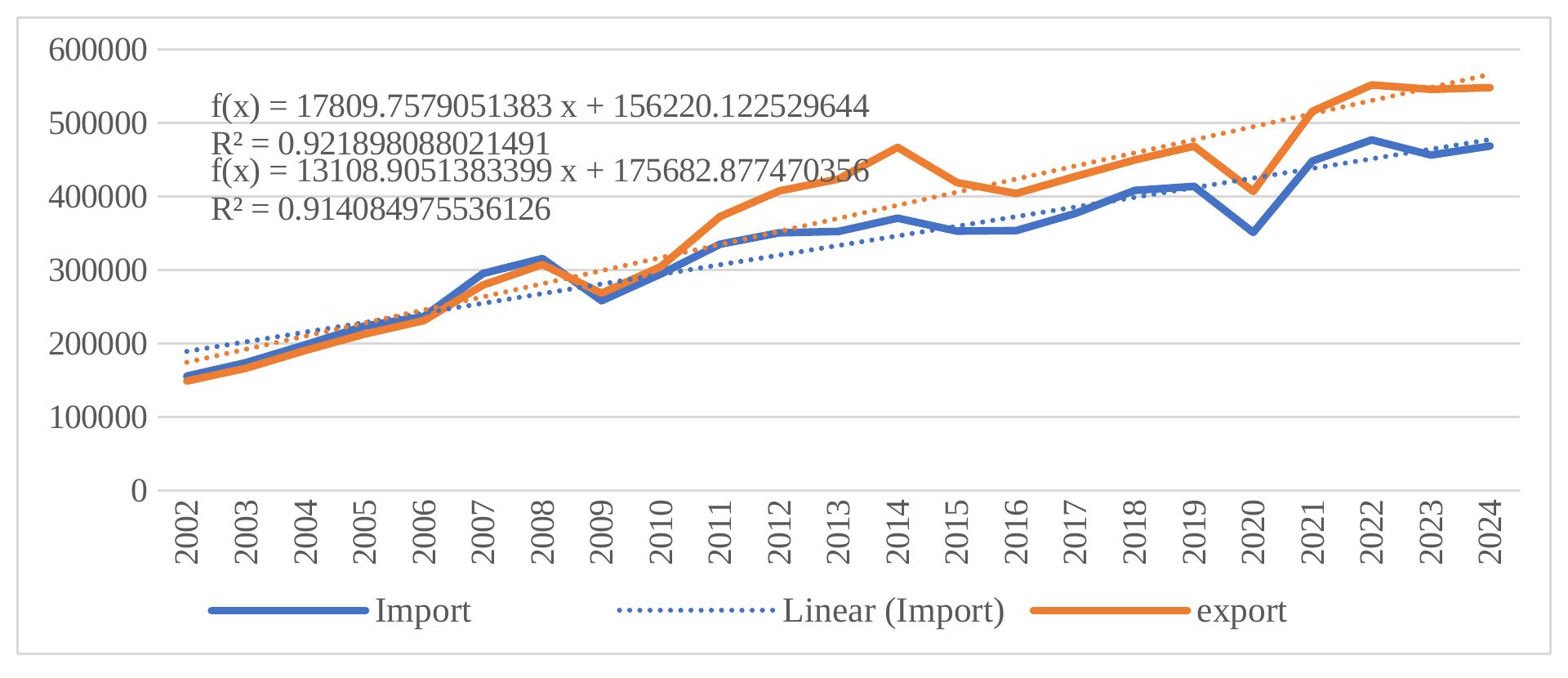
In 2002–2007, there is a steady growth of both indicators (exports from 148.6 to 279.1 billion USD; imports from 155.1 to 294.8 billion USD). In 2008, there was a continuation of growth, but with a further transition to a crisis correction in 2009 associated with the global financial crisis. In 2010–2014, there is a rapid recovery and accelerated expansion of the market, especially exports, which reach 466.4 billion USD. In 2015–2019, there is a relative stabilization with reaching the pre-pandemic maximum in 2019 (exports of $468.0 billion). In 2020, the COVID-19 pandemic caused a temporary reduction in trading volumes, but since 2021, the market has been showing a rapid recovery and renewal of historical highs. In 2024, exports amount to USD 547.7 billion, imports – USD 468.4 billion.
Linear trend analysis confirms the presence of stable positive dynamics. High values of the coefficients of determination (export: R2 = 0.92, imports: R2 = 0.91) indicate the strong explanatory power of the models and the stable long-term nature of the growth of global trade in creative goods.
Within the framework of the analysis, a comparison of dynamics and interconnections between regions of the world (according to the UNCTADstat breakdown) in international flows of creative goods (import and export) is considered, which allows us to identify the degree of their synchronization in the global system of the creative economy. Let’s first analyze the dynamics by regions of the world.
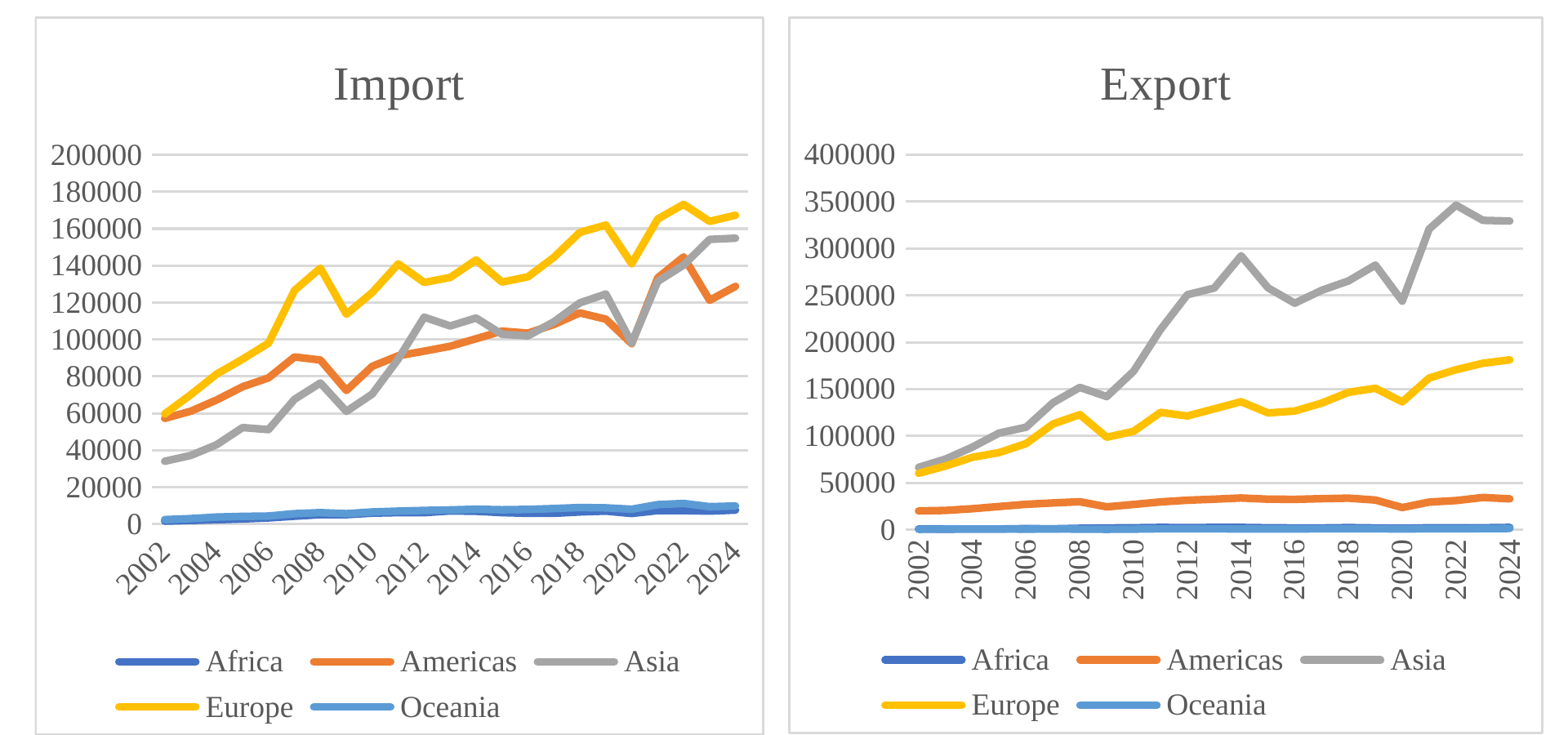
The data presented in Figure 2 reflect the dynamics of global flows of creative goods (handicrafts and designer products) for 2002–2024 in a regional context, which allows you to assess structural changes in global trade.
In general, both exports and imports show a steady long-term upward trend with short-term crisis fluctuations (2008–2009 and 2020). Europe and Asia are key centers of global trade. They consistently form the largest volumes of both imports and exports. Asia is showing particularly rapid export growth. This reflects its role as a major manufacturing hub for creative products. Europe, in turn, maintains a high share in both production and consumption.
North and South America occupy an intermediate position with relatively stable dynamics. Oceania is characterized by the smallest but consistent trade volumes. Africa remains the least represented region in both exports and imports, although it shows gradual growth throughout the period.
After the pandemic recession of 2020, there is a rapid recovery and reaching new highs in 2021–2024, which indicates the high resilience of the creative goods market to global shocks and its further integration.
| Regions | Africa | Americas | Asia | Europe | Oceania |
|---|---|---|---|---|---|
| Africa | 1 | ||||
| Americas | 0.859** | 1 | |||
| Asia | 0.915** | 0.940** | 1 | ||
| Europe | 0.946** | 0.930** | 0.929** | 1 | |
| Oceania | 0.941** | 0.970** | 0.959** | 0.966** | 1 |
Source: calculated by authors based on UNCTAD [17]
Note: **. Correlation is significant at the 0.01 level (2-tailed).
Correlation analysis of imports (Table 2) shows very high and statistically significant relationships between all regions (r = 0.859–0.970; p < 0.01). The highest values were recorded between the Americas and Oceania (r = 0.970), Europe and Oceania (r = 0.966), and Asia and Oceania (r = 0.959). Africa also shows strong correlations with Europe (r = 0.946) and Asia (r = 0.915). Such a high synchronization of import flows indicates the globalized nature of the consumption of creative goods. Consequently, demand in different regions responds in a similar way to global economic cycles, crises and recovery. Note that the correlation analysis in both the export and import cases is based on Pearson correlations, since the data series are normally distributed over a specified time period.
In the case of exports, the correlations are also significant (Table 3) but more differentiable (r = 0.642–0.953; p < 0.01). The strongest connection is observed between Asia and Europe (r = 0.953). It reflects their key role in the global production and export chains of creative products. High values are also characteristic of Europe and Oceania (r = 0.792), Asia and the Americas (r = 0.817), while the lowest correlations are recorded for Africa and Oceania (r = 0.642). This may indicate their relatively limited integration into global export networks.
| Regions | Africa | Americas | Asia | Europe | Oceania |
|---|---|---|---|---|---|
| Africa | 1 | ||||
| Americas | 0.801** | 1 | |||
| Asia | 0.833** | 0.817** | 1 | ||
| Europe | 0.766** | 0.801** | 0.953** | 1 | |
| Oceania | 0.642** | 0.719** | 0.775** | 0.792** | 1 |
Source: calculated by authors based on UNCTAD [17]
Note: **. Correlation is significant at the 0.01 level (2-tailed).
Note that the use of the Pearson correlation coefficient is justified, since its purpose was not to establish cause-and-effect relationships between regions, but to show how similarly the volumes of international trade in creative goods in different parts of the world changed during 2002–2024. The analyzed series do not have a uniform or purely ascending character. They have both periods of growth and crisis periods of decline (in particular, in 2008–2009 and 2020) with subsequent recovery. That is why the Pearson correlation in this case makes it possible to assess the degree of synchronicity of these changes and to identify whether regional markets reacted synchronously to global economic challenges. They should be interpreted not as causal relationships, but as indicators of the coherence of their dynamics and the general level of integration of the world market of creative goods.
Therefore, the results obtained allow us to draw several conclusions. First, imports are more synchronized across regions than exports. This is due to the globalization of consumer markets and the unification of demand for creative goods. Secondly, exports reflect the structural unevenness of world production. Asia and Europe dominate here as key production and export centers. Third, Africa’s relatively weaker inclusion in export correlations may be due to a less developed infrastructure of creative industries, as well as a lower level of integration into global value chains.
Taken together, this confirms that the creative goods market functions as a globally integrated demand system. At the same time, it maintains an asymmetric structure of production and exports between regions.
Summarizing the results obtained, it can be argued that the global market of creative goods in the field of arts and crafts functions as a high-level integrated system with a pronounced regional asymmetry. The identified trends of growth, synchronization of import flows and structural differentiation of exports confirm the strengthening of globalization processes and cross-cultural interaction in the field of crafts and designer products. At the same time, the dominant positions of Asia and Europe as key production and export centers and the relatively weak integration of Africa reflect the uneven inclusion of regions in global value chains. The results obtained empirically confirm the concept of glocalization. According to this concept, local artisan practices do not disappear under the influence of globalization. On the contrary, they are transformed, adapted and take on new forms within the framework of international cultural exchange. Thus, arts and crafts act not only as a carrier of cultural identity and traditional practices, but also as an active element of the global creative economy. It combines local cultural codes with global market and visual trends.
V. Discussion
The results of correlation and trend analysis demonstrate a high level of global synchronization of import flows of creative goods and, at the same time, structural asymmetry of export networks between regions. To deepen the interpretation of the identified patterns, it is advisable to refer to the qualitative and interpretive level of analysis, in particular to individual case studies. This approach makes it possible to explain statistical dependencies through specific models of cross-cultural interaction, mechanisms of glocalization and transformation of traditional handicraft practices in the global cultural and economic environment.
In this context, further analysis focuses on representative cases from different regions of the world. The proposed cases illustrate the identified quantitative patterns and reveal their substantive basis.
A. Case Study 1. China as a Global Hub of Creative Production (Asia–Europe–America)
Asia shows the highest export volumes and high correlations with Europe (r = 0.953) and the Americas (r = 0.817), which reflects the close consistency of the dynamics of changes in regional export flows of creative goods. Such a high correlation depends on the synchronized response of markets to global economic cycles and structural shifts in creative trade.
In this context, China acts as a key manufacturing center for creative goods. It is integrated into global value chains through a combination of mass production and elements of traditional artisan techniques (ceramics, textiles, décor). Research confirms that Chinese creative exports combine industrial scalability with cultural stylization of local motifs, which reinforces global demand in Europe and the United States [10], [18].
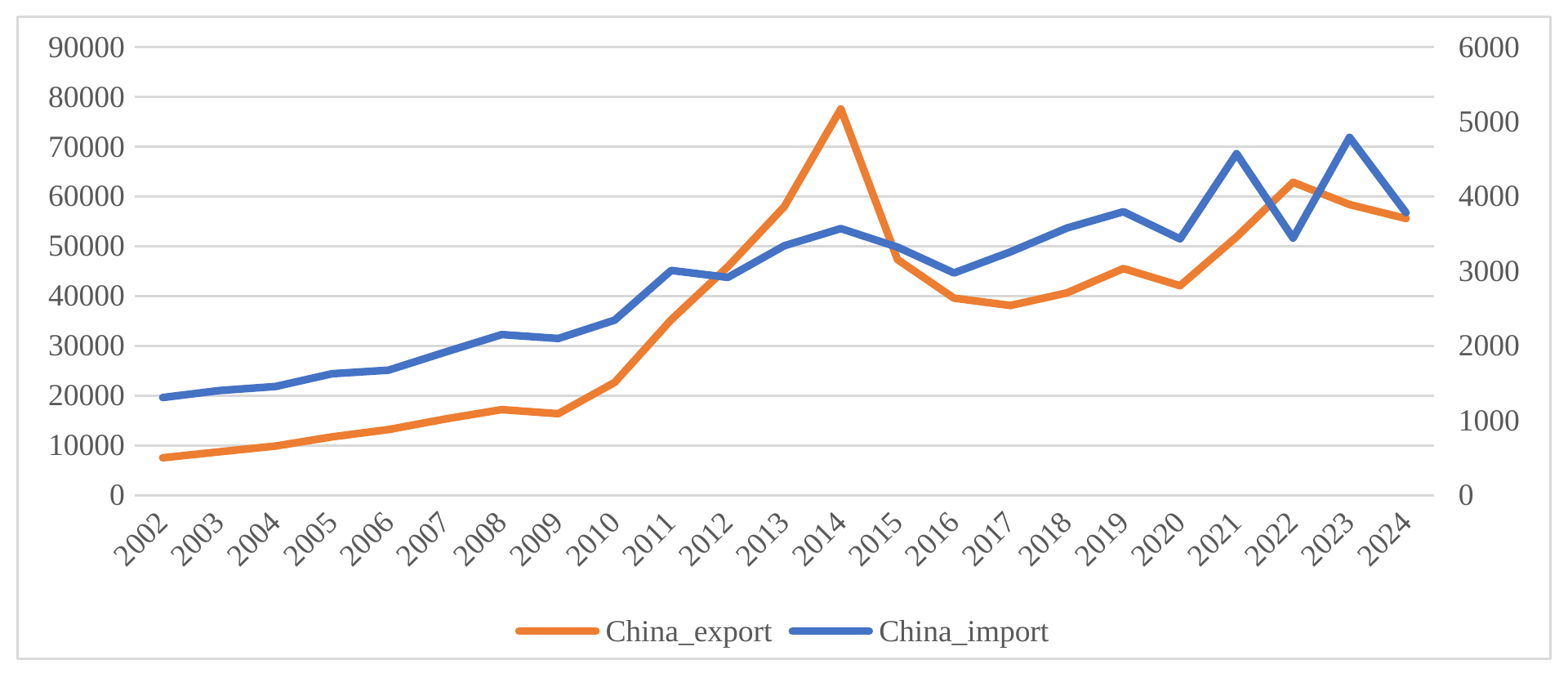
China’s dynamics (Figure 3) further confirm the country’s decisive role in the global export of creative goods. If imports during 2002–2024 grew moderately (from $1.3 billion to $3.8 billion), exports increased from $7.5 billion to $55.6 billion, reaching a peak of $77.6 billion in 2014. Fluctuations since 2015 reflect adaptation to changes in global demand, trade transformations and post-pandemic reformatting of markets.
B. Case Study 2. European Creative Industries and Glocalization of Crafts
Europe is both a major importer and exporter of creative goods, and also demonstrates a high synchronization of import dynamics with other regions, in particular with Oceania (r = 0.966). This reflects a model of glocalization, where local artisan traditions adapt to global markets. At the same time, they retain cultural specificities and are integrated into international distribution channels [6].
The European market combines the historical heritage of crafts with modern business models: Italian ceramics, French decorative products, Scandinavian textiles, Central European glass and woodworking are transformed into competitive design products with high added value. That is why Europe maintains a stable position both in the production and consumption of creative products.
Modern European initiatives confirm this trend. The Crafting Europe, CRAFTED and European Crafts Alliance programs are aimed at supporting craftsmen, digitalizing crafts, interstate cooperation and transferring traditional skills to new generations. In European Union (further EU) documents and programs, crafts are increasingly seen not only as heritage. They are presented as a factor in regional development, employment, sustainable production and cultural diplomacy [19–22].
Thus, Europe’s high correlations with other regions reflect its role as a global intermediary between local cultural authenticity and the global design market, where craft becomes both a cultural resource and an economic asset.
C. Case Study 3. Africa: Weaker Integration into Global Export Networks
Correlation analysis shows relatively lower values for Africa in exports (in particular, r = 0.642 with Oceania). This can be interpreted as a less stable integration of the region into global value chains of creative goods compared to Asia or Europe. It can also be associated with infrastructure constraints, a lower level of industrialization, as well as logistics costs and a smaller presence of African producers in international trade networks.
At the same time, there are successful local growth centers within the region. For example, in countries such as Morocco, Ghana and Kenya, craft clusters, cooperatives and small businesses are actively promoting textiles, ceramics, jewelry, beadwork and décor items to foreign markets. In particular, arts and crafts such as Moroccan carpets, baskets from Ghana and Kenyan beaded designs are distributed through fair trade networks, travel channels and digital marketplaces, including Etsy and other e-commerce platforms.
Such examples confirm that even with a lower level of macrointegration, crafts can perform the function of inclusive development. It can create jobs by supporting women’s entrepreneurship, local communities and the preservation of intangible cultural heritage. This is seen as a model of inclusive craft economies, where cultural production is combined with social sustainability and local economic growth [3], [9].
D. Case Study 4. Ukraine: Transformation of Traditional Crafts in the Global Market
Ukrainian crafts (including embroidery, ceramics, wood carving) demonstrate stable but uneven dynamics of integration into global creative flows, which is reflected in the data on international trade in creative goods for 2002–2024 (Figure 4).
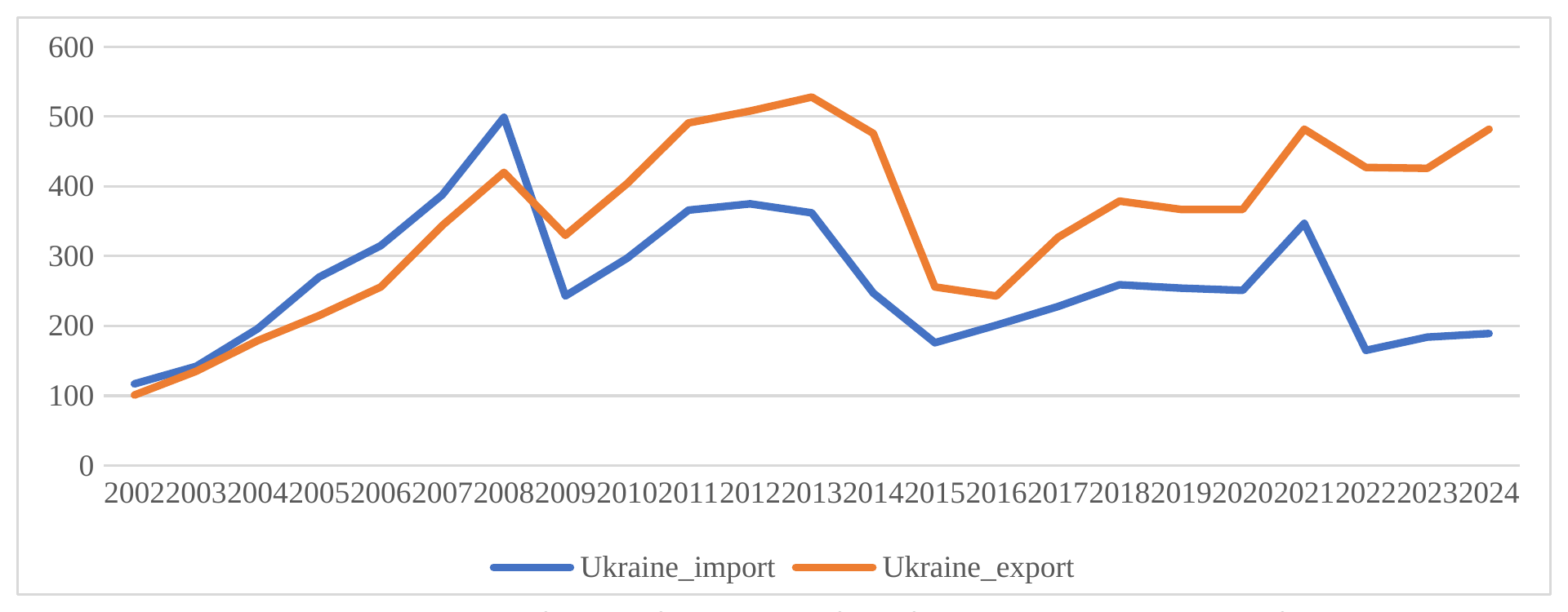
Initially, Ukraine’s exports increased from USD 101 million in 2002 to a peak value of USD 528 million in 2013, which corresponds to the period of relative stabilization and gradual entry into the European markets of creative products.
After 2014, there has been a sharp decline in export indicators from USD 476 million in 2014 to USD 256 million in 2015, which correlates with geopolitical transformations and structural restructuring of the economy. At the same time, since 2017, exports have been gradually restored from USD 327 million in 2017 to USD 482 million in 2024, which in turn indicates the adaptation of Ukrainian manufacturers to new market conditions and the growing role of digital sales channels.
Imports show more stable, but crisis-sensitive dynamics. After growing to USD 499 million in 2008, there is a decline in 2009 to USD 243 million. Then there is a second fall in 2014–2015. This reflects general macroeconomic shocks. At the same time, after 2020, imports recovered to the level of USD 347–189 million in 2021–2024. This already indicates a gradual reintegration into global supply chains.
The change in the structure of exports after 2014 is particularly indicative. Although absolute volumes have decreased, at this time there is a qualitative transformation of the creative sector. There is a transition from locally oriented craft to the export of designer and fashion-oriented products (embroidered clothes, interior ceramics, author’s décor, etc.). This is in line with the concept of heritage reconfiguration. According to the concept, traditional forms do not disappear, but adapt to the global market through changes in forms of representation [3], [4].
In the context of regional creative flows, Ukraine functions as part of the European zone of high synchronization. This is confirmed by its general trajectory of dynamics, similar to European trends, namely the decline in 2009 and 2014–2015 and recovery after 2020. This process is especially carried out through the EU’s digital platforms and design markets.
Thus, the Ukrainian case demonstrates the transition from the traditional craft model to a hybrid system of creative production. Here, local cultural heritage becomes a resource for global economic integration.
E. Case Study 5. Platformization of Crafts (Global Level)
Since 2020, the global trade in creative goods has shown an accelerated recovery and structural transformation. This goes beyond the cyclical economic recovery after the COVID-19 pandemic. One of the key drivers of this process is the digitalization and platformization of the craft sector.
At the level of theoretical explanation, the platformization of cultural production is defined as the process by which digital platforms become the infrastructure for the creation, distribution and monetization of cultural goods, forming new modes of visibility and economic interaction [12]. At the same time, more recent studies highlight that after 2020, platforms have become a key channel for small creative businesses to survive during global shocks, providing direct access to international demand without intermediaries [3], [9], [23].
Within artisanal production, this led to a change in the logic of design and production. Masters are increasingly focused on algorithmic visibility, digital trends, and global demand standards. As a result, the phenomenon of “platform-driven craft design” is formed. Here, local techniques adapt to formats that are optimized for online sales and social media.
These processes directly explain the high level of synchronization of import flows between regions (r > 0.85 in most cases), as digital platforms unify consumer patterns and synchronize demand in different parts of the world through global algorithmic recommendation systems.
Thus, platformization acts not only as a technological phenomenon, but as a structural mechanism for the global integration of the creative economy, which simultaneously strengthens access to markets and standardization of cultural products.
VI. Conclusions
Thus, the study summarizes the main types of arts and crafts and shows what challenges they face in the context of globalization. For different crafts, these challenges have their own specifics: textiles and embroidery are affected by mass standardization, ceramics compete with industrial production, wood carving is gradually being replaced by cheaper materials, jewelry art is under pressure from global brands, and weaving and decorative painting are at risk of losing traditional technologies. At the same time, all these areas are characterized by a common trend. They adapt to new conditions through the combination of local traditions with global markets, digital platforms, and the logic of the creative economy.
The study allows us to draw several generalized but valuable conclusions about the development of arts and crafts in the context of the global creative economy.
First, the global market for creative goods demonstrates steady long-term growth, even in the face of economic crises and global shocks. This shows that crafts and design have gradually become an important part of the international economic system.
Secondly, import flows in different regions are much more synchronized than export flows. This means that the global demand for creative goods is formed in a more unified way, while production remains unevenly distributed among regions of the world.
Third, Asia and Europe play a key role in global production, while Africa remains less integrated into global export networks, although it has some successful local examples of handicraft development.
Fourthly, digital platforms have become one of the main factors in the transformation of the craft sector. They opened up access to global markets for individual craftsmen. At the same time, they have increased their dependence on algorithmic mechanisms of visibility and trends.
Fifth, the case of Ukraine shows that even in difficult geopolitical conditions, traditional crafts may not disappear. On the contrary, they are changing shape and moving into modern design, fashion industry and digital markets. At the same time, they retain their cultural basis.
As a result, it can be argued that decorative and applied arts today function as a living system that simultaneously preserves local identity and is actively involved in global economic and cultural processes.
Funding
This research receives no funding.
Ethics Statement
The study involved questionnaire responses from full-time teachers. The final manuscript should provide the name of the approving or reviewing institution, the approval or exemption number where applicable, and a statement confirming voluntary participation and informed consent. These details were not included in the materials available for revision and therefore have not been invented.
Conflict of Interest
The author declares no conflict of interest.
Data Availability
The questionnaire data supporting the findings of this study are available from the corresponding author upon reasonable request, subject to applicable ethical, privacy, and institutional restrictions.
Declaration of Generative AI Use
During the revision of this manuscript, the author used a generative artificial intelligence tool to assist with language editing, grammatical correction, academic phrasing, and improvements to the clarity and organization of the text. The tool was not used to generate or manipulate the research data, conduct the statistical analysis, or determine the study’s findings and conclusions. The author critically reviewed and verified all AI-assisted content and accepts full responsibility for the accuracy, integrity, and final content of the manuscript.