
Vocational and technical education constitutes an integral component of China’s education system and represents a distinctive form of education that combines theoretical learning with occupational knowledge and practical skills [1]. The effectiveness of vocational teaching depends substantially on appropriate instructional design. High-quality vocational education therefore requires instructional strategies that are aligned with learning objectives, occupational competencies, student characteristics, and authentic workplace requirements. Information technology-enhanced instructional design extends across the teaching process and contributes to the development of corresponding pedagogical principles, learning resources, teaching activities, and assessment procedures [2]–[4].
One important difference between information technology-enhanced instruction and conventional teacher-centered teaching is the changing role of students in the learning process. The classroom is no longer the only environment in which students receive information, and teachers are no longer the exclusive source of knowledge. Digital resources, online learning platforms, virtual simulations, communication applications, and electronic libraries allow students to access, evaluate, and apply information across different learning environments.
Autonomous learning involves students adjusting their learning strategies and efforts according to their abilities, objectives, progress, and learning conditions [5]. Information technology can support this process by providing flexible access to instructional resources and opportunities for self-directed inquiry. Within this environment, teachers increasingly serve as organizers, facilitators, mentors, and sources of instructional support rather than acting exclusively as lecturers. Instructional design should therefore recognize differences among students and provide opportunities for independent learning, guided practice, feedback, and reflection. Strengthening autonomous-learning abilities may help students adapt to technological change and continue developing their knowledge and occupational competencies.
Experiential educational principles emphasize that meaningful inquiry frequently begins with practical situations and clearly defined problems. Dewey’s educational perspective has been summarized in the statement that “there must be an actual empirical situation as the initiating phase of thought” and that reflective thinking begins with a problem [6]. In information technology-enhanced vocational education, authentic or simulated situations can therefore provide an important foundation for instructional design.
A practical learning situation may involve an authentic task supplied by a school–enterprise partner or a three-dimensional virtual simulation of a workplace environment. Through inquiry-based and task-oriented instruction, students can acquire relevant knowledge while completing activities that reflect occupational practice. The task can serve as the principal organizing element of learning, guiding students through the sequence “identifying problems \(\rightarrow\) analyzing problems \(\rightarrow\) solving problems” [7]. This process can connect conceptual knowledge with practical application and assist students in addressing important or difficult aspects of a vocational task.
Collaborative learning is another important element of information technology-enhanced instruction. Individual students possess different experiences, abilities, learning preferences, and strengths. Group analysis, discussion, investigation, peer evaluation, and shared problem-solving can develop students’ capacity to cooperate while encouraging active participation. Digital platforms can further support collaboration by allowing students to exchange information, coordinate tasks, document progress, and evaluate one another’s contributions.
The use of information technology in vocational education involves more than employing presentation software or multimedia equipment as auxiliary tools for teacher explanation [8]. In a student-centered environment, learners use digital technologies to study independently, retrieve information, examine practical problems, organize evidence, communicate with peers, and construct integrated knowledge. The pedagogical value of technology consequently depends on how it is incorporated into objectives, learning activities, resources, collaboration, and assessment rather than on the mere availability of digital equipment.
Despite the growing importance of education informatization, institutions may differ considerably in infrastructure, digital-resource availability, teacher competence, and the instructional use of technology. Teachers may possess favorable attitudes toward information technology while differing in their ability to use online platforms, multimedia classrooms, image-processing applications, animation software, virtual simulations, and other digital resources. Examining these differences is necessary for designing professional-development programs and improving institutional support.
Accordingly, this study has two related objectives. First, it presents a student-centered framework for information technology-enhanced vocational education by integrating the SQD and TPACK perspectives with a cyclical instructional-design process. Second, it provides a descriptive account of teachers’ demographic characteristics, attitudes, technical competencies, and use of information technology at a vocational education college. The study does not attempt to establish that information technology causes improvements in teaching quality or student achievement. Instead, it describes the institutional framework and teacher-related conditions that may support subsequent instructional development and empirical evaluation.
This study applies an SQD-based framework to the development of vocational students’ learning and digital competencies. The framework identifies two necessary conditions for the effective use of information and communication technology (ICT): deliberate planning for the use of ICT and meaningful integration of ICT with teaching content. Technology should therefore be selected according to the learning objective and instructional activity rather than being introduced without a defined pedagogical purpose.
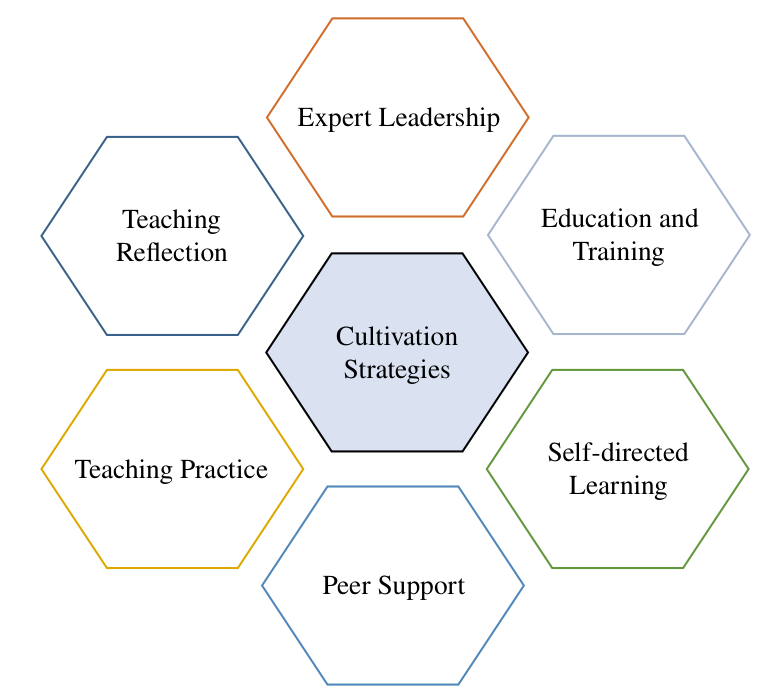
The SQD framework also includes six professional-development and implementation strategies: expert leadership, educational training, self-directed learning, peer support, teaching practice, and teaching reflection. Expert leadership provides theoretical and technical guidance; educational training develops teachers’ knowledge and skills; self-directed learning encourages continuous professional development; peer support facilitates the exchange of experience; teaching practice allows teachers to apply digital strategies in authentic settings; and teaching reflection supports the evaluation and refinement of those strategies.
The relationships among these six strategies are illustrated in Figure 1. The circular arrangement emphasizes that teacher development is an iterative process in which training, practice, support, independent learning, and reflection continuously inform one another.
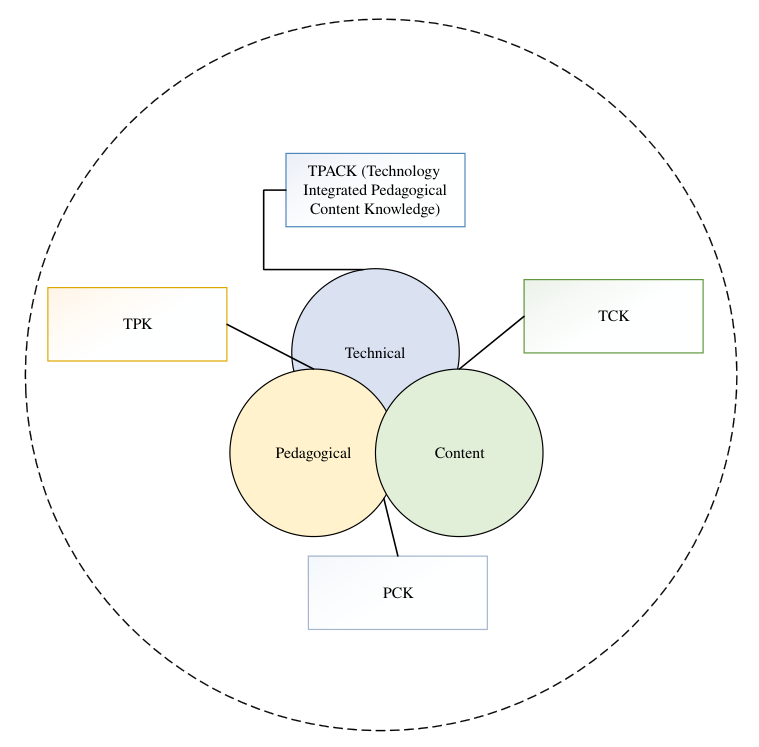
The technological pedagogical content knowledge (TPACK) framework explains the forms of professional knowledge teachers require when integrating technology into instruction. Based on the framework developed by Koehler and Mishra, TPACK comprises three foundational knowledge domains and four intersecting domains. The foundational domains are technological knowledge, pedagogical knowledge, and content knowledge. Their intersections produce technological pedagogical knowledge, technological content knowledge, pedagogical content knowledge, and integrated technological pedagogical content knowledge.
As shown in Figure 2, the framework emphasizes that effective technology integration cannot be achieved through technical knowledge alone. Teachers must understand the subject matter being taught, the pedagogical approaches appropriate to that subject matter, and the ways in which specific technologies can support learning. The central intersection represents the coordinated application of technological, pedagogical, and content knowledge.
The informatization of vocational education can be considered across several related areas, including institutional information infrastructure, high-quality digital educational resources, electronic administrative services, educators’ information literacy, modern distance vocational education, and the development of digitally competent skilled personnel. These areas collectively influence whether digital technology can be integrated effectively into teaching, learning, assessment, and institutional management.
The vocational education college examined in this study used its relocation to a new campus as an opportunity to develop its information infrastructure and digital-campus environment. A digital campus-management system developed by an educational-technology company was introduced to establish an integrated digital information-service platform. The platform connected several administrative and teaching functions and supported the electronic management of institutional information and educational activities.
This institutional development provided the infrastructure required for information technology-enhanced instruction. However, the presence of infrastructure alone does not guarantee effective teaching. Digital systems must be supported by suitable educational resources, teacher competencies, student access, technical assistance, and instructional designs that connect technology with clearly defined learning objectives.
The proposed information technology-enhanced instructional-design process begins with an analysis of teaching objectives. It then proceeds through contextualization, information-resource design, teaching-process design, learning-case design, and learning-evaluation rubric design. Evaluation and modification occur throughout the process, making the framework dynamic and cyclical rather than strictly linear.
Figure 3 presents the principal stages of this instructional-design process. The continuous evaluation and modification component occupies a central position because evidence obtained during planning, implementation, and assessment can be used to revise objectives, resources, activities, cases, and evaluation criteria.
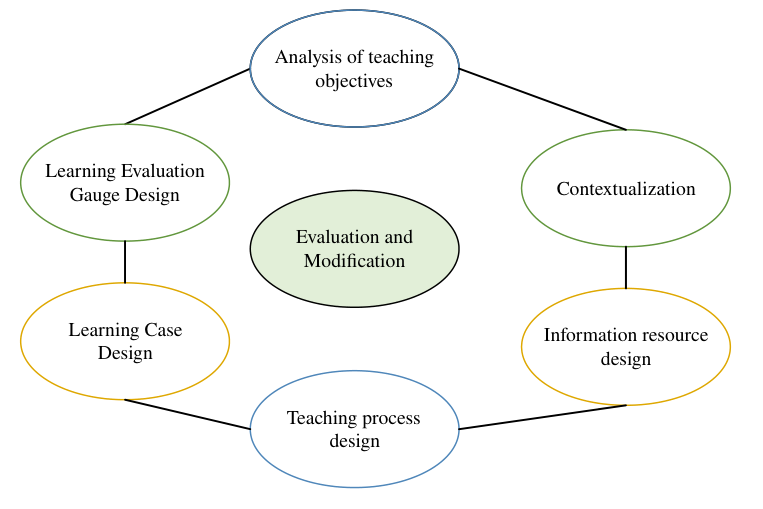
The analysis of teaching objectives identifies the knowledge, skills, and occupational competencies students are expected to develop. Contextualization connects these objectives with authentic professional situations or realistic simulations. Information-resource design identifies the digital materials required to support learning, while teaching-process design organizes the sequence of activities undertaken by teachers and students. Learning cases translate occupational problems into structured instructional tasks, and evaluation rubrics establish criteria for assessing student performance.
Continuous evaluation allows instructors to determine whether the selected technologies and activities support the intended outcomes. When weaknesses are identified, individual elements of the design can be modified. This iterative process is particularly important in vocational education because technologies, occupational standards, workplace practices, and student needs may change over time.
The college’s digital educational resources were divided into two broad categories: digital library resources and online course resources. By 2015, the college had reportedly introduced 15,881 GB of electronic-book resources, including 4,703 GB of electronic-journal resources. The development of online courses began in 2006, initially through the construction of high-quality courses.
The professional teaching-resource library represented an important institutional project. Before its construction, the college established a professional resource-library project group and separate course-development teams. Responsibilities were allocated among team members, and project implementation was monitored according to predefined stages and schedules. Resources were reviewed and revised throughout the development process to support their continued improvement and updating.
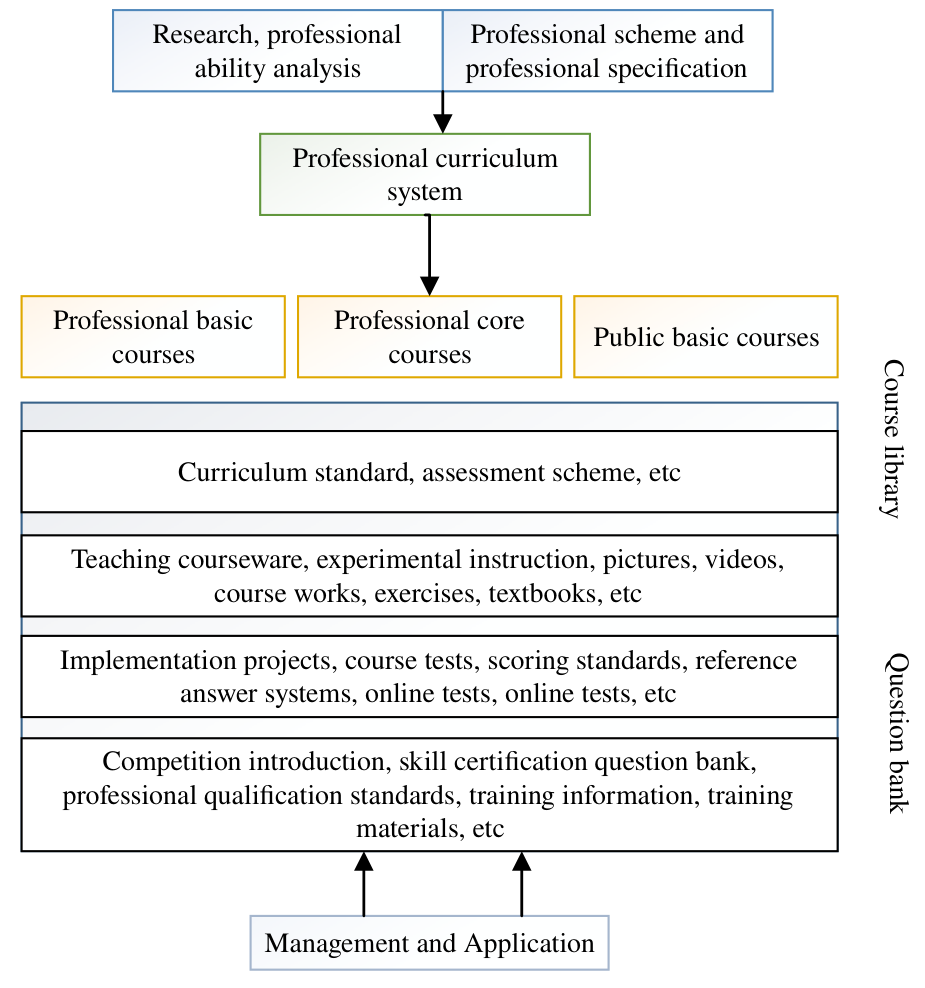
The design of the resource library was informed by preliminary investigation and interpretation of curriculum requirements. Its principal components included the professional curriculum system, curriculum standards, teaching materials, multimedia courseware, experimental instructions, images, videos, assignments, textbooks, exercise materials, assessment schemes, test banks, online tests, training resources, occupational standards, skills-certification materials, and professional qualification information.
The organizational structure of the professional teaching-resource library is presented in Figure 4. The framework connects professional and occupational analysis with curriculum development, course resources, assessment materials, and practical-training resources.
As illustrated in Figure 4, the resource library supports both teaching and learning activities. Teachers can use it to assign preparatory tasks, upload images and cases, distribute teaching materials, review and grade assignments, answer questions, communicate with students, and publish course information. Students can use the platform across five connected stages: pre-class preparation, in-class participation, post-class consolidation, question-and-answer activities, and extended learning. This structure supports continuity between classroom instruction and independent learning.
The empirical component of the study employed a descriptive, cross-sectional questionnaire design. Its purpose was to summarize teachers’ demographic characteristics, attitudes toward information technology-enhanced teaching, perceived technical competencies, and reported use of digital teaching methods. The design was descriptive and did not include an experimental intervention, control group, pretest–posttest comparison, or direct measurement of student-learning outcomes. Consequently, the analysis was not intended to establish causal effects.
The survey involved 258 full-time teachers from the vocational education college described in the institutional context. All results reported in the following section are based on these 258 respondents. The supplied study record did not identify the institution by its formal name or report the number of teachers invited to participate. Therefore, a survey response rate could not be calculated.
The recorded demographic characteristics included gender, age group, and academic qualification. Age was classified into four categories: younger than 30 years, 31–40 years, 41–50 years, and older than 50 years. Academic qualifications were classified as master’s degree or higher, bachelor’s degree, college-level qualification, and secondary-school qualification.
The questionnaire examined three broad areas. The first collected general demographic information. The second assessed teachers’ attitudes toward and awareness of information technology-enhanced teaching. The third examined teachers’ knowledge, technical skills, application practices, and innovative uses of information technology in teaching.
The attitude and awareness component included five reported topics: whether information technology could reduce teachers’ teaching burden, make instructional content more vivid, improve teaching efficiency, improve teaching quality, and promote teaching reform. The technical-competency component examined familiarity with word-processing applications, document-processing or typesetting tools, image-processing software, audio- and video-processing software, animation-production software, communication applications, online course platforms, and virtual-simulation training systems.
The instructional-application component examined teachers’ use of multimedia classrooms, virtual-simulation technologies, and online teaching methods. Reported online practices included publishing notices, providing learning resources, conducting question-and-answer or discussion activities, assigning and correcting work, and administering online tests.
The questionnaire responses were summarized using frequencies, percentages, and arithmetic means. Demographic findings were reported as percentages of the 258 respondents. Responses concerning teachers’ attitudes, awareness, technical competencies, and instructional practices were also summarized descriptively.
The available documentation did not report the questionnaire administration date, recruitment procedure, item-response scale, coding direction, missing-data procedure, reliability coefficient, validity assessment, or statistical software. Consequently, the reported means should be interpreted descriptively, and comparisons among mean values should be made cautiously. No inferential statistical tests, confidence intervals, effect sizes, or subgroup comparisons were reported.
The study therefore provides a descriptive institutional profile rather than a validated evaluation of teaching effectiveness. The findings identify patterns in teachers’ reported attitudes and technology use but do not demonstrate that information technology caused improvements in teacher performance, instructional quality, or student outcomes.
The survey included 258 full-time teachers from the participating vocational education college. Among the respondents, 178 were women, accounting for 69% of the sample, and 80 were men, accounting for the remaining 31%.
The age distribution of the respondents is presented in Table 1. Teachers aged 31–40 years constituted the largest group, accounting for 44% of the sample. Teachers younger than 30 years accounted for 35%, while those aged 41–50 years accounted for 15%. Only 16 respondents were older than 50 years, representing approximately 6% of the sample. Overall, 79% of the respondents were 40 years of age or younger, indicating that younger and middle-aged teachers constituted the majority of the surveyed faculty.
| Under 30 | 31–40 | 41–50 | Over 50 |
|---|---|---|---|
| 35% | 44% | 15% | 6% |
The academic qualifications of the respondents are summarized in Table 2. Teachers with bachelor’s degrees represented the largest educational group, accounting for 49% of the sample. A further 40% held master’s degrees or higher qualifications, 9% held college-level qualifications, and 1% held secondary-school qualifications. The reported percentages total 99%, which is likely attributable to rounding. The results indicate that most respondents possessed undergraduate or postgraduate qualifications.
| Master’s degree or higher | Bachelor’s degree | College-level qualification | Secondary-school qualification |
|---|---|---|---|
| 40% | 49% | 9% | 1% |
Five questionnaire items examined teachers’ attitudes toward and awareness of information technology-enhanced teaching. The items addressed whether the use of information technology could reduce teachers’ instructional burden, make teaching content more vivid, improve teaching efficiency, improve teaching quality, and promote teaching reform.
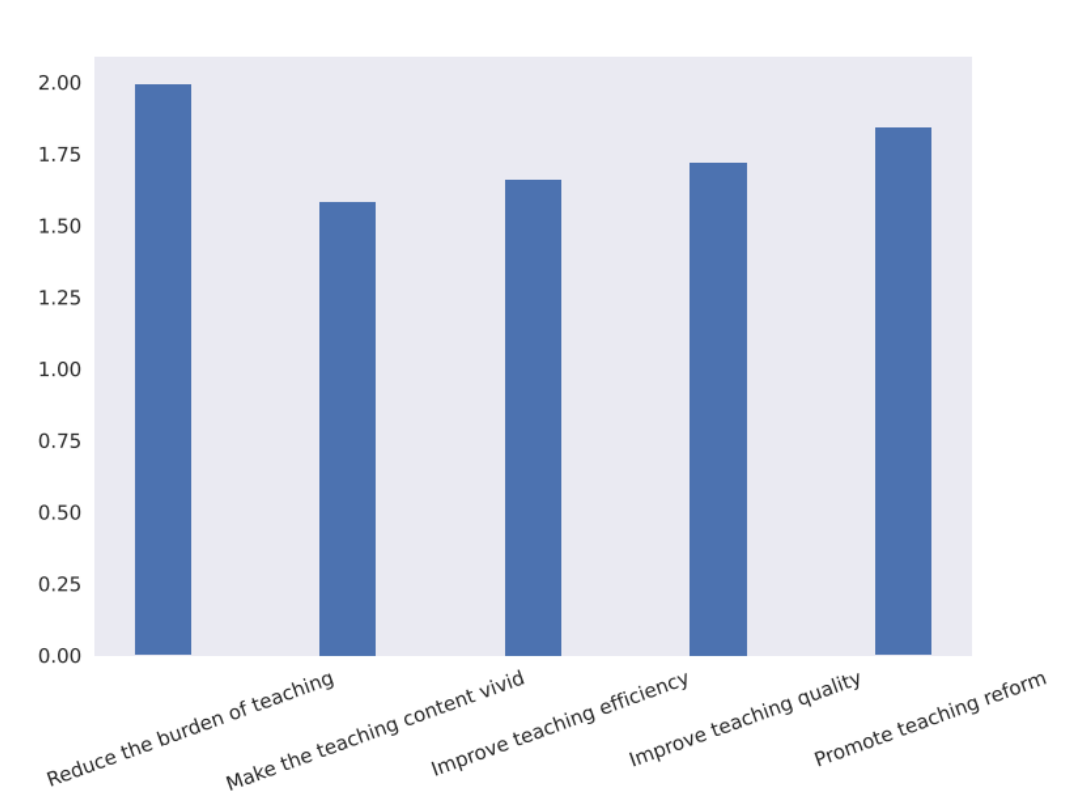
The item-level mean values are presented in Figure 5. The reported means ranged from approximately 1.6 to 2.0, and the overall mean across the five items was 1.7. Under the response coding applied in the original analysis, this average was interpreted as being close to the “agree” category. The findings therefore suggest that the surveyed teachers generally expressed favorable attitudes toward the potential educational value of information technology.
As shown in Figure 5, the lowest mean was associated with making teaching content vivid, while the highest mean was associated with reducing teachers’ instructional burden. However, these differences should be interpreted cautiously because the complete response scale, coding direction, item-level standard deviations, and inferential comparisons were not reported. The figure presents descriptive attitudes and does not demonstrate that information technology actually reduced workload or improved teaching outcomes.
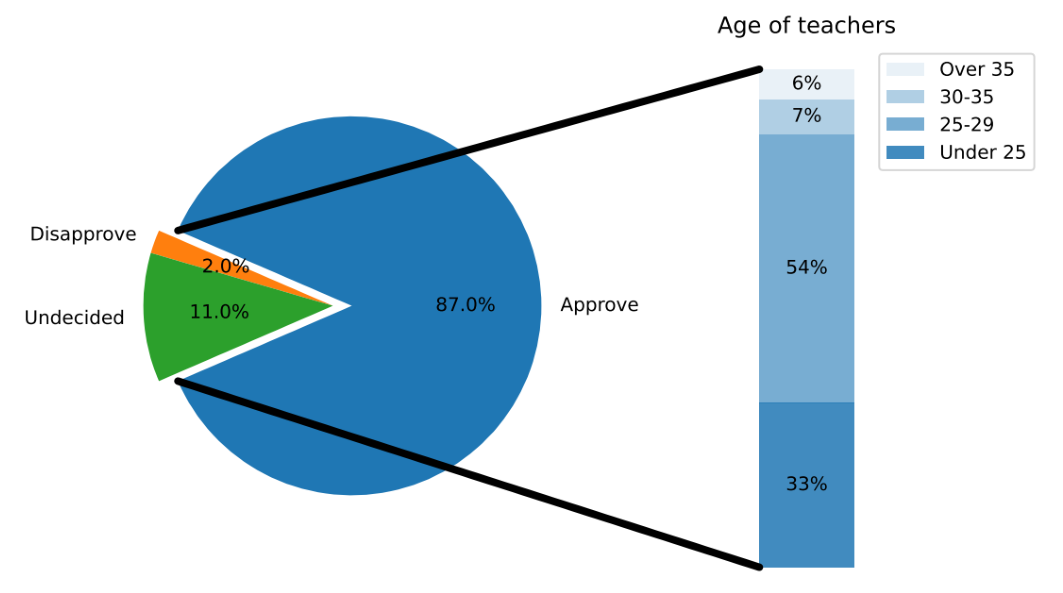
Teachers’ ability to use multimedia classrooms was assessed through the statement, “I can use the basic functions of a multimedia classroom to conduct teaching.” The response distribution is presented in Figure 6. A total of 31% of respondents selected “strongly agree,” and 56% selected “agree,” producing a combined favorable response of 87%. A further 11% were undecided, while 2% selected “disagree.”
These percentages total 100% and correspond to the values displayed in Figure 6. The original text reported the undecided category as 1%; this has been corrected to 11% based on the figure. The results indicate that most respondents perceived themselves as capable of using the basic functions of multimedia classrooms. Nevertheless, this finding represents self-reported ability and was not confirmed through observation or a practical competency assessment.
Teachers’ self-reported mastery of commonly used information technology applications and equipment is summarized in Table 3. The reported mean scores were 1.75 for word-processing software, 2.34 for PDF document-processing tools, 2.57 for image-processing software, 2.58 for audio- and video-processing software, 2.80 for animation-production software, 1.77 for QQ or WeChat, 2.20 for online course platforms, and 1.98 for virtual-simulation training systems.
Under the interpretation used in the original analysis, lower mean scores represented greater reported mastery. On this basis, Table 3 indicates that teachers reported the greatest familiarity with word-processing applications, QQ or WeChat, and virtual-simulation training systems. Familiarity with online course platforms and PDF document-processing tools was comparatively moderate. The highest mean values were recorded for animation-production, audio- and video-processing, and image-processing software, suggesting comparatively lower confidence in using these specialized applications.
The questionnaire scale and coding direction were not fully documented in the available study materials. Accordingly, the interpretation of the means in Table 3 should be regarded as provisional until the response categories are explicitly reported. The table also describes perceived competence rather than objectively tested software proficiency.
| Word-processing software (Word or WPS) | PDF document processing tools | Image-processing software (Photoshop) | Audio- and video-processing software | |
|---|---|---|---|---|
| Mean score | 1.75 | 2.34 | 2.57 | 2.58 |
| Animation-production software | QQ or WeChat | Online course platforms | Virtual-simulation training systems | |
| Mean score | 2.80 | 1.77 | 2.20 | 1.98 |
Teachers’ use of virtual-simulation technology in practical teaching was assessed through the statement, “I can use virtual-simulation technology in my practical teaching activities.” The response distribution is presented in Figure 7.
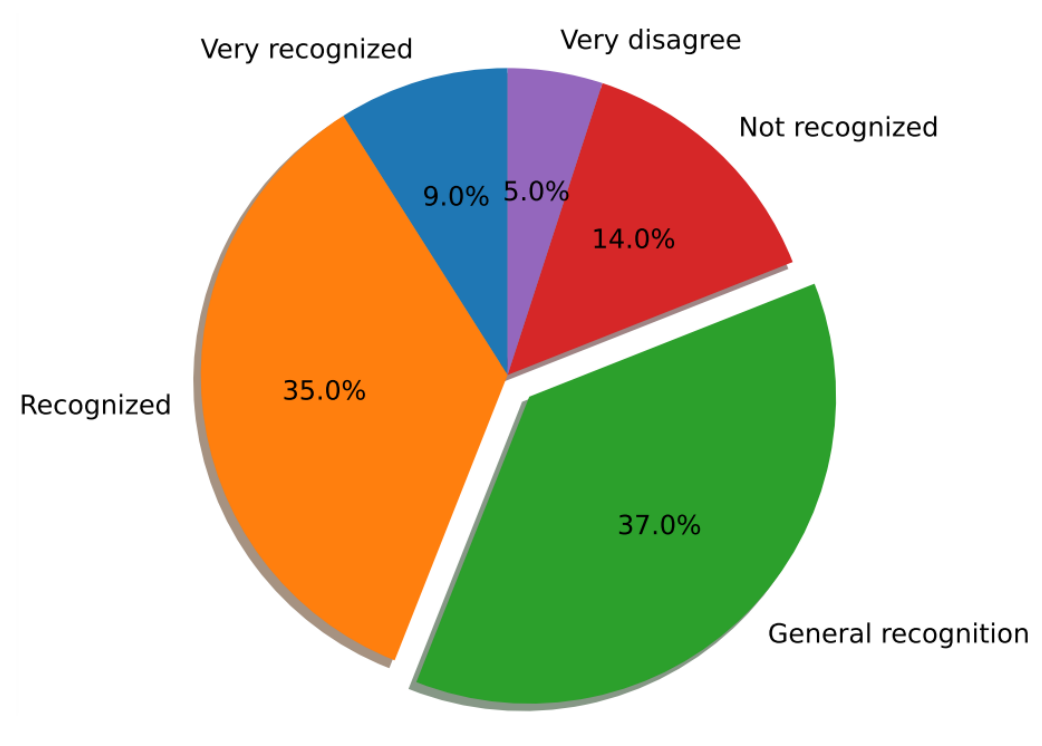
As shown in Figure 7, 9% of respondents selected the highest recognition category, 35% selected the recognition category, and 37% selected the general-recognition category. In comparison, 14% selected the non-recognition category and 5% selected the strongest negative category. Taken together, 44% selected one of the two favorable categories, 37% selected the intermediate category, and 19% selected one of the two unfavorable categories.
These findings suggest that virtual-simulation technology had achieved a moderate level of acceptance among the respondents, although strong recognition was not universal. Because the original category labels appear to have been translated from another language, their precise correspondence with conventional Likert categories should be clarified in the questionnaire description.
Teachers’ reported use of online teaching methods is presented in Figure 8. Providing learning resources was the most frequently reported activity, selected by 72.09% of respondents. Issuing notices to students was reported by 69.77%, while 53.49% used online systems for question-and-answer activities or discussions. A further 40.70% used the Internet to assign and correct homework, and 32.56% administered online tests. Only 10.47% reported that they had not used any of the listed online teaching methods.
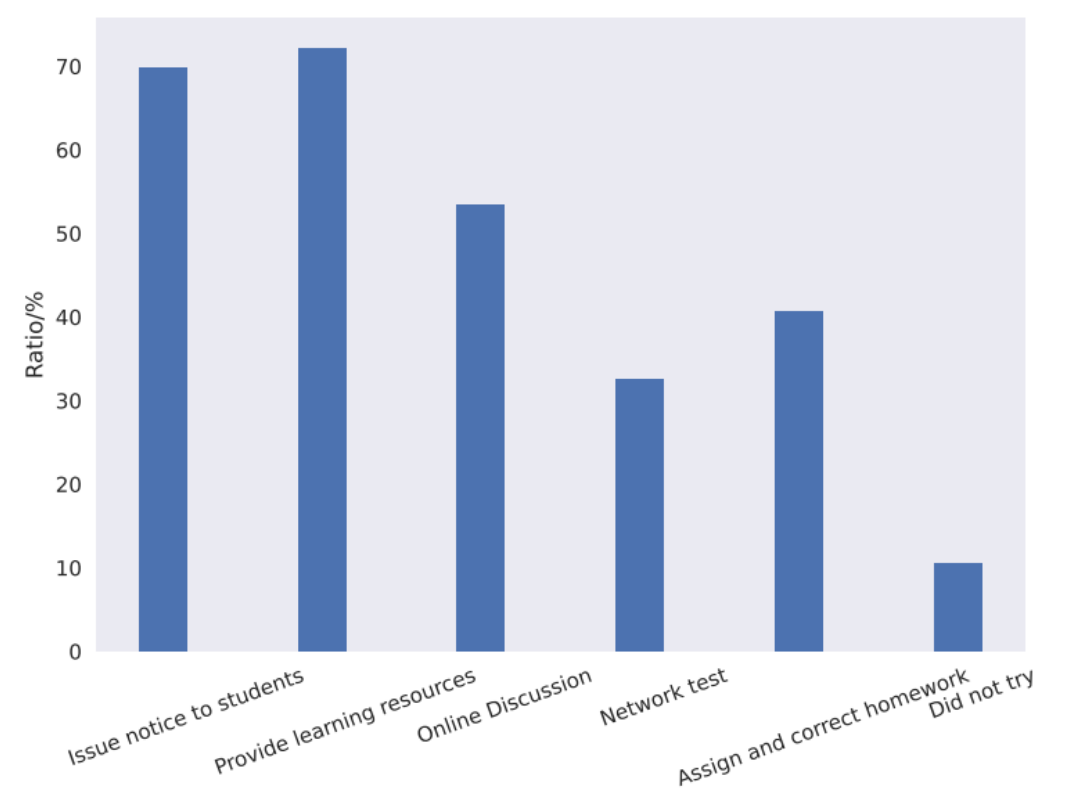
The percentages in Figure 8 exceed 100% when combined because respondents could apparently select more than one online activity. This multiple-response format should be stated explicitly in the questionnaire description. The findings indicate that online technologies were used primarily for distributing information and resources, while more interactive or assessment-oriented practices, particularly online testing, were less common.
Online teaching can extend instructional activity beyond the physical classroom through computers, broadband networks, communication platforms, and learning-management systems. It may support live instruction, resource distribution, interaction, discussion, assessment, and other forms of remote or blended learning. In the present study, however, teachers’ reported use of online tools does not independently demonstrate improvements in instructional quality or student achievement. Additional outcome-based research would be required to evaluate the educational effectiveness of these practices.
The demographic findings show that the surveyed teaching workforce was predominantly female and that most respondents were 40 years of age or younger. Most teachers also held bachelor’s or postgraduate qualifications. These characteristics provide important contextual information because teachers’ educational backgrounds, professional experience, and familiarity with digital technologies may influence their engagement with information technology-enhanced instruction.
The generally favorable attitude scores indicate that respondents recognized the potential value of information technology in reducing instructional burdens, presenting content more vividly, improving teaching efficiency, supporting teaching quality, and promoting educational reform. Positive attitudes may facilitate technology adoption, but they are not sufficient by themselves. Teachers also require technical competence, pedagogical knowledge, subject-specific understanding, institutional support, and opportunities to apply and evaluate digital approaches.
The results concerning multimedia classrooms were particularly favorable, with 87% of respondents agreeing or strongly agreeing that they could use their basic functions. Multimedia-classroom technologies may therefore represent an established component of teaching practice at the participating college. Nevertheless, the result is based on self-assessment, and respondents may differ in their interpretation of what constitutes competent use.
The software-mastery results reveal a distinction between commonly used applications and more specialized production tools. Teachers reported greater familiarity with word-processing software and communication applications than with animation, image-processing, and audio- and video-processing software. This pattern suggests that professional-development programs should move beyond basic office and communication tools and provide targeted training in applications relevant to resource development, virtual simulation, and interactive vocational instruction.
The virtual-simulation findings were more mixed than the multimedia-classroom results. Although 44% selected favorable recognition categories, a substantial proportion selected the intermediate category, and 19% selected unfavorable categories. These findings suggest that access to virtual-simulation systems may not automatically translate into confidence or effective instructional use. Training should therefore address both technical operation and the pedagogical integration of simulated occupational tasks.
The online-teaching results indicate that teachers used technology more frequently for one-way activities, such as distributing resources and notices, than for online assessment. Question answering, discussion, and homework management occupied an intermediate position. This pattern suggests that the college had achieved a basic level of online instructional use but had not necessarily realized the full potential of digitally supported interaction, formative assessment, and collaborative learning.
The SQD and TPACK frameworks provide useful perspectives for interpreting these findings. SQD emphasizes expert guidance, professional training, peer support, practice, reflection, and self-directed development. TPACK emphasizes the integration of technological, pedagogical, and content knowledge. Together, these frameworks indicate that effective informatization depends on continuous teacher development and purposeful instructional design rather than on technology acquisition alone.
The teaching-resource library can support this development by providing reusable materials, practical cases, assessments, simulations, and opportunities for pre-class, in-class, and post-class learning. However, the quality, accessibility, currency, and instructional relevance of these resources should be evaluated systematically. Future institutional evaluation should also examine whether resource-library use is associated with student engagement, practical competency, course completion, and learning achievement.
This study has several limitations. First, the survey was conducted at a single vocational education college, limiting the generalizability of the findings to other institutions or regions. Second, the sampling procedure, survey-administration period, invitation count, and response rate were not documented. The representativeness of the 258 respondents therefore cannot be established.
Third, the complete questionnaire, response-scale definitions, coding direction, reliability statistics, and validity evidence were unavailable. The reported mean scores must consequently be interpreted cautiously. Fourth, the findings were based on teachers’ self-reports and were not verified through classroom observation, practical competency testing, platform-usage records, or student outcomes.
Fifth, the analysis was descriptive and did not include confidence intervals, inferential comparisons, regression analysis, or controls for potentially relevant characteristics such as age, teaching experience, academic discipline, and prior technology training. Finally, the study did not directly measure whether the proposed instructional framework improved teaching quality, student engagement, vocational competencies, or employment-related outcomes. These limitations should be considered when interpreting the conclusions.
Information technology-enhanced vocational education requires more than the availability of computers, multimedia equipment, online platforms, and digital resources. Its effective implementation depends on student-centered instructional design, clearly defined learning objectives, authentic occupational situations, appropriate digital materials, collaborative learning, systematic evaluation, and continuous teacher development.
The descriptive survey of 258 full-time teachers indicates generally favorable attitudes toward information technology-enhanced teaching and widespread self-reported ability to use multimedia classrooms. Teachers reported comparatively greater familiarity with commonly used word-processing and communication applications than with specialized animation, image-processing, and audio-visual production tools. Online technology was used most frequently to distribute learning resources and notices, while online testing was less common. Recognition and use of virtual-simulation technology were comparatively mixed.
These findings identify areas in which institutional support and professional development may be strengthened. Training should connect technical skills with pedagogical objectives and vocational content, consistent with the SQD and TPACK frameworks. Particular attention may be directed toward specialized media-production tools, virtual simulations, interactive online activities, and digitally supported assessment.
The findings do not demonstrate that information technology independently improves teaching quality or student performance. Such conclusions would require validated instruments, comparative or longitudinal designs, and direct measures of educational outcomes. Subject to these limitations, the study provides a descriptive foundation for improving information technology-supported instructional design and teacher development in vocational education.
This study was supported by the 2021 Ministry of Education Ideological and Political Special Project, entitled “Research on the Integrated and Autonomous Model of Practical Teaching of Ideological and Political Courses in Universities,” Project No. 21DSZK120.
The study involved questionnaire responses from full-time teachers. The final manuscript should provide the name of the approving or reviewing institution, the approval or exemption number where applicable, and a statement confirming voluntary participation and informed consent. These details were not included in the materials available for revision and therefore have not been invented.
The author declares no conflict of interest.
The questionnaire data supporting the findings of this study are available from the corresponding author upon reasonable request, subject to applicable ethical, privacy, and institutional restrictions.
During the revision of this manuscript, the author used a generative artificial intelligence tool to assist with language editing, grammatical correction, academic phrasing, and improvements to the clarity and organization of the text. The tool was not used to generate or manipulate the research data, conduct the statistical analysis, or determine the study’s findings and conclusions. The author critically reviewed and verified all AI-assisted content and accepts full responsibility for the accuracy, integrity, and final content of the manuscript.