
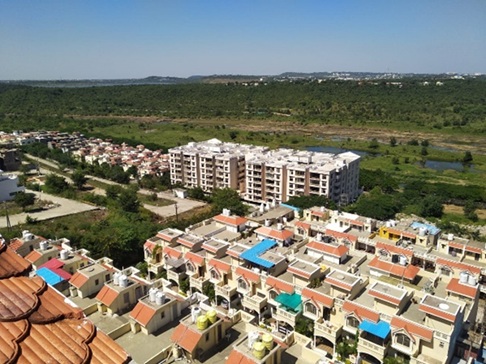
In the present research, five residential projects of different locations in Bhopal and Indore were chosen to study their different construction phases and evaluate them on the basis of 34 criteria specified by GRIHA. This evaluation will determine the extent to which this project falls short of achieving a 1- to 5-star rating stipulated by GRIHA. Additionally, it will identify which mandatory or partially mandatory criteria are overlooked by conventional residential projects. The major aim is to find out the status of present residential projects of Tier-II city Bhopal and to compare their performance along with the shortcomings. The case study focuses on the selection of the first site Sagar Green Hills (SGH) project, situated on Kolar Road in Bhopal, featuring luxurious 3, 4, and 5 BHK flats equipped with modern amenities including rainwater harvesting, swimming pools, jogging tracks, a club house, Jain temple, and landscaped gardens. Hence, it is imperative to assess the performance of this non-green certified residential development against the GRIHA rating system. Key project statistics include a total area of 32380 sq. m and a permissible ground coverage of 9715.92 sq. m (30%).
| Plot No. | No. | Plot Area (SQM) |
G. FL. Coverage (sq.m) | Total G. FL. Coverage (sq.m) | Built Up area (sq.m) | Total Built Up Area (sq.m) |
|---|---|---|---|---|---|---|
| 1 to 21 | 21 | 122.61 | 60.62 | 1273.02 | 152.83 | 3209.43 |
| 22 to 27 | 6 | 139.84 | 66.19 | 397.14 | 174.27 | 1045.62 |
| 28 to 36 | 9 | 122.61 | 61.19 | 367.14 | 153.04 | 1377.36 |
| 37 to 45 | 9 | 81.74 | 46.72 | 420.48 | 101.52 | 913.68 |
| 46 to 65 | 20 | 162.26 | 71.55 | 1431.0 | 202.35 | 4047.0 |
| 65 | Total | 3888.78 | 10593.09 |
| Block | G. FL. Area (in Sq. m) | Built Up Area (in Sq. m) |
|---|---|---|
| Block A | 1356.16 | 8136.96 |
| Block B | 1356.16 | 8136.96 |
| Block C | 1130.65 | 6783.93 |
| Block D | 1130.65 | 6783.93 |
| Total | 4973.62 | 29841.78 |
Total Achieved Built Up area- 40434.87 sq. m
| S. No. | Unit Type | Total Units |
|---|---|---|
| 1 | 4 BHK_A1 | 24 |
| 2 | 4 BHK_A2 | 48 |
| 3 | 5 BHK_A | 4 |
| 4 | 3 BHK_D1 | 48 |
| 5 | 3 BHK_D2 | 48 |
| 6 | 5 BHK_D | 4 |
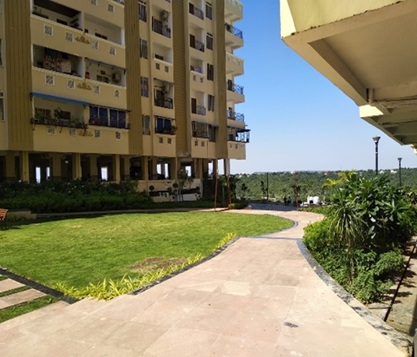
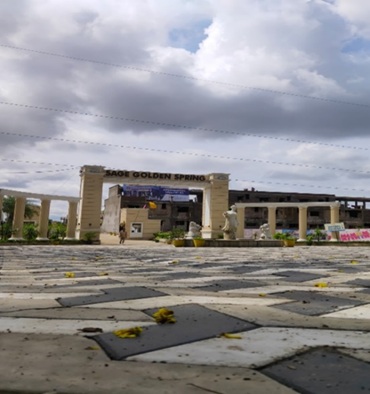
The second site selescted is residential project Sage Golden Spring (SGS) which is located on Ayodhya Bypass Road, Bhopal and comprises of 3, 4 and 5 BHK Bungalows, 2 and 3 BHK luxurious flats with various modern facilities such as rain water harvesting system, swimming pools, jogging tracks, club house, Jain temple and landscaped gardens. Some of the important statistics related to project are as follows. The details of the residential project undertaken for the study has been shown.
| Unit Type | Accommodation | Plot Size (in Ft.) | Plot Area (sq. ft.) | Built Up Area (sq.ft.) |
|---|---|---|---|---|
| B | 5 BHK | 22*60 | 1320 | 3560 |
| C | 4 BHK | 22*50 | 1100 | 3000 |
| D | 3 BHK | 18*50 | 900 | 2210 |
| Unit Type | Accommodation | Carpet Area (in Ft.) | Built Up Area (sq. ft.) | Super Built Up Area (sq.ft.) |
|---|---|---|---|---|
| C1 | 3 BHK | 1080 | 1184 | 1515 |
| C2 | 2 BHK | 900 | 973 | 1275 |
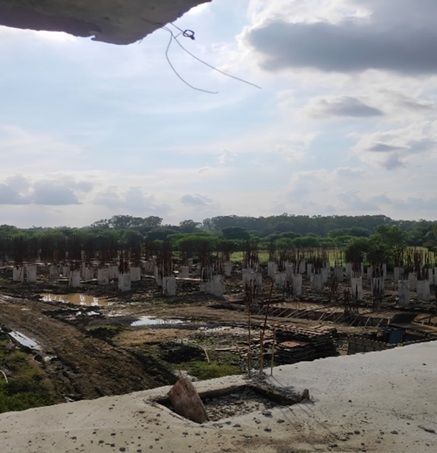
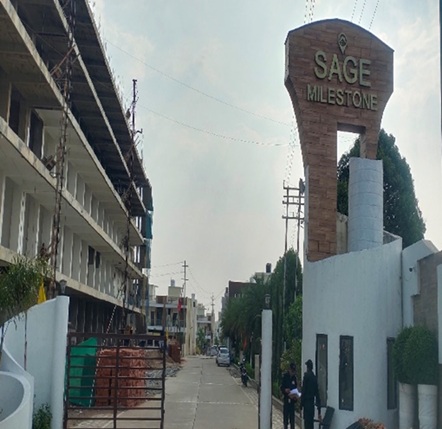
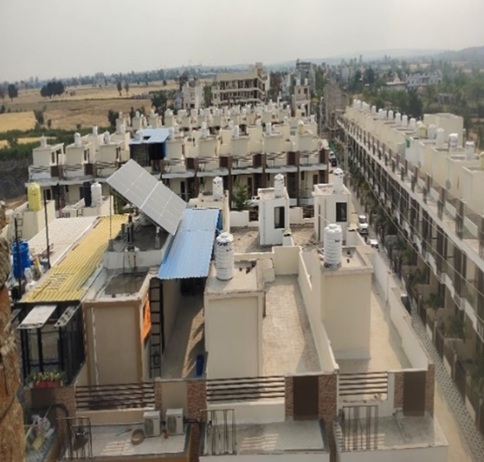
The third site selected is residential project Milestone which is located in Hoshangabad comprising of 3, 4 and 5 BHK Bungalows 2 and 3 BHK luxurious flats with Water Storage Tank having capacity of 1.5 Lac litres, water supply line made up of advanced material Chlorinated Poly Vinyl Chloride (CPVC) of lengths 65m, 40m, 32m, 15m., clubhouse, parks, underground electrification system along with Sewage Treatment Plant (STP) having capacity of 120 KLD. The total land area is 40406 sq.m. out of which area for phase-I is 27223 sq. m. The area for multi unit development is 7375.2 sq. m. and area for residential plots development is 19848 sq. m. The details of Bungalows and flats are shown in Table 6 and 7 below.
| Unit Type | Accommodation | Plot Size (in Ft.) | Plot Area (sq. ft.) | Built Up Area (sq.ft.) |
|---|---|---|---|---|
| B | 5 BHK | 22*50 | 1100 | 2960 |
| C | 4 BHK | 22*40 | 880 | 2650 |
| D | 3 BHK | 18*50 | 900 | 2210 |
| Unit Type | Accommodation | Carpet Area (in Ft.) | Built Up Area (sq. ft.) | Super Built Up Area (sq.ft.) |
|---|---|---|---|---|
| C1 | 3 BHK | 1050 | 1144 | 1420 |
| C2 | 2 BHK | 800 | 850 | 1150 |
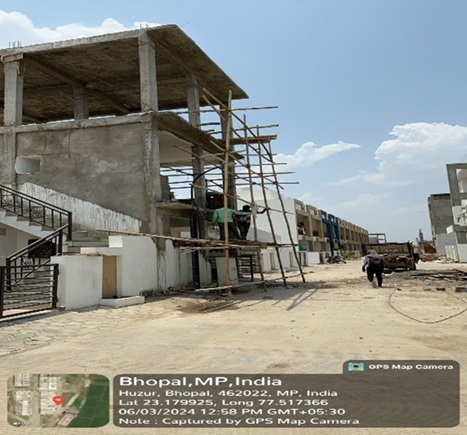
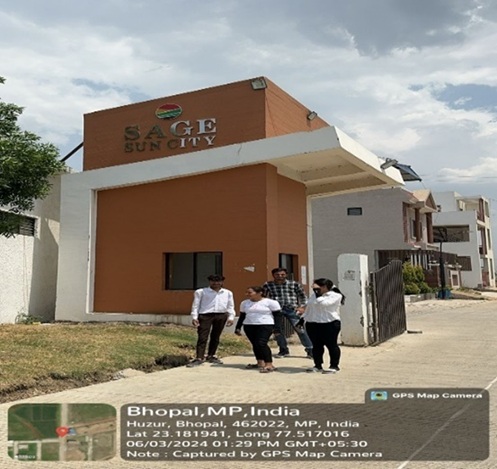
The fourth site selected is project Suncity which is located in Katara Hills Bhopal comprising of 3 and 4 BHK Duplexes. The campus has modern facilities like landscaped gardens, jogging tracks, swimming pools and rain water harvesting arrangements. Underground Sewage disposal system, through PVC pipes, Manholes and sewage treatment plant in the campus. The total area is 50410 sq. m. and the area of residential plot development is 32126 sq. m. The details of duplexes is mentioned in the Table 8.
| Unit Type | Accommodation | Plot Size (in Ft.) | Plot Area (sq. ft.) | Built Up Area (sq.ft.) |
|---|---|---|---|---|
| A | 4 BHK | 22*50 | 1100 | 2920 |
| B | 3 BHK | 22*40 | 880 | 2250 |
Green building entails the process of constructing structures that prioritize environmental sustainability and resource efficiency from site selection to deconstruction throughout the building’s life cycle. The construction industry stands as the largest polluting and resource-consuming sector globally. Consequently, infrastructure development significantly contributes to greenhouse gas emissions [1]. The primary cause of global warming is intricately linked to climate change concerns, necessitating urgent actions for the benefit of future generations [2]. According to the United Nations Environmental Program, adherence to standard building norms can effectively reduce environmental pollution, conserve energy, minimize waste generation, and preserve the natural environment. The conceptualization of green building initiatives involves not only architects but also designers, consultants, and engineers collaborating to achieve common objectives in planning, designing, constructing, and operating buildings. This collective team focuses on mitigating negative impacts while promoting positive project approaches. Key aspects of green building design include site selection, infrastructure design, HVAC systems, lighting, electrical systems, water heating, utilization of renewable energy sources for on-site energy generation, water management, waste management strategies, and selection of sustainable materials that are easily recyclable [3], [4].
The inception of green building concepts in India dates back to 2001, leading to the establishment of the Indian Green Building Council (IGBC) under the Confederation of Indian Industry (CII). The vision of IGBC is to foster a sustainable built environment nationwide and position India as a global leader in sustainable construction by 2025. IGBC contributes to the development of green rating standards and programs, offers training certifications, and organizes annual events to promote green buildings. Collaborating with governmental organizations and the World Green Building Council, IGBC plays a pivotal role in advancing sustainable construction practices in India. Despite India’s progress in embracing the green building movement, the pace of adoption needs to accelerate to meet the infrastructure demands of its vast population. The total green building area in India reached approximately 1.80 billion square feet by 2013, with projections indicating a growth to 20 billion square feet by 2025 (IBEF). Building classifications are determined based on certifications issued by relevant authorities, with different countries developing their own certification schemes for green infrastructure [5].
1. The Building Research Establishment Environmental Assessment Methodology (BREEAM), United Kingdom, 1990
2. Leadership in Energy and Environmental Design (LEED), the United States,1994
3. The Deutsche Gesellschaft für nachhaltiges Bauen (DGNB) system in Germany
4. Comprehensive Assessment System for Built Environment Efficiency (CASBEE) in Japan
5. The Green Star system in Australia.
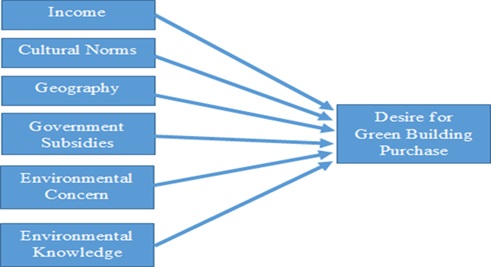
Indians have made significant advancements in embracing green initiatives within the infrastructure sector; however, there is a lack of mandatory regulations compelling the adoption of these practices, resulting in widespread disregard for this construction technique. Despite the higher cost associated with green buildings compared to conventional ones, there is a sluggish demand for them. Nevertheless, the environmental damages caused by construction activities cannot be overlooked. Therefore, it is imperative for the government and relevant authorities to raise awareness among citizens regarding the significance of green infrastructures. Moreover, emphasis should be placed on identifying target consumers who are inclined to invest in green buildings. The inclination towards purchasing Green Buildings [6]. It is evident that green infrastructures come at a premium; hence, ongoing research aims to identify factors that can bolster their market demand. Among these factors, environmental consciousness appears to be the most crucial, as individuals are keen on preserving nature despite the associated costs. The additional expenses incurred by green projects can be offset in the long run, as these infrastructures operate at a lower cost. The project offers both short-term and long-term benefits, with long-term advantages including enhanced resident health compared to occupants of traditional buildings, potentially serving as a motivating factor for buyers. Additionally, geographical location, cultural norms, and political considerations can influence the demand for green buildings [7].
Researchers have outlined key criteria for purchasing green buildings, including: Income: Given that green infrastructures are premium products, their cost is higher, appealing mainly to the educated class.
Cultural Norms: Cultural influences play a significant role in the purchase of premium products, with varying probabilities of purchase across different regions.
Geography: Purchasing preferences for green buildings vary significantly based on geographical conditions and the nature of residents in different areas, prompting research to explore demand variations across the country.
Government Subsidies: The government consistently offers benefits such as subsidies and property tax breaks to incentivize the purchase of green infrastructures, positively impacting the promotion of green buildings and attracting clients.
Environmental Concern: Environmental issues resonate deeply with the educated populace, driving them to seek alternative solutions. This love for nature translates into a commitment to exclusively purchase green buildings, even at a higher cost, reflecting a strong willingness to invest in environmentally friendly products.
Environmental Knowledge: It is the knowledge which is an essential tool for the citizens of such a vast population so that the alternatives of protecting the nature can be researched and solutions may be promoted amongst the other citizens of the society [8].
Adoption of Green Building guidelines in developing countries is informed by the experiences of the United States and India. Various nations, both developing and developed, are actively engaged in formulating guidelines for green building construction or adhering to existing standards outlined in their regulatory frameworks. The expeditious implementation of these guidelines is imperative for the foreseeable future. The establishment of green building standards in any given country draws upon insights gleaned from manuals of other nations and their historical practices. This approach facilitates the acceleration of green infrastructure development within a country, thereby enabling significant contributions to global environmental preservation [9]. Green Building Construction for Sustainable Future. In light of the dire consequences of climate change, the concept of green buildings has garnered significant attention, as sustainable development emerges as the sole viable recourse. The concerns surrounding sustainable development have also resonated within the Indian democratic system, given the country’s robust economic growth averaging about 7% annually, directly correlating with infrastructural advancements. This article elucidates the imperative nature of embracing green building rating systems to advance sustainable development initiatives. It further delves into design strategies and mechanisms to enhance public awareness regarding sustainable infrastructure development, underscoring the growing necessity of green buildings [10].
The environmental impact of real estate development cannot be overstated, as it accounts for approximately 43% of energy consumption, 32% of raw materials utilization, and 25% of urban land occupancy. Consequently, cities are faced with the challenge of managing around 35% of solid waste generated, which often leads to environmental degradation within urban centers. This issue is exacerbated by the continuous energy consumption over the lifespan of buildings, resulting in the emission of greenhouse gases. In light of these challenges, it becomes imperative to adopt principles centered on waste reduction, resource reuse, and waste recycling to bolster the nation’s economy. Initiatives such as the Indian Green Building Council (IGBC) and Green Rating Integrated Habitat Assessment (GRIHA), developed by The Energy and Resources Institute (TERI), have been instrumental in refining the rating systems nationwide to streamline the evaluation of green infrastructures. Nonetheless, a critical obstacle remains the lack of awareness among developers, land developers, and prospective property buyers. This research article adeptly addresses this issue, drawing insights from various secondary sources to offer key recommendations for fostering sustainable construction practices in both urban and rural settings [11].
The environmental degradation has been witnessing the stage where it cannot heal by its own efforts rather the hard work and positive approach by each and every citizen can bring changes. Thus, the construction industry shall also try its best to mitigate the impacts caused over the natural surrounding and checking the impacts at every stage. The only way to minimize the impacts is the adoption of green building technologies. Thus, everyone must be made aware to follow the guidelines decided by the green rating bodies and make a healthy change.
The authors here tried to highlight the importance of green buildings with due considerations to the Indian context and how the demand for these green infrastructures can be brought amongst the stakeholders. Researches have been done over the cities of Shillong and Meghalaya where in the cost associated factor was the major obstacle in the demand for green buildings. People wish to receive aids from government in the form of subsidies on the purchase of green infrastructures.
Besides that people are well aware about the environmental knowledge and factors responsible for pollution. Another case study of Pune city has been highlighted where people are well affected by the reckless felling of trees and rapid urbanization leading to losses in the form of environmental pollution. The concrete jungle being constructed every day is bringing the water table to the lowest level. The research study states that people are willing to buy green apartments in the campuses if government can bring some aid in the form of reducing prices or making the campuses maintenance charges free [12].
This research work has determined the effects of green technologies over the Indian MNC are who are continuously involved in research and development in terms of production design and maintenance. Some of the MNC’s selected for the research work were L&T, Tata Consultancy Services, Tech Mahindra etc. These brands have been listed already in the Climate Disclosure Leadership Index. All these companies have done a great work in the Green production technologies which is the main focusing point of this research work. These companies have a tremendous combination of technology, innovation and sustainable mindset which have made them the global leaders of their own fields [13].
The environmental degradation has reached a point where self-healing is no longer feasible, necessitating proactive efforts from every citizen to induce changes. Therefore, the construction industry must endeavour to mitigate impacts on the natural environment by embracing green building technologies to minimize adverse effects at all stages. It is imperative to raise awareness among individuals to adhere to guidelines established by green rating organizations for a positive transformation [14]. The authors underscore the significance of green buildings within the Indian context and strategies to increase demand for such eco-friendly structures among stakeholders. Studies conducted in Shillong and Meghalaya reveal that cost is a major barrier hindering the adoption of green buildings, with individuals seeking government assistance through subsidies for purchasing green infrastructures [15]. Additionally, there is a widespread understanding among the populace regarding environmental issues and pollution factors. The case of Pune city emphasizes the detrimental effects of rampant deforestation and rapid urbanization, leading to environmental degradation. The continuous construction of concrete jungles is progressively depleting the water table. Research indicates that individuals are inclined to invest in green apartments within communities if the government provides support by reducing prices or waiving maintenance charges.
This study examines the influence of green technologies on sustainability within Indian multinational corporations (MNCs) engaged in ongoing research and development for enhancing production design and maintenance processes. Companies such as L&T, Tata Consultancy Services, and Tech Mahindra, all listed in the Climate Disclosure Leadership Index, have made significant strides in green production technologies, the focal point of this research. These entities exhibit a remarkable blend of technology, innovation, and a sustainable outlook, positioning them as global leaders in their respective industries [16].
The Indian population, currently the largest globally, has two prominent systems in place – Leadership in Energy & Environmental Design (LEED) and GRIHA (Green Rating for Integrated Habitat Assessment) developed by the Ministry of New and Renewable Energy (MNRE) and The Energy & Resources Institute (TERI). This paper provides an overview of GRIHA system, emphasizing its importance and method for promoting sustainable construction practices.
The primary objective of this research was to study the different residential projects of Tier-II cities so that the shortcomings of these traditional projects can be discussed and suitable suggestions can be provided so that they can be promoted to develop green residential projects in the near future which can prevent the environmental losses and promote the use of renewable energy sources. The table below gives the detail about comparative marks scored by the respective residential projects as specified under GRIHA checklist. The selected projects are falling short of 1 star rating by a few marks which can be recovered by taking suitable measures as specified by GRIHA. The major drawbacks and the remedial measures have been highlighted below.
| Criteria | P1 (SGH) | P2 (Milestone) | P3 (SGS) | P4 (Suncity) | P5 Prime Square | ||
|---|---|---|---|---|---|---|---|
| S. N. | Clause | Points | Achieved points | ||||
| 1. Selecting the site | Partly Mandatory | 1 | 1 | 1 | 1 | 1 | 1 |
| 2. Landscape protection during construction/compensatory depository forestation. | Partly Mandatory | 5 | 3 | 2 | 4 | 4 | 2 |
| 3. Conserving soil (post construction) | – | 2 | 2 | 2 | 2 | 1 | 0 |
| 4. Designing while including existing site features | – | 4 | 1 | 1 | 2 | 1 | 1 |
| 5. Reduction in hard pavements on site | Partly Mandatory | 2 | 1 | 1 | 1 | 1 | 2 |
| 6. Uplifting external lighting system efficiency | 3 | 1 | 1 | 1 | 1 | 0 | |
| 7. Sustainable planning of utilities and optimizing on-site circulation efficiency | 3 | 2 | 1 | 2 | 2 | 1 | |
| 8. Providing basic sanitation/safety facilities to the construction workers | Mandatory | 2 | 2 | 2 | 1 | 1 | 1 |
| 9. Minimizing air pollution while constructing | Mandatory | 2 | 1 | 1 | 1 | 1 | 2 |
| 10. Reducing the water requirements of landscape | 3 | 1 | 1 | 1 | 1 | 1 | |
| 11. Minimizing the use of water in building | 2 | 1 | 1 | 1 | 1 | 2 | |
| 12. Utilizing water efficiently during construction | 1 | 1 | 1 | 1 | 1 | 1 | |
| 13. Designing building to reduce demand of non-renewable energy | Mandatory | 8 | 3 | 3 | 3 | 3 | 2 |
| 14. Utilizing the building energy performance under specified limits of comfort | Partly Mandatory | 16 | 4 | 4 | 4 | 4 | 2 |
| 15. Consumption of fly-ash in building structure | 6 | 4 | 4 | 5 | 4 | 4 | |
| 16. Ways of reducing construction time by utilizing technologies like pre-cast construction, RMC etc.) | 4 | 1 | 1 | 2 | 1 | 2 | |
| 17. Using material having lower energy in interior of buildings | 4 | 2 | 3 | 2 | 2 | 2 | |
| 18. Utilizing renewable energy in construction | Partly Mandatory | 5 | 0 | 1 | 0 | 0 | 0 |
| 19. using hot- water system based on renewable energy | 3 | 0 | 1 | 0 | 0 | 0 | |
| 20. Arrangements of treating waste water | 2 | 1 | 2 | 1 | 1 | 0 | |
| 21. Recycling & reusing water (even rainwater) | 5 | 2 | 3 | 1 | 0 | 0 | |
| 22. Ways of minimizing construction waste | 1 | 1 | 1 | 1 | 1 | 1 | |
| 23. Segregating the construction waste | 1 | 0 | 0 | 0 | 0 | 1 | |
| 24. Storing and disposing construction wastes | 1 | 1 | 1 | 1 | 1 | 1 | |
| 25. Ways of recovering resources from waste | 2 | 0 | 0 | 0 | 0 | 0 | |
| 26. Using paints and products having low VOC. | 3 | 2 | 2 | 2 | 2 | 3 | |
| 27. Minimizing substances causing ozone depletion | Mandatory | 1 | 0 | 0 | 0 | 0 | 0 |
| 28. Ways of maintaining water quality | Mandatory | 2 | 1 | 1 | 1 | 1 | 2 |
| 29. Maintaining noise in interior and exterior | 2 | 0 | 0 | 0 | 0 | 0 | |
| 30. Neglecting use of Tobacco and smoke | Mandatory | 1 | 0 | 0 | 1 | 1 | 1 |
| 31. Providing accessibility for persons with disability | 1 | 0 | 0 | 1 | 1 | 0 | |
| 32. Conducting audit of energy, waste and water. | Mandatory | – | – | – | – | – | – |
| 33. Protocols for Operating and maintaining electrical and mechanical equipment’s | Mandatory | 2 | 0 | 0 | 0 | 0 | 0 |
| 34. Adopting innovative methods (beyond 100) | 4 | 0 | 0 | 0 | 0 | 0 | |
| TOTAL | 104 | 39 | 42 | 43 | 38 | 35 | |
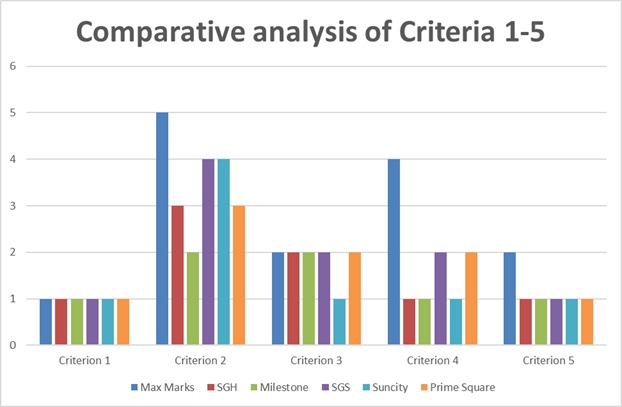
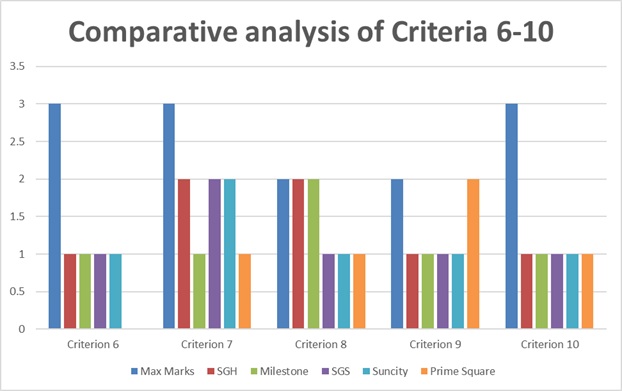
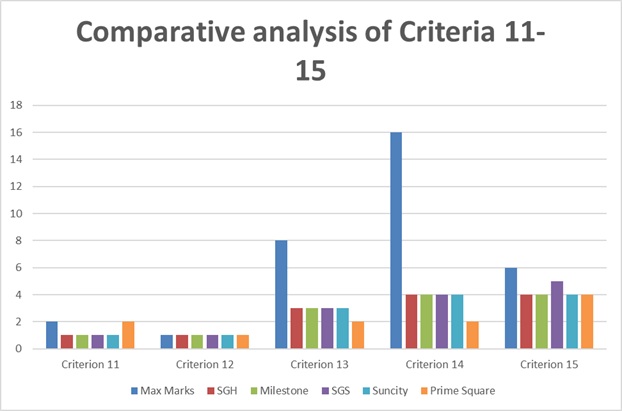
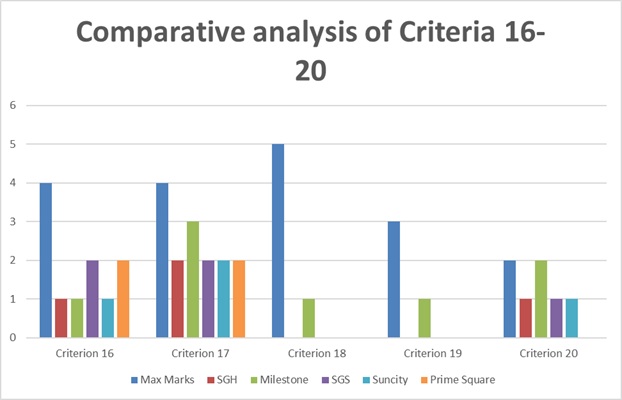
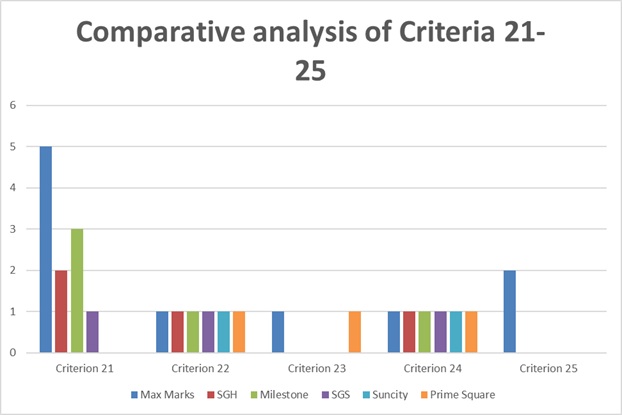
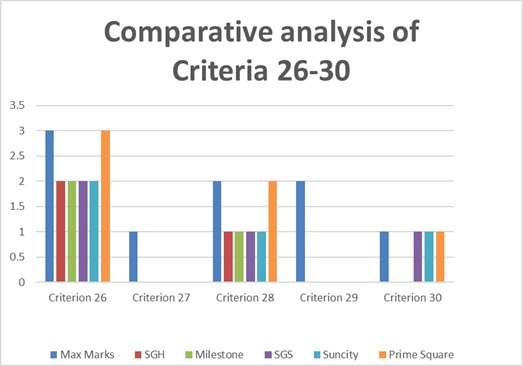
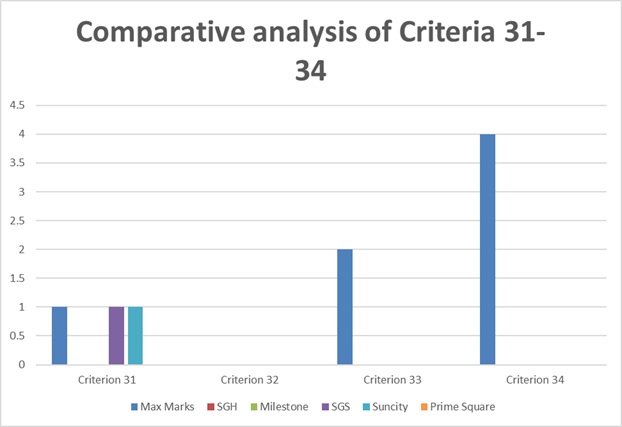
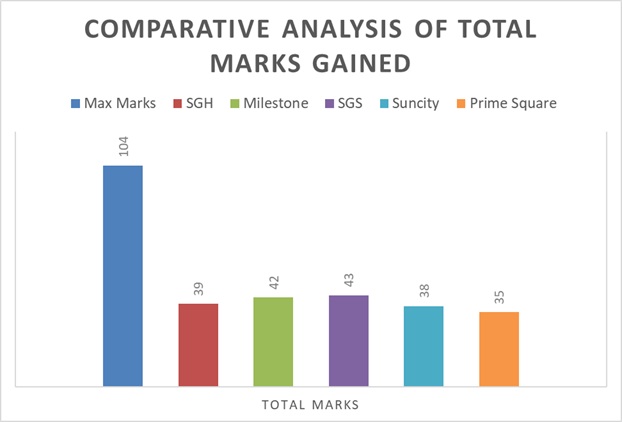
The specified rating system as per GRIHA has been shown below in table 10 which clearly indicates that none of the traditional project is liable to be rated.
| S. No. | Points scored | Rating |
|---|---|---|
| 1 | 50-60 | One star |
| 2 | 61-70 | Two stars |
| 3 | 71-80 | Three stars |
| 4 | 81-90 | Four stars |
| 5 | 91-100 | Five stars |
In this study we have tried to identify the initiatives taken by the conventional residential projects of Bhopal and evaluated their scores as per the guidelines of GRIHA. Following are the results obtained from the intensive evaluation of 5 residential projects. The shortcomings of the mandatory criterion have been discussed along with suitable suggestions to overcome them.
1) As per the mandatory criterion 9, for reducing air pollution on site, the wheels of the heavy vehicles entering and leaving the site must be cleaned. The loading and unloading of the construction materials shall be done by sprinkling water. This practice is not being followed by any of the projects.
2) As per the mandatory criterion 13, for reducing conventional energy demand, the building surfaces which receives maximum exposure of Sun shall be shaded by external devices. Also the orientation of buildings should be such that the total daylighted area is more than 25
3) As per the mandatory criterion 27, halon free fire suppressing arrangements can be provided in the multi storey buildings. Also CFC free equipment’s can be used for refrigeration and air conditioning.
4) As per the mandatory criterion 28, they shall ensure that whether groundwater or municipal water being used on site is as per the IS 10500. Also, the water quality details from various sources before and after treatment shall be notified.
5) As per the mandatory criterion 30, they shall ensure prohibition for the use of tobacco and smoking. For educating all, proper sign boards for prohibiting smoking must be installed on the suitable locations.
6) As per the mandatory criterion 32, the builders and developers shall ensure Energy audit along with water and solid waste audit within 2 years of full occupancy.
7) As per the mandatory criterion 33, smart water meters shall be available at main supply points so that the building consumptions can be noticed and checked.
8) Under the Criterion 34, none of the projects have done innovative work in the project hence no marks have been scored.